Teak vs. Cast Aluminum Outdoor Dining Furniture: Which Is Right for You?
Picking the right material for your outdoor dining furniture is one of those decisions that sounds simple until you're actually in it. You're weighing aesthetics, your local climate, how much upkeep you're willing to do, your budget, how heavy the furniture should be, and how long you expect it to last. Teak and cast aluminum are the two materials that consistently come up at the top tier of outdoor dining — and for good reason. In short: teak is a warm, natural hardwood with striking aesthetics, incredible durability, and real heft; it carries a premium price and may require some care, though it ages beautifully with or without it. Cast aluminum — and its cousin, extruded aluminum — is lightweight, sleek, corrosion-proof, lower maintenance, and spans a wide price range from mid-tier to very high-end. Both are excellent long-term investments. Which one is right for you depends on where you live, what you value aesthetically, and what kind of relationship you want to have with your outdoor furniture. Let's break both down.
Cast Aluminum Outdoor Dining Furniture
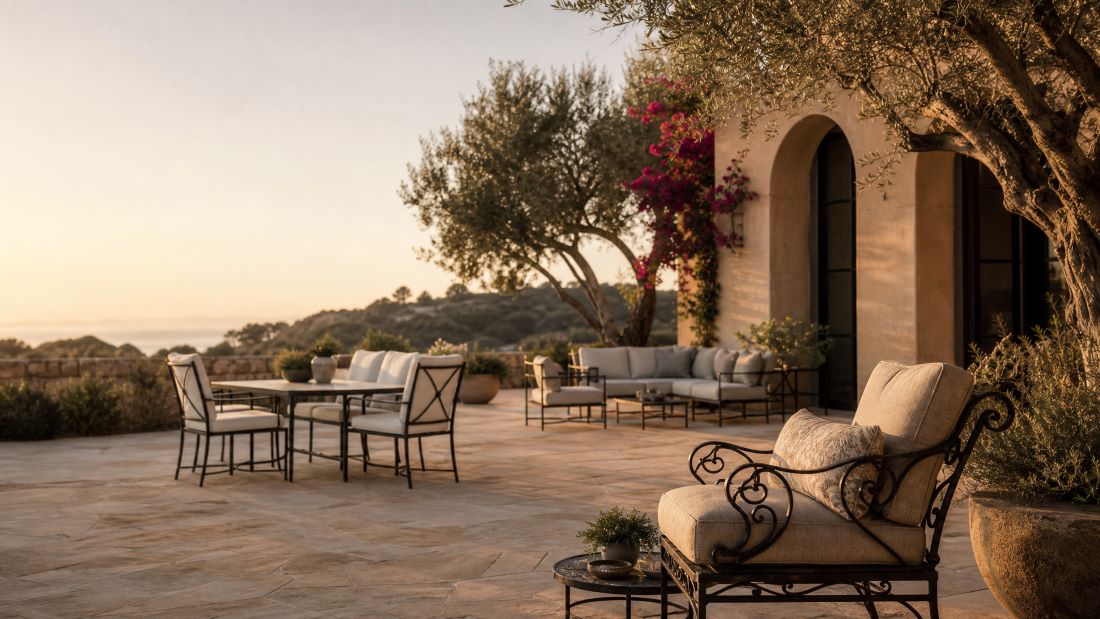
There are two kinds of aluminum outdoor furniture, and they're not the same. Cast aluminum is poured into molds under heat and pressure, producing furniture with dense, precisely formed frames — the kind of carved detail you see in a traditional lattice-back chair is built directly into the casting, not painted or welded on afterward. Extruded aluminum is pulled through a die to create uniform profiles: cleaner lines, lighter weight, and a more contemporary look. Both are powder-coated for weather protection, and both are worth considering depending on your aesthetic.

Powder coating is worth understanding because it's one of the primary reasons aluminum outdoor furniture lasts. Unlike spray paint, powder coating is electrostatically applied as a dry pigment and then cured in an oven, bonding it to the metal at a molecular level. It doesn't chip or peel the way conventional paint does, it resists UV fading, and a quality outdoor formulation handles salt air, rain, and temperature swings without degrading. The full range of finishes — from matte black to brushed bronze to warm neutrals — is achieved through powder coat color, which is why aluminum furniture can be customized across hundreds of finish options without any structural change to the piece. Browse the full selection in our outdoor dining sets collection to see how varied the finish palette gets across brands like OW Lee, Castelle, and Jensen Outdoor.
On durability, cast aluminum is exceptional. The frames don't rust, they don't swell or contract with temperature changes, and they don't require seasonal sealing or storage. The 15-year frame warranties that our aluminum brands carry are not marketing language — aluminum simply doesn't fail under normal outdoor conditions. Maintenance is genuinely minimal: soap, water, and a rinse. Our guide to cleaning metal patio furniture confirms there's not much more to add. For a thorough look at the aluminum options we carry, our aluminum dining sets page covers the full range.
One real consideration for aluminum in hot climates: metal conducts heat. A dark aluminum tabletop in direct Phoenix or Las Vegas sun can get very hot to the touch. Choosing lighter powder coat finishes helps, and a shade structure makes a real difference. In cold climates, aluminum similarly conducts cold, though that matters less functionally than it does for seating comfort. For coastal climates like Miami or San Diego, aluminum's corrosion resistance is a genuine advantage over materials that require more protection from salt air and humidity. Most aluminum dining sets also ship fully assembled, which matters more than you'd think when the alternative involves crating heavy hardwood components.
Teak Outdoor Dining Furniture
Teak comes with a relationship, and that relationship gives back. The material has been used for ship decks, outdoor architecture, and premium furniture for centuries not because it was fashionable but because it works — and understanding why helps you take care of it properly.

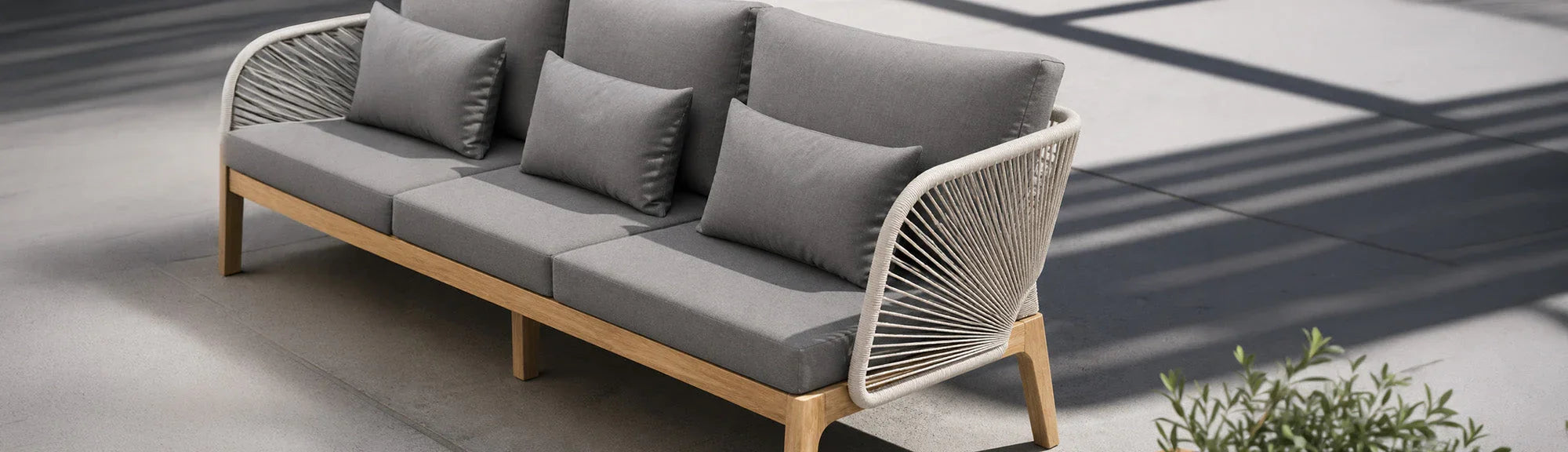
Grade A teak, specifically, comes from the heartwood of mature plantation-grown trees. The silica content in teak heartwood is what does the real work: it clogs the pores of the wood fiber against water absorption, provides natural hardness, and gives Grade A teak its weather resistance without chemical preservatives. That's meaningfully different from Grade B teak, plantation sapwood, or budget alternatives labeled "teak" that don't share the same density or oil content. Our teak furniture comes from responsibly managed, sustainable plantations in Indonesia, where teak has been cultivated for centuries — so when you're buying a teak dining set, you're buying something that's both premium and consciously sourced. For a deeper look at what responsible sourcing actually means in practice, our piece on teak's real eco-footprint goes beyond the certification label.
Left untreated, Grade A teak weathers to a silver-grey patina over time. The wood remains structurally sound — the surface is stable once the color sets, and plenty of buyers prefer the aged look. If you want to preserve the warm honey-brown color, an application of teak oil once a season does the job — our teak care and maintenance guide has the full routine. Neither approach is wrong, and neither accelerates wear. The choice is aesthetic, not structural. What you're really choosing is your maintenance philosophy: hands-off and let it silver, or a light annual ritual and keep the warmth.
Weight is real with teak. A quality teak dining set for six is heavy. That's mostly a feature — it doesn't blow off a coastal terrace in a storm, and it doesn't need to be anchored or weighted down in windy conditions. But it's worth knowing if you plan to rearrange your patio regularly or store furniture seasonally. Most furniture from Patio Productions, teak included, ships fully assembled — a detail that matters more than you'd expect with heavier pieces. For a complete buyer's guide to evaluating teak quality — Grade A vs. Grade B, joinery types, and what plantation certification actually means — our teak outdoor furniture buyer's guide covers all of it. For the full range we carry, see our teak dining tables collection.
Teak vs. Aluminum: Side-by-Side

Before the climate specifics, here's the quick-reference comparison across the factors that drive most buying decisions.
| Grade A Teak | Cast & Extruded Aluminum | |
|---|---|---|
| Aesthetic | Warm, organic wood grain; weathers naturally to a silver-gray patina over time | Traditional carved detail (cast) to clean contemporary lines (extruded); many powder coat color options available |
| Price | $$$–$$$$ — Grade A teak commands a consistent premium at every brand tier | $$–$$$$ — spans accessible mid-tier to very high-end depending on brand and configuration |
| Weight | Heavy — naturally wind-stable; not easy to rearrange on the fly | Light to medium — easy to move and reconfigure; consider anchoring in high-wind settings |
| Maintenance | None if you accept the silver patina; annual oiling to preserve the warm honey-brown | Minimal — soap and water only, regardless of climate or season |
| Longevity | 25–50+ years with minimal care; structurally sound indefinitely once the patina sets | 15–25+ years; backed by a 15-year frame warranty across premium brands |
| Surface Heat | Stays comfortable in direct sun — wood doesn't conduct heat the way metal does | Can get very hot in direct afternoon sun; shade structure recommended in Phoenix, Las Vegas, and similar climates |
| Best Climate | All climates; particularly well-suited to hot/sunny and freeze-thaw environments; performs well coastal with occasional cleaning | All climates; exceptional in coastal and high-humidity settings (fully corrosion-proof powder coat) |
| Sustainability | FSC-certified; sourced from responsibly managed plantation forests | Aluminum is infinitely recyclable; powder coat contains no chemical preservatives |
| Assembly | Ships fully assembled from Patio Productions in most cases | Ships fully assembled from Patio Productions in most cases |
Climate and Weather: Where You Live Matters
The right material depends heavily on your climate, and this comparison gets more specific than most buyers realize.

Hot and dry climates (Phoenix, Las Vegas, inland California): Teak has a real thermal advantage here. Wood doesn't conduct heat the way metal does — a teak tabletop in direct afternoon sun will be warm, not burning. Cast aluminum in the same conditions can get hot enough to be uncomfortable without shade. If your dining area is uncovered and faces direct sun through the hottest part of the day, teak's thermal properties matter. Aluminum remains the better choice if you have reliable shade coverage or a pergola.
Hot and humid climates (Miami, Houston, coastal Southeast): Both materials handle humidity well. Aluminum has no moisture concern whatsoever. Grade A teak handles humidity admirably, though the silica content that makes it so resistant also means it can be more reactive to humidity swings than it is in drier climates. Annual oiling is more important in humid environments if you want to maintain color. Aluminum's edge in this region is zero maintenance regardless of conditions.
Cold climates (Lansing, Denver, Chicago, Pacific Northwest): Teak handles freeze-thaw cycles without cracking, splitting, or warping — a real advantage over lesser woods. Aluminum doesn't rust and doesn't care about cold. For both, cushion storage during winter extends the life of the fabric. Teak's ability to stay outdoors year-round without covers is one of its genuine selling points in cold climates. Aluminum can also stay out, though powder coat is more likely to show wear over time in climates with heavy freeze-thaw if it develops any surface damage that allows moisture under the finish.
Coastal climates (San Diego, Miami, Cape Cod, Pacific Northwest): Aluminum's corrosion resistance makes it the natural choice if you're close to salt water. Marine-grade powder coat handles salt air and high humidity without degrading. Teak also performs well in coastal conditions — its natural oils provide real protection — but regular cleaning and more frequent oiling in salty, humid air keeps it looking its best.
Where They Actually Diverge
Maintenance is the clearest separator. Aluminum requires nothing beyond occasional cleaning regardless of where you live or what weather it sees. Teak requires a decision: accept the silver patina (maintenance-free once it sets) or commit to an annual oiling if you want the warm color. Both are manageable, but one asks nothing of you and the other asks something.

Price tells a similar story. Quality teak runs at a real premium. Grade A teak dining sets cost more than cast aluminum equivalents at the same brand tier. The raw material is expensive, the joinery is labor-intensive, and the shipping weight is significant. Aluminum spans a much wider price range — accessible mid-tier sets exist alongside configurations well above $5,000 from OW Lee and Castelle. Our guide to the top 10 outdoor patio furniture brands gives a full breakdown of who makes what, if you're still narrowing the field. Teak starts higher and stays there.
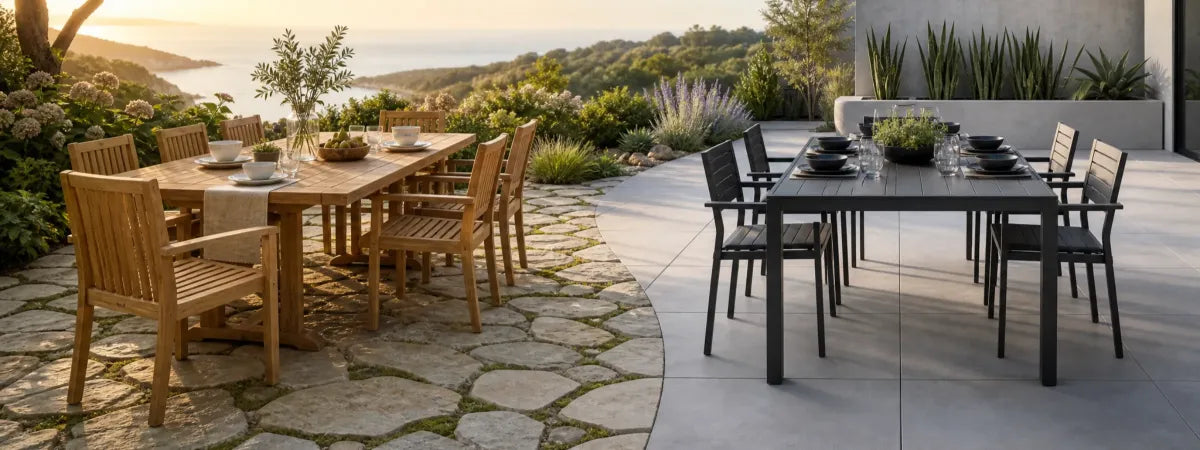
Aesthetics is where the comparison stops being about specs. Teak is warm, natural, and organic. The grain, the heft, and the way the color shifts across seasons communicate craftsmanship in a way no other outdoor material quite replicates. Cast aluminum is precise and versatile: it handles traditional carved styles as well as clean contemporary silhouettes, and the powder coat palette gives you finish and cushion fabric combinations that wood can't offer. If your outdoor space leans toward natural stone, planted edges, and rough texture, teak likely belongs in it. If the space is architecturally composed with clean lines and a defined material palette, aluminum is probably the more coherent choice.
It's Your Call, Ultimately
Most people who buy teak never wish they'd bought aluminum. Most people who buy cast aluminum never miss the teak. The choice tends to clarify once you stop asking which material is objectively better and start thinking about the specific space, the specific climate, and the kind of relationship you want to have with your outdoor furniture. Teak is a commitment that rewards you. Aluminum is an agreement that asks almost nothing of you in return. If teak's sustainability credentials matter to your decision, our sustainable teak guide covers sourcing and certification in depth, and if you're also weighing Ipe wood, our Ipe wood comparison takes on that matchup directly. Both are exceptional — and for anyone still weighing these two against poly lumber, steel, or other material categories, our guide to the best materials for outdoor furniture puts all of them in context.