Article: Why Aluminum Wins on Most Restaurant Patios, and Where It Doesn't
Why Aluminum Wins on Most Restaurant Patios, and Where It Doesn't
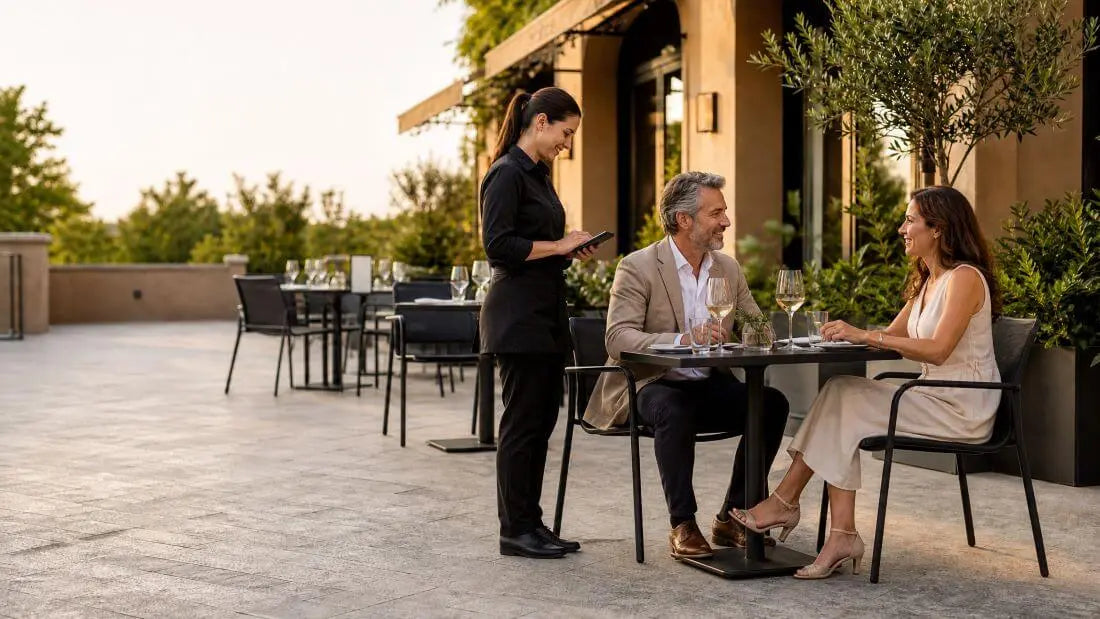
Aluminum wins on most restaurant patios, and it's not close: it's light enough for one server to reset a table between seatings, it doesn't rust, and the powder-coat finish shrugs off three seatings a night for years. That's the short version! The longer version is that "aluminum" covers two genuinely different manufacturing processes with different strengths, and there are a handful of restaurant scenarios where I'd point you somewhere else entirely.
We've covered aluminum briefly in our piece on what dozens of restaurant installs have taught us, and in more depth in our full guide to buying commercial patio furniture, but the material deserves its own explanation here, because the difference between cast and extruded aluminum actually changes what you should buy, not just how it's described on a spec sheet.
What Makes Aluminum Different From Everything Else

Aluminum doesn't rust, full stop, because it doesn't contain iron. What it does instead, given enough time and exposure, is oxidize into a dull white film, which is cosmetic and not structural. That's the whole reason it dominates commercial outdoor use: wrought iron and steel need a protective coating standing between the metal and the weather at all times, and the day that coating fails, the clock starts on visible rust. Aluminum's failure mode is just duller, not weaker.
The Aluminum Association notes that aluminum naturally forms a thin oxide layer on exposure to air, which is part of why it holds up outdoors without the coating dependency that steel has. Powder-coat finish on top of that is mostly about color and surface feel, not structural protection, which matters when you're evaluating a chipped chair: a chip in an aluminum finish is cosmetic, while a chip in painted steel is the beginning of a real problem.
The Case for Aluminum on a Restaurant Patio Specifically

Weight is the part people underrate. A standard aluminum stacking chair runs somewhere in the neighborhood of 8 to 12 pounds, light enough that one server clears and resets a two-top without help, and light enough to stack eight or ten high in a back room during a slow season. Try that with cast iron or solid teak and you need two people and a dolly. Cost holds up over time better than the sticker price suggests, too. A quality aluminum frame with a real commercial powder-coat, kept reasonably clean, should outlast several cycles of cheaper materials that need refinishing, re-oiling, or replacement. If I'm running the numbers for a restaurant owner, I'm looking at cost per year of service life, not cost per chair, and aluminum wins that math more often than the upfront price tag suggests it will. Multiply a few dollars of price difference across forty chairs and it looks like real savings on day one; multiply the replacement cycle across five years and the math flips completely. That's the whole argument in one sentence: aluminum costs a little more up front and a lot less over time.
Cast or Extruded? It Actually Matters
Cast aluminum is poured into a mold as molten metal, which is why it can carry ornate scrollwork and heavier, more substantial-feeling frames. It's typically heavier, pricier, and reads more traditional or upscale. Extruded aluminum is pushed through a die to create a consistent tube or profile, which is why it's lighter, usually less expensive, and tends to look cleaner and more modern.
| Trait | Cast Aluminum | Extruded Aluminum |
|---|---|---|
| Weight | Heavier, more substantial feel | Lighter, easier to move and stack |
| Look | Ornate, traditional | Clean, modern lines |
| Price | Higher | Lower |
| Best fit | Upscale, low-turnover patios | High-turnover, stack-and-store operations |
For most restaurant patios, especially anything with real table turnover, I'd go extruded. The weight advantage compounds every single shift, and the clean lines read fine in almost any concept. Cast aluminum earns its keep on a slower-turning, design-forward patio where the heavier, more detailed look is actually part of the draw. Our commercial dining chairs and commercial dining tables collections carry both, filterable by frame type.
Where Aluminum Isn't the Right Call
I'll say this even though we sell a lot of it: aluminum isn't automatically correct everywhere. In genuinely high-wind, exposed coastal spots, a very lightweight aluminum chair can walk across a patio in a real gust unless it's weighted or tied down, where a heavier material or a properly ballasted piece stays put on its own. If your concept is going for a rustic, reclaimed-wood, cabin aesthetic, aluminum's clean lines and cool touch work against the mood you're building, and a teak or wrought iron piece will read more honestly. And on the tightest possible budget, sling-on-aluminum or resin stacking chairs undercut even extruded aluminum on price, at the cost of a shorter service life.
Keeping It Looking Like It Did on Day One

Aluminum care is mostly about not letting anything sit. A rinse with a hose and a wipe with mild soap and water handles day-to-day grime; the mistake we see most is letting sunscreen, wine, or grease sit on the finish for weeks, which can dull the powder-coat faster than actual weather does. Avoid abrasive pads on the finish itself. If a chip does happen, a touch-up pen matched to the powder-coat color keeps moisture from working underneath the finish at that one spot, which is the only real vulnerability aluminum has.
For a deeper comparison against teak, wicker, and the rest of the material lineup, our guide to choosing the best material for outdoor furniture walks through the full picture, not just aluminum.
Aluminum Questions Restaurant Owners Actually Ask
No. Rust is specifically an iron oxidation process, and aluminum contains no iron. It can develop a dull white oxide film over time, but that's cosmetic, not structural, and a good powder-coat finish prevents most of it from ever showing.
Extruded, for most restaurant patios. It's lighter, easier for staff to move and stack, and generally less expensive. Cast aluminum makes sense for a slower-turning, design-forward patio where the heavier, more detailed look is part of the concept.
Aluminum, for almost every restaurant use case. Steel needs a coating to prevent rust and that coating eventually fails; aluminum's oxidation is cosmetic, not structural, so it ages more gracefully with less maintenance.
Mild soap, water, and a soft cloth or hose rinse, done regularly rather than occasionally. The finish dulls faster from grease, sunscreen, or wine sitting for weeks than from actual weather exposure, so the schedule matters more than the product.
Well past a decade of real restaurant use with reasonable care, and often much longer, since the underlying metal doesn't degrade the way iron or steel does. Fabric and cushions on any material will need replacing well before the aluminum frame does.
Yes for corrosion resistance, aluminum handles salt air better than almost anything else. Wind is the actual variable to plan around: lightweight aluminum pieces need weighting, stacking, or securing in genuinely exposed, high-wind spots.
None of this is a reason to overthink the decision. For the overwhelming majority of restaurant patios, extruded aluminum with a real commercial powder-coat is the boring, correct answer, and boring is exactly what you want from a chair that has to survive three seatings a night for the next decade. Save the interesting material choices for the parts of your patio where nobody's counting on them for structural duty, the planter boxes, the string lights, wherever you want personality instead of load-bearing durability. The dining chairs are not that place!
Browse our aluminum outdoor furniture collection when you're ready to spec a patio, or start with our full commercial furniture catalog if you're still comparing materials against your budget. And once the material decision is made, our buyer's checklist from first quote to final delivery covers everything that happens next.