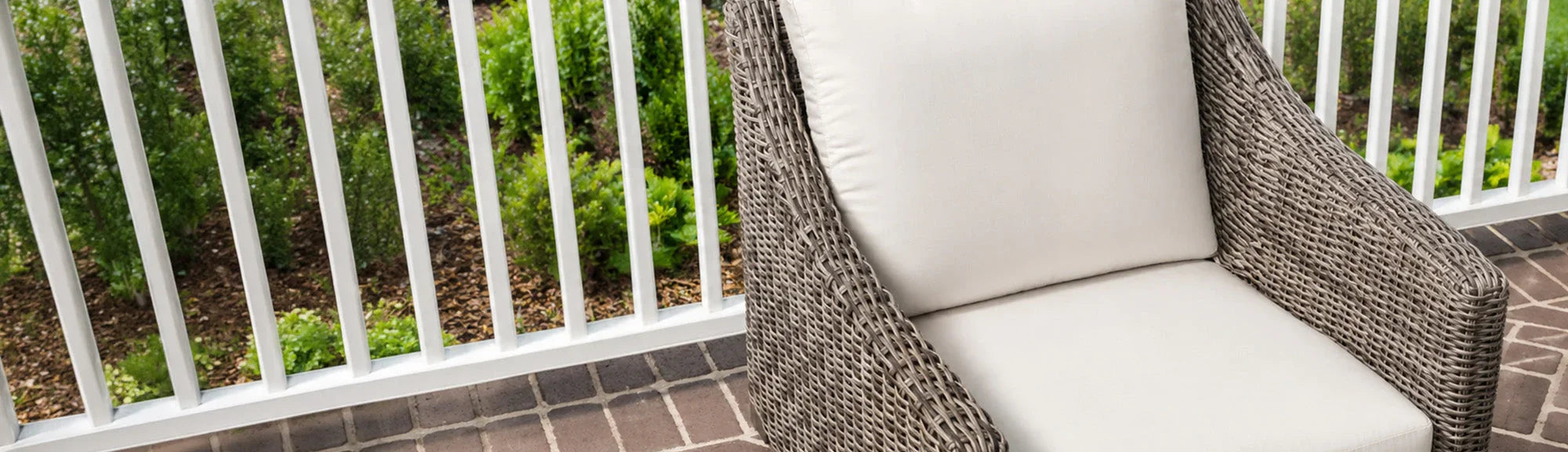
8 Keys to the Perfect Patio Furniture Arrangement
To arrange patio furniture, start with a focal point, plan clear walkways of 30 to 48 inches, and place your largest piece along the longest edge facing that focal point. Then group seating into zones for lounging, dining and cooking, and finish with side tables, rugs, lighting and plants. Sketch your layout on paper first; it saves a lot of heavy lifting later.
Reviewed by the Patio Productions design team · Last updated October 2026
Patio Furniture Spacing Guide
| Space | Recommended clearance | Notes |
|---|---|---|
| Main walkways | 30–48 in. | Keep paths to doors, steps and the grill clear |
| Low-traffic paths | About 24 in. | Behind chairs or along the edge of the patio |
| Sofa to coffee table | 14–18 in. | Close enough to reach a drink, with room for legs |
| Dining chair pull-out | About 36 in. | From the table edge to a wall, railing or other furniture |
| Seat width at a dining table | About 24 in. per person | Allow more for armchairs |
| Seating around a fire pit or fire table | Follow the manufacturer's clearance | Many recommend at least 3 ft from the edge |
| Umbrella coverage | About 2 ft beyond the table edge | See our patio umbrella size guide |
8 Keys to the Perfect Patio Furniture Arrangement

Follow these eight rules of thumb to create a patio layout that looks good and works for the way you live.
1. Decide on a Focal Point

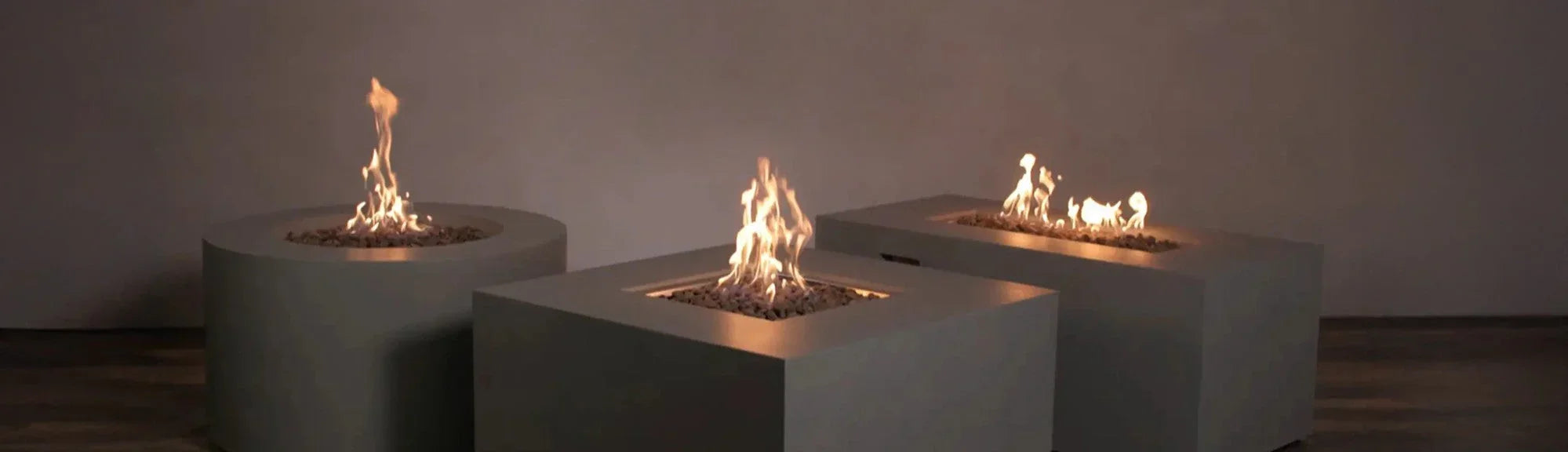
Every great patio has a focal point that anchors the space. It might be a view, a fire pit or fire table, a pool, or a statement piece like a sectional or daybed. This becomes the heart of your patio, and everything else is arranged around it.
2. Decide How You'll Use the Space

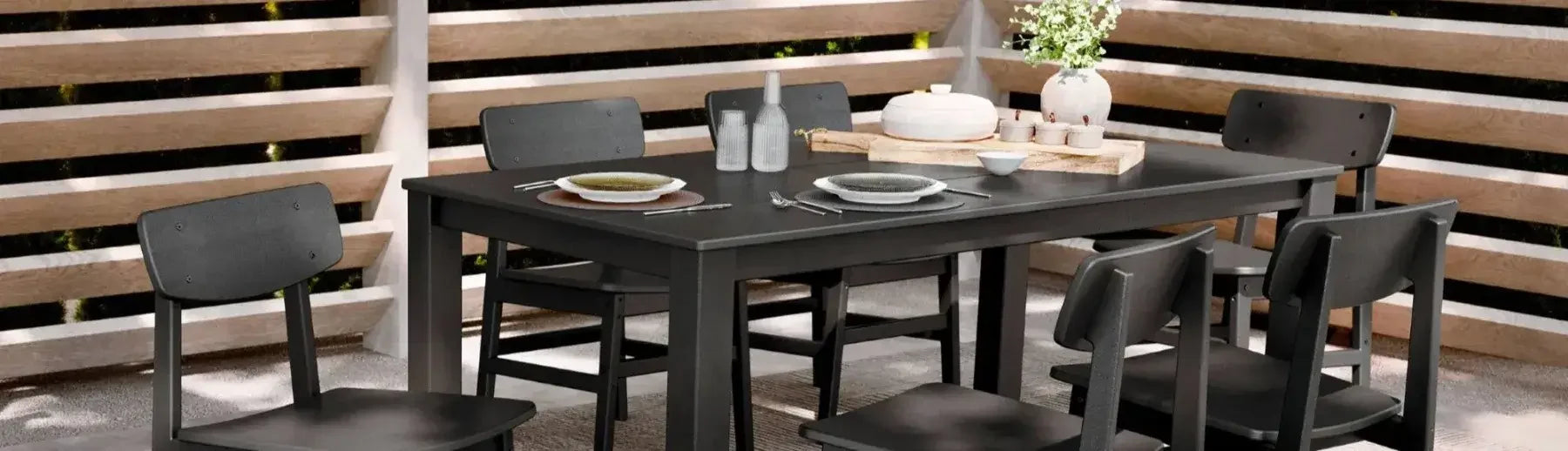
Think about how you'll use your patio most: entertaining, dining, lounging or all three. If you mostly dine outside, center the layout on a dining set. If you love to relax with friends, start with a conversation set.
Then choose a style. Symmetrical layouts, like two sofas facing each other, feel formal and balanced. Asymmetrical layouts feel more relaxed and casual.
3. Plan for Traffic Flow
Think about how people will move through the space: from the door, to the grill, to the steps or the yard. Leave 30 to 48 inches for main walkways and about 24 inches for low-traffic paths.
Pro tip: Direct guests around your main seating area, not through it. Planters, a console table or the back of a sofa can help guide people where you want them to walk.
4. Place the Largest Piece First

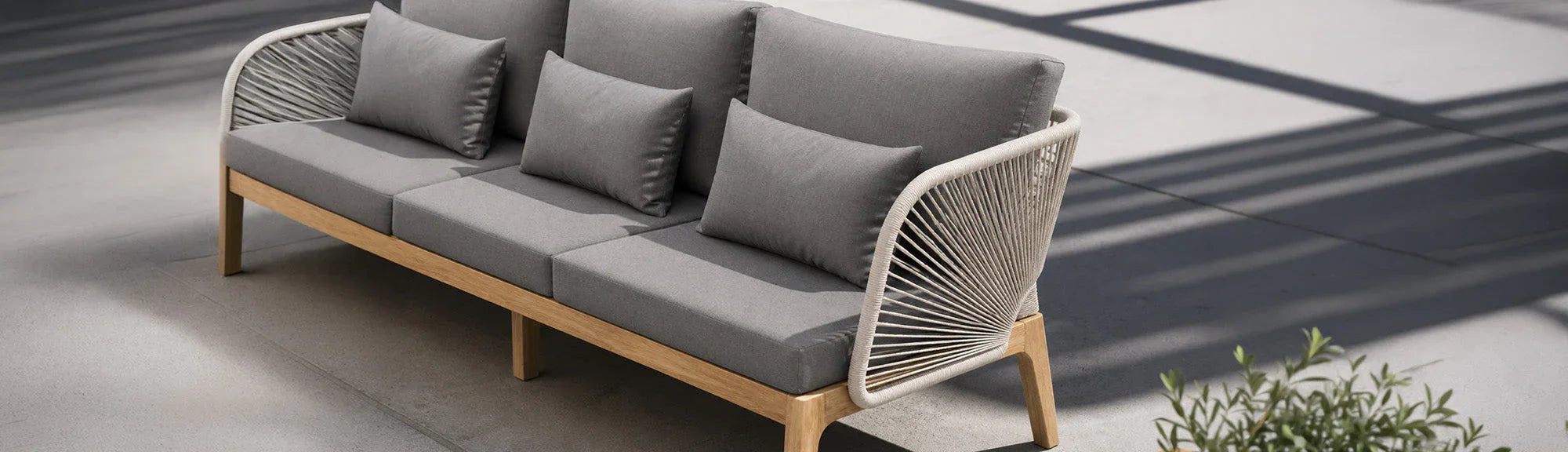
Put your longest piece, usually an outdoor sofa or loveseat, along the longest wall or edge, facing the focal point. This anchors the arrangement so the furniture doesn't look like it's floating. Then add club chairs to create a conversation area where everyone can see each other.
5. Add Comfort and Convenience

Give every seat a spot to set down a drink. Side tables and coffee tables, plus ottomans that double as extra seating, make your patio feel like an outdoor living room. For more ideas, see these patio accessories that transform your backyard.
6. Separate the Outdoor Kitchen

Keep the cooking area apart from where people sit and eat. This keeps smoke and heat away from guests and makes the layout easier to understand. A bar counter, low wall, planters or a change in flooring can separate the spaces. Place the kitchen close to the house for easy trips indoors, and always follow your grill's clearance requirements.
7. Divide Large Patios into Zones

A big open patio can feel empty. Break it into zones for dining, lounging, sunbathing or games. Outdoor rugs, umbrellas, planters, lighting and hardscaping all help define each area and make the space feel more intimate.
8. Accessorize and Organize

Finish the look with throw pillows, outdoor rugs, lanterns, planters and greenery. Keep extra cushions, blankets and games in an outdoor storage box or cabinet so the patio stays tidy and your cushions stay protected from the weather.
Layout Ideas for Common Patio Shapes

Small Patio or Balcony
Choose pieces scaled to the space, like a loveseat and one chair, or an outdoor bistro set. Keep the center open and push furniture toward the edges. See our small patio and balcony ideas.
Long, Narrow Patio or Deck
Create two zones along its length, such as seating at one end and dining at the other, with a clear walkway along one side. Keep the area in front of the door open.
Pool Deck
Line chaise lounges along the side of the pool that gets the most sun, and place a seating or dining group in a shaded spot nearby. Leave a wide, clear path around the pool edge.
Covered Patio or Lanai
Use the covered area for the furniture you'll use most, like a sofa set or dining table, and keep sun-loving pieces like chaise lounges out in the open. Learn more in lanai vs. patio vs. porch vs. veranda.
Watch: 8 Keys to the Perfect Patio Furniture Arrangement
Need Help With Your Layout?
Every patio is different. Our design team can help you plan a layout and choose furniture that fits your space, or visit our San Diego showroom to see complete outdoor settings in person. When you're ready to shop, browse all outdoor furniture, and before you buy, read our guide to the best time to buy patio furniture.
FAQs: How to Arrange Patio Furniture
Pick a focal point, plan walkways, then place the largest piece first. Start with a focal point such as a view, fire feature or conversation set. Plan clear walkways of 30 to 48 inches, place your largest piece along the longest edge facing the focal point, then add chairs, tables and accessories around it.
30 to 48 inches for main walkways and 14 to 18 inches between a sofa and coffee table. You can narrow lower-traffic paths to about 24 inches. Around a dining table, leave about 36 inches behind each chair so guests can pull out and sit down easily.
Along the longest edge, facing the focal point. Anchoring the longest piece against a wall, railing or the edge of the patio keeps furniture from looking like it's floating and makes the space feel larger.
Choose scaled-down pieces and keep the center open. A loveseat or two chairs with a small table, a bistro set, or pieces that do double duty, like an ottoman that works as a seat or table, keep a small space usable. See our small patio and balcony ideas.
Divide it into zones along its length. Place a seating group at one end and a dining or bistro set at the other, with a clear walkway along one side. Keep the door or entry area open.
Use zones defined by rugs, planters, umbrellas or lighting. Group the dining set near the house or kitchen for easy serving, and place the lounge area toward the view or fire feature. An outdoor rug under each group helps define it.
Away from seating, but close to the house. Keep cooking separate from where people gather, and place it near the door for easy trips to the kitchen. Always follow your grill's clearance requirements.