
Outdoor Saunas
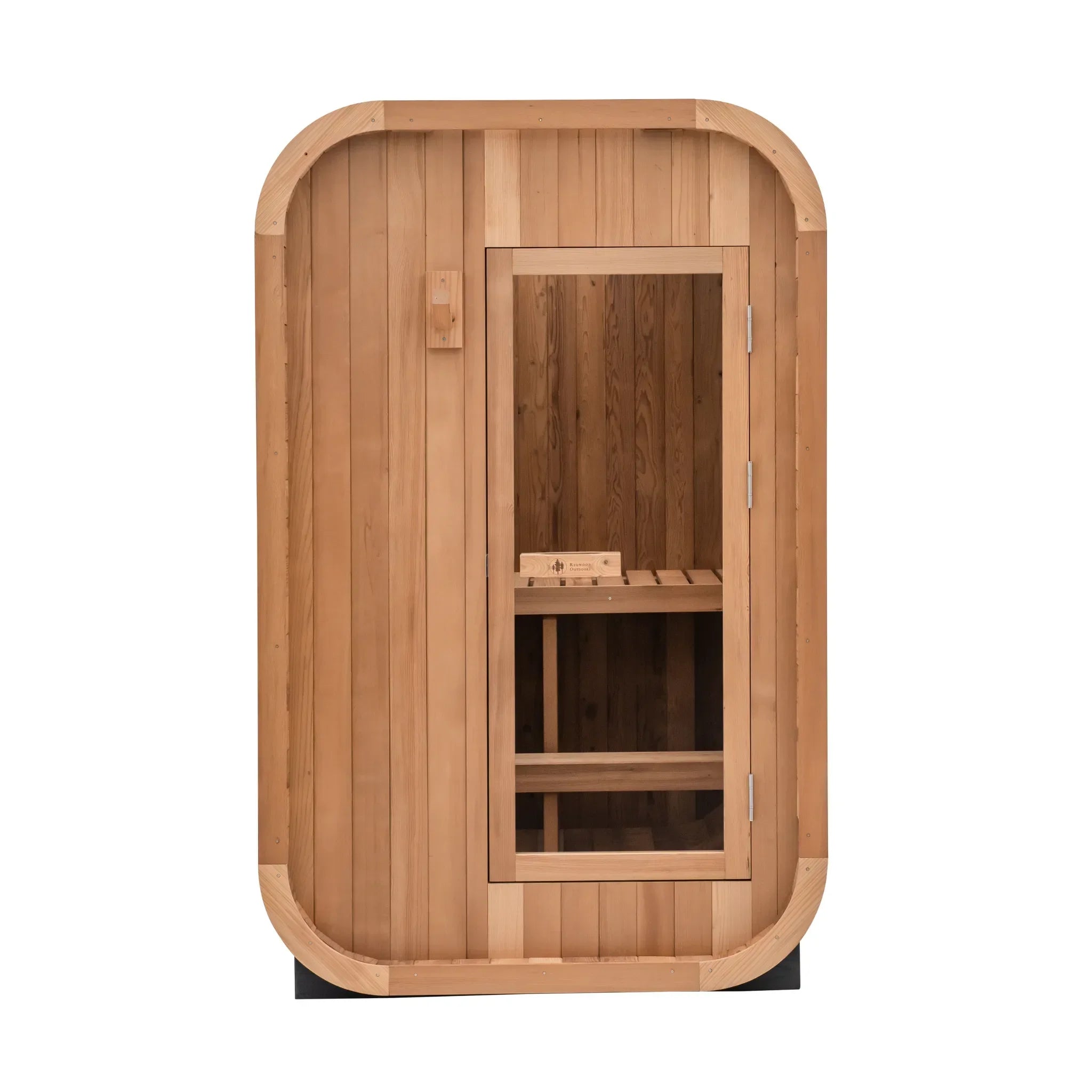
Outdoor Saunas: The Backyard Ritual
A sauna is one of the oldest wellness practices in recorded history and one of the few that has aged into modern life without needing to be repackaged. The heat is the same. The wood is the same. The ritual — time set aside to sit in serious heat, sweat, and emerge reset — is unchanged. What has changed is the equipment. Part of our wellness collection, today's outdoor saunas are purpose-built for residential backyards: pre-assembled or flat-pack structures in cedar and Nordic spruce that can be installed on a deck or concrete pad without requiring a building permit in most jurisdictions.
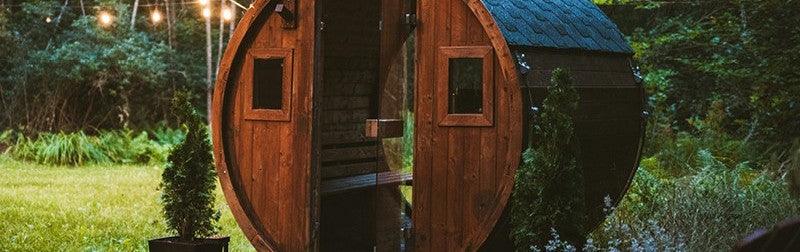
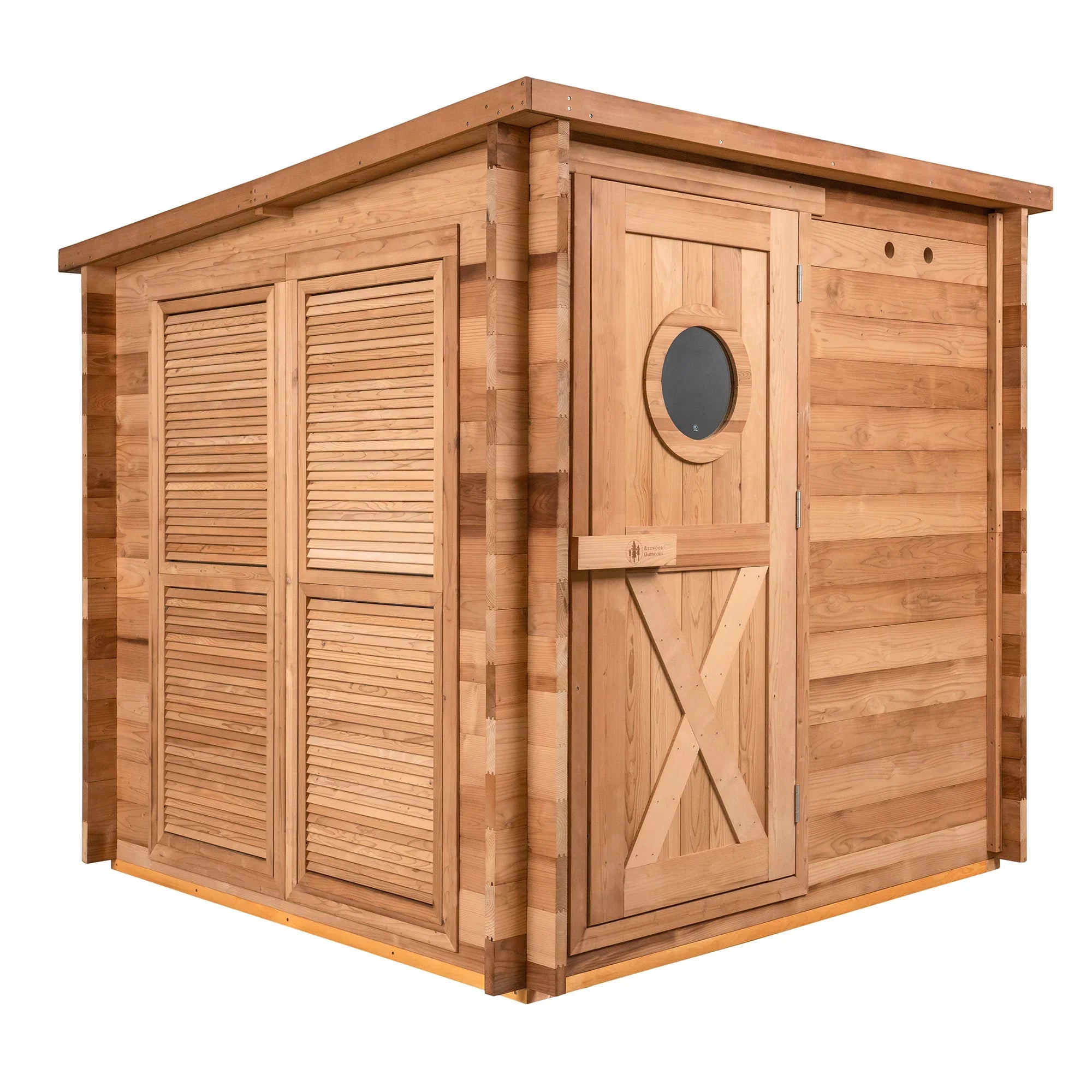
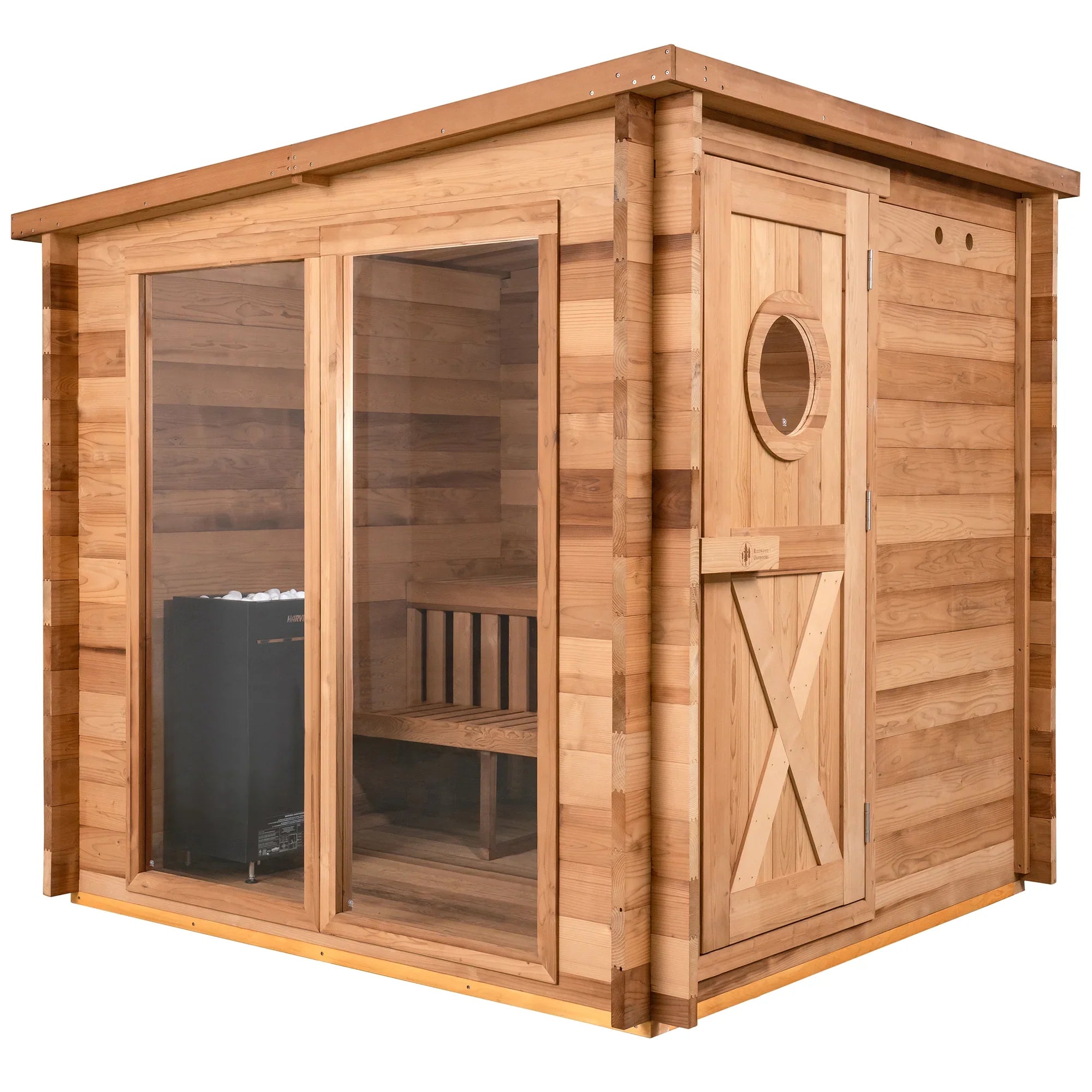
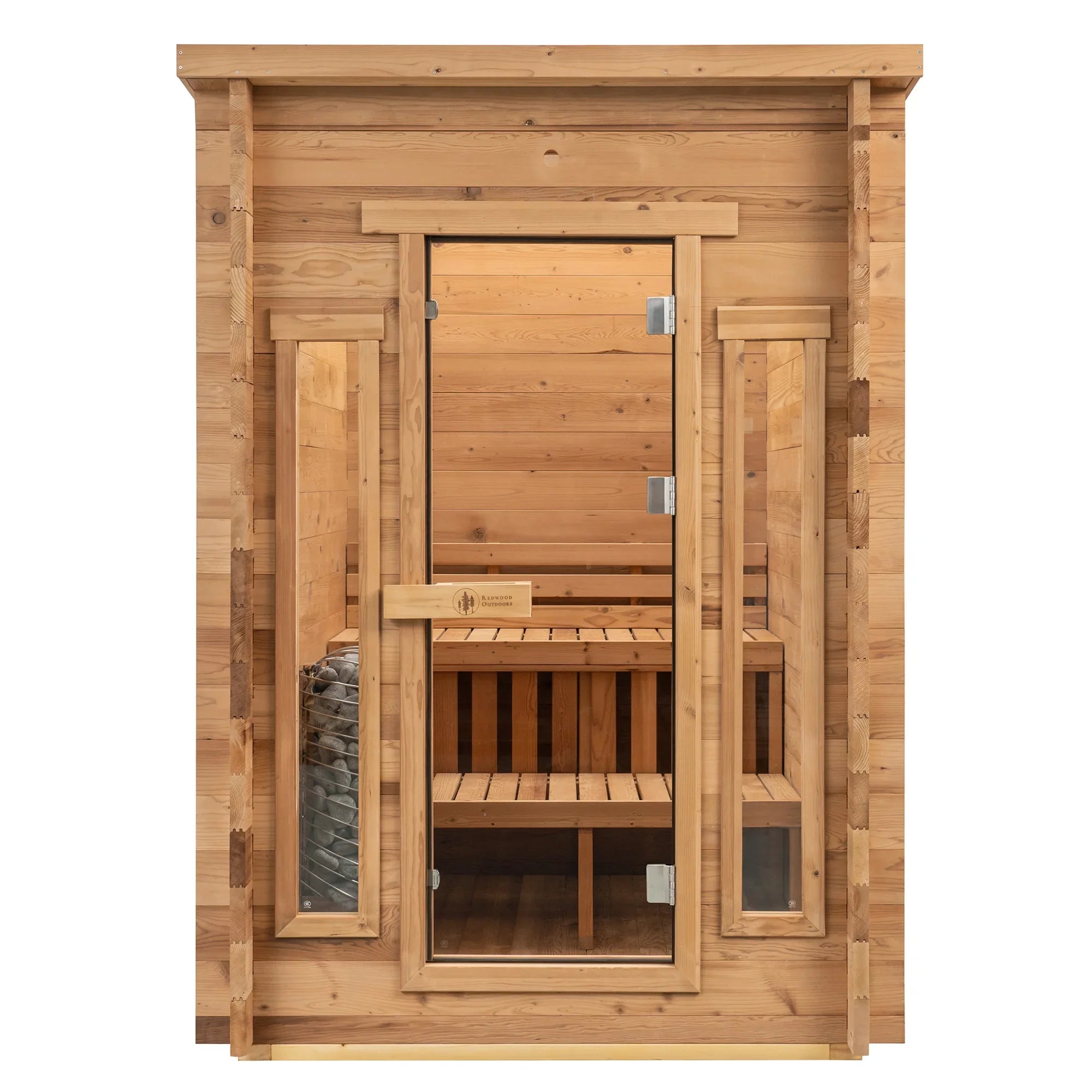
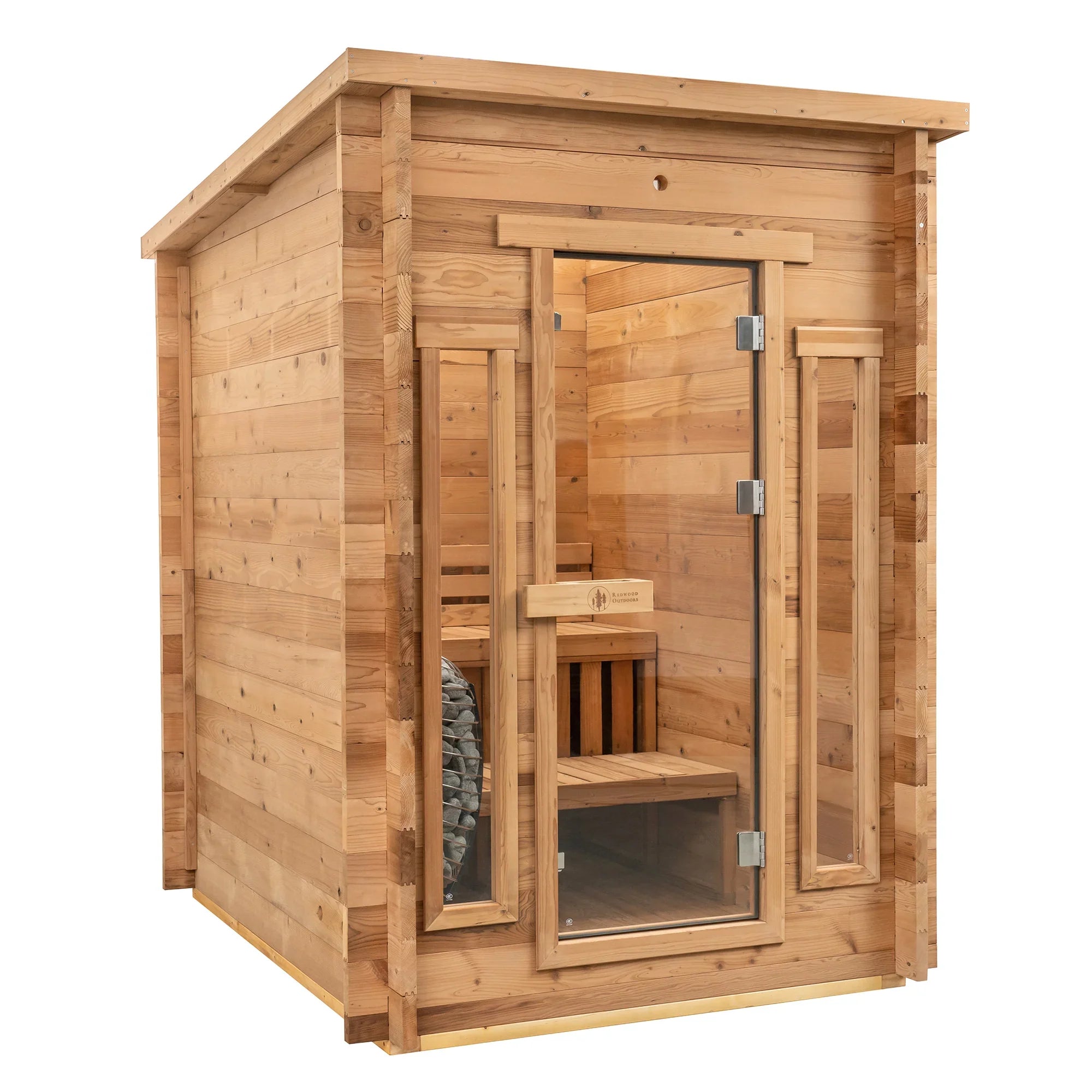
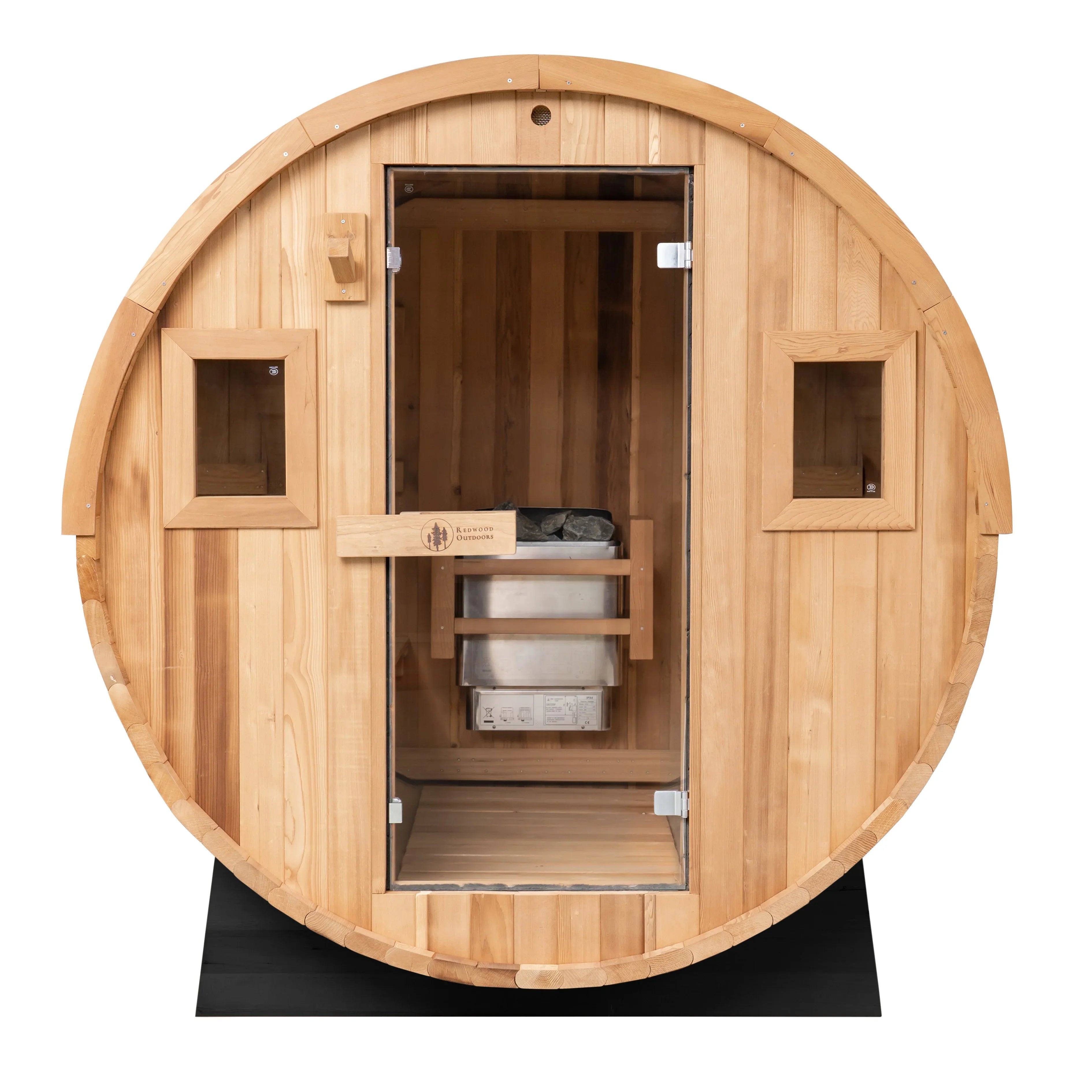
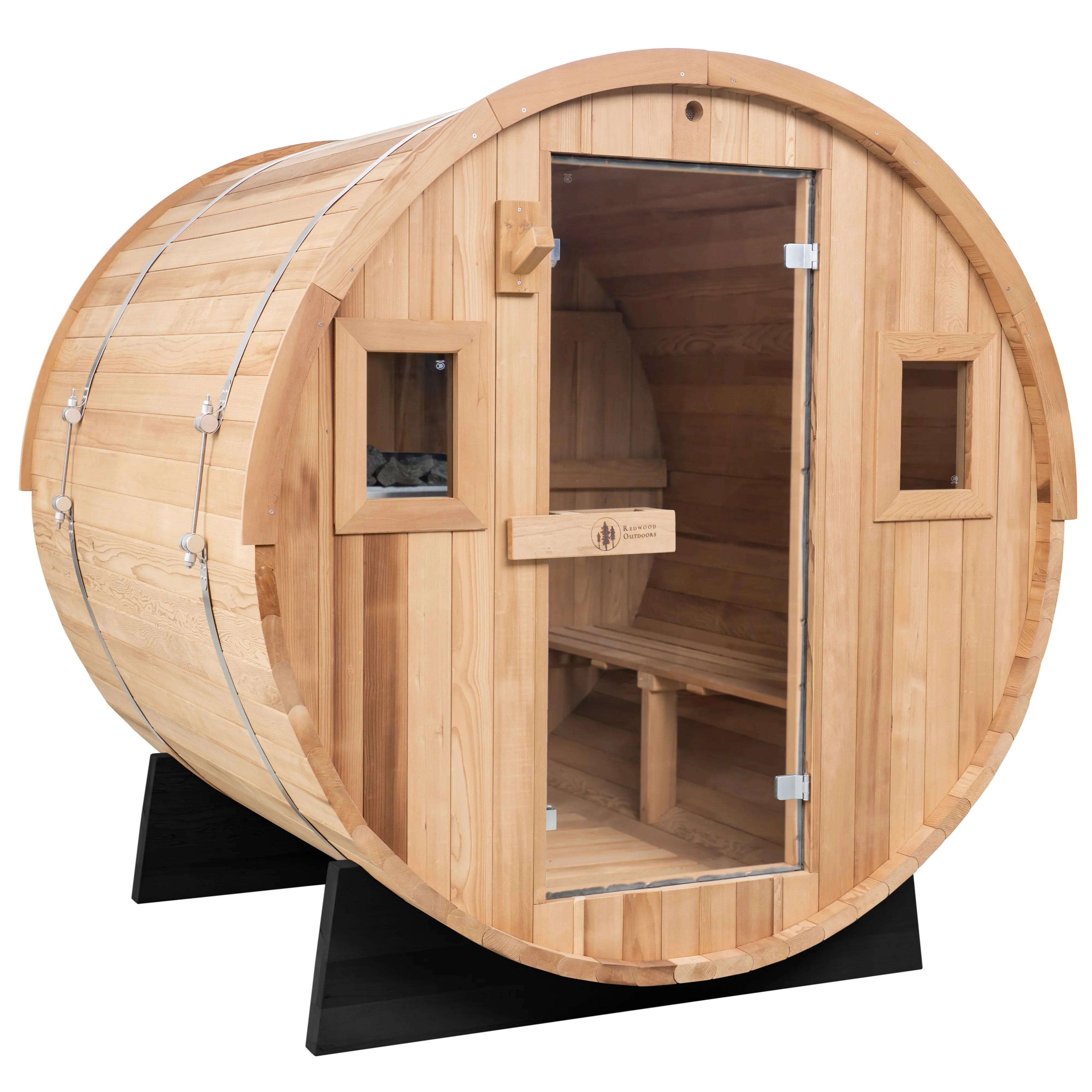
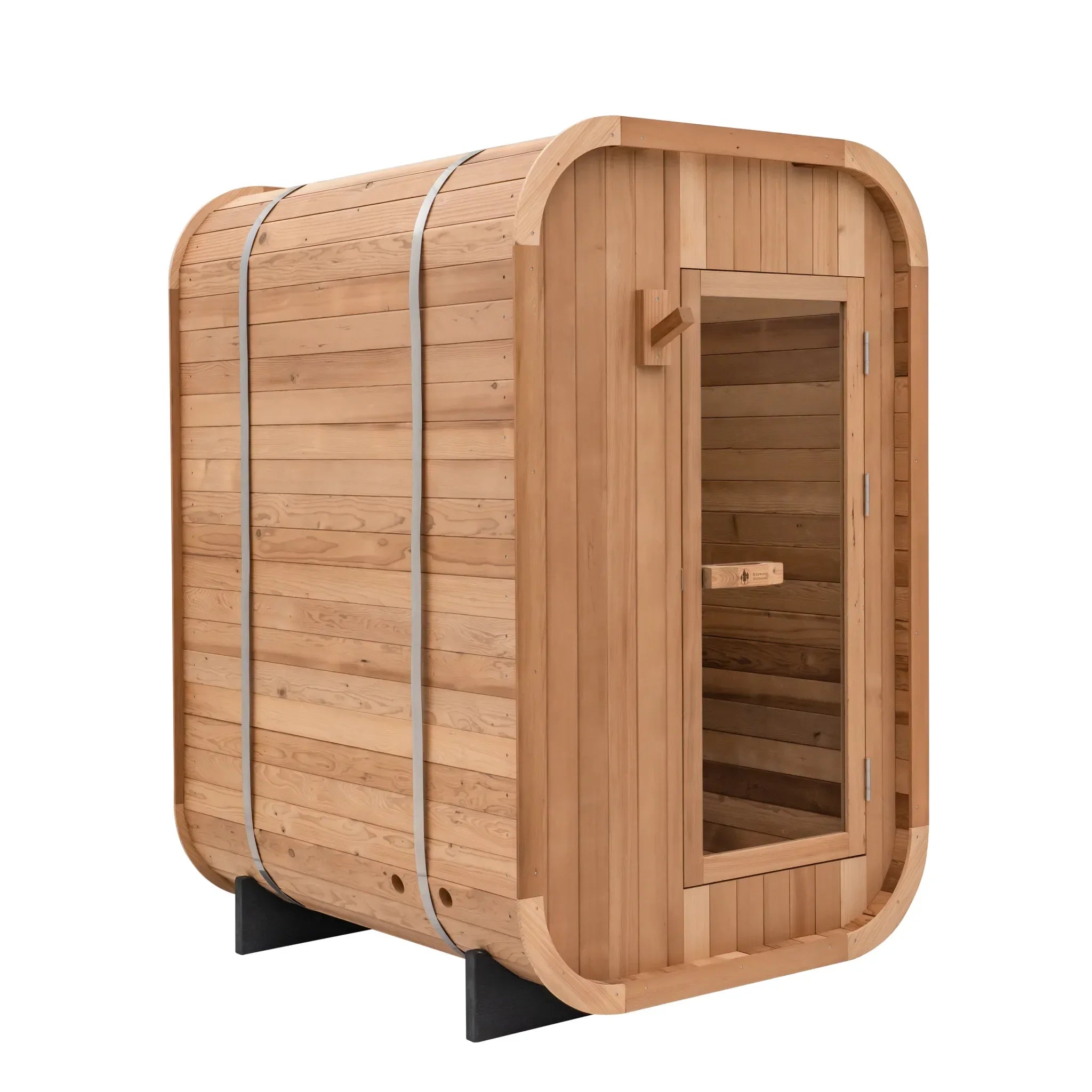
We carry Redwood Outdoors, a Pacific Northwest brand that builds traditional outdoor saunas in cedar and Nordic spruce, with a lineup that spans from the Duo (a compact two-person sauna for smaller spaces) through a 4-person Cabin, a 6-person Barrel, and the 8-person Garden cabin for serious group use. All three main formats are represented: barrel saunas, which use the round shape to create a faster heat cycle with less wasted airspace; traditional rectangular cabin designs, which offer more interior flexibility and multi-bench configurations; and infrared panel models, which operate at lower temperatures and use less power for people who want the recovery benefits without the full intensity of a traditional steam session. The right format depends on how you prefer to use it and who you're building it for.
Barrel, Traditional, or Infrared?
Barrel saunas heat faster than rectangular designs — the curved geometry means there's less air volume to heat, so a smaller heater reaches temperature more quickly. They're also compact: a two-person barrel fits roughly a 7 by 7 foot footprint. The tradeoff is interior flexibility; you can't stand fully upright in most barrel designs, and the bench configuration is typically fixed. Traditional rectangular saunas behave more like a room — you can stand, stretch out, and configure the benches. They take longer to heat but hold temperature more consistently once there.
Infrared saunas operate at 120 to 150°F rather than the 160 to 200°F of a traditional Finnish sauna, which some users prefer for extended sessions. The lower temperature makes them more accessible for daily use and easier on cardiovascular systems. The heating mechanism is different too — infrared panels warm the body directly rather than heating the air around you. Both are legitimate recovery tools; the choice is about the experience intensity you want. Patio Productions is ICFA-certified and has been outfitting outdoor spaces from our San Diego showroom and nationally since 2007. Every order ships free in the U.S. and arrives fully assembled. Our USA-based team offers complimentary consultations to help match the right sauna to your space and wellness goals.
Frequently Asked Questions About Outdoor Saunas
| What type of wood is best for an outdoor sauna? |
Cedar and Nordic spruce are the two most common materials in quality outdoor saunas. Cedar is naturally rot-resistant, handles temperature cycling well, and produces a pleasant aroma during use — it's particularly well suited for humid or coastal climates. Nordic (or Siberian) spruce is lighter, typically less expensive, and just as thermally efficient; it's the traditional material used in Finnish sauna construction. Both perform well long-term with minimal maintenance when properly installed outdoors. |
| Do outdoor saunas require a permit? |
Permit requirements vary by municipality. Most jurisdictions treat a freestanding outdoor sauna as an accessory structure — similar to a shed — and exempt units under a certain square footage (commonly 120 square feet) from permit requirements. Electrical work for the sauna heater almost always requires a licensed electrician and a permit regardless of the structure. Check with your local building department before installing; requirements vary significantly by city and county. |
| How hot does an outdoor sauna get? |
Traditional Finnish saunas typically operate between 160°F and 195°F (70–90°C). Humidity can be added by pouring water over heated rocks (kiuas), which raises the perceived temperature significantly even if the air temperature stays constant. Infrared saunas run cooler, typically 120–150°F, with the warmth delivered directly to the body rather than through the air. Both formats are effective recovery tools; the choice depends on the experience intensity you prefer. |
| How long does it take to heat an outdoor sauna? |
A well-insulated barrel sauna with a properly sized electric heater reaches operating temperature in 30 to 45 minutes. Traditional rectangular saunas take 45 to 60 minutes depending on size and insulation quality. Infrared models are faster — most reach usable temperature in 15 to 20 minutes because they don't need to heat the air volume of the room, just the infrared panels. Wood-burning sauna stoves take longer than electric but produce a heat quality many traditionalists prefer. |


