
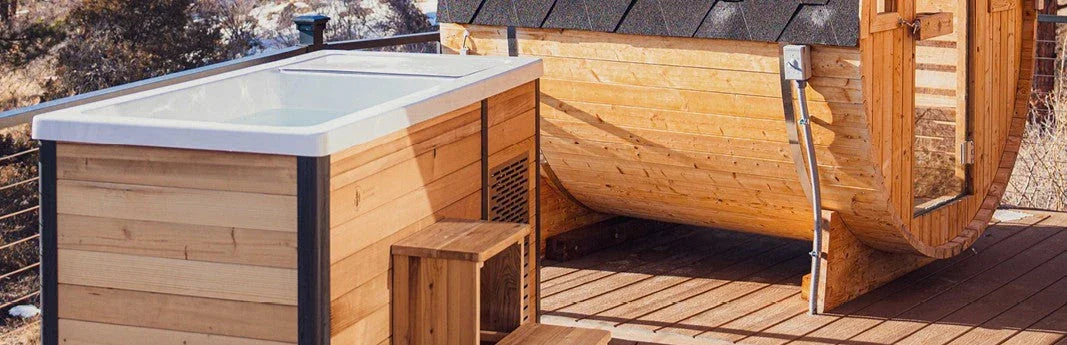
Outdoor Cold Plunges
Cold Plunges: The Other Half of the Practice
Cold water immersion has moved from niche athletic recovery into mainstream use fast enough that the equipment has struggled to keep up. A dedicated outdoor cold plunge is the solution that replaces the bag of ice in the bathtub, the cold shower, or the occasional trip to a facility — it's always at temperature, always available, and built for the outdoor environment where it naturally belongs. Part of our wellness collection, these units are designed to sit on a deck, patio, or wellness pad and deliver a reliable, controllable cold immersion experience at home.
The core hardware in a quality cold plunge is the chilling system. Basic models use insulation plus ice to maintain temperature; purpose-built cold plunges use an active chiller — a refrigeration unit that continuously maintains the set temperature without ice management. Active chilling makes the difference between a product you can use daily on schedule and one that requires planning around ice deliveries and temperature drift. Most active-chiller units also include filtration, ozone sanitation, or both, which keeps the water clean between sessions without draining and refilling after each use.
Temperature, Recovery, and Getting It Right
The cold exposure research centers on a few variables: temperature, duration, and timing. Most protocols for cold immersion land in the 50 to 59°F range (10–15°C), with sessions lasting 2 to 10 minutes. Colder is not necessarily better — 50°F for 5 minutes produces most of the physiological response. The norepinephrine release, vasoconstriction, and anti-inflammatory cascade that make cold immersion valuable happen quickly; the goal is not to endure extreme cold but to hit the therapeutic range consistently.
Timing matters for training adaptation. Cold immediately after strength training may blunt hypertrophy by reducing the inflammatory response needed for muscle protein synthesis. For recovery from aerobic work, injury, or as a daily mental reset, that tradeoff doesn't apply. Morning cold plunges have a compelling effect on alertness and mood that carries through the day. Evening sessions need more care around sleep timing for temperature-sensitive sleepers. Patio Productions is ICFA-certified and has been outfitting outdoor spaces from our San Diego showroom and nationally since 2007. Every order ships free in the U.S. and arrives fully assembled. Our USA-based team offers complimentary consultations to help you find the right cold plunge for your setup and goals.
Frequently Asked Questions About Outdoor Cold Plunges
| What temperature should a cold plunge be? |
Most cold plunge protocols target 50–59°F (10–15°C). This range produces the primary physiological responses — norepinephrine release, reduced inflammation, improved circulation — without requiring extreme cold that extends session time to achieve the same effect. Beginners often start closer to 60°F and move down as adaptation progresses. Below 50°F is used in clinical contexts but isn't necessary for general recovery and wellness use. |
| How long should I spend in a cold plunge? |
Research protocols typically use 2 to 10 minutes at 50–59°F. The physiological response activates quickly — most of the norepinephrine release and vasoconstriction happens in the first few minutes. Extending beyond 10 minutes at cold temperatures doesn't proportionally increase benefit and increases the risk of hypothermia for less adapted individuals. Start shorter (2–3 minutes) and work up as your cold tolerance builds. |
| Do cold plunges require much maintenance? |
Active-chiller models with built-in filtration and ozone sanitation require minimal day-to-day maintenance — primarily checking and adjusting sanitizer levels weekly and cleaning the filter periodically. Full water changes are typically needed every 2 to 4 weeks depending on usage frequency. Models without active filtration require more frequent water changes. The chilling unit itself is largely maintenance-free; follow the manufacturer's seasonal preparation guidance for climates with freezing temperatures. |
| Can a cold plunge stay outside year-round? |
Many cold plunges are designed for permanent outdoor placement, and in climates that don't drop below freezing, year-round outdoor use is standard. In cold climates, the chilling unit may need winterization or protection from sustained freezing temperatures — the same basic steps as winterizing a hot tub. Drain and protect the plumbing, cover or store the unit if temperatures will stay below freezing for extended periods, and follow the manufacturer's winterization instructions for your specific model. |


