Article: Mixing and Matching: How to Style Your Teak Patio Furniture with Other Materials
Mixing and Matching: How to Style Your Teak Patio Furniture with Other Materials
Matching patio furniture has its place, but it's no longer the only way to design a beautiful outdoor space. In fact, diversity may be the best design decision you can make. One of the biggest trends in outdoor living today is mixing materials—pairing teak with aluminum, wicker, rope, stone, and outdoor fabrics to create a patio that feels layered, personal, and thoughtfully designed. The key is in choosing the right foundation.
That's where teak outdoor furniture stands apart. Its warm natural tones, timeless appearance, and exceptional durability make it one of the easiest materials to build around. Whether your home leans modern, coastal, transitional, or somewhere in between, teak provides a versatile starting point that can evolve as your style changes.
After helping homeowners furnish outdoor spaces for nearly twenty years, we've found that the patios people love most usually aren't built from one perfectly matching collection. They're built around one exceptional material, then finished with complementary textures and carefully chosen accents that make the space feel like home.
In This Guide
- Choose Teak as Your Anchor Material
- Mastering Visual Weight, Proportion, and Scale
- Why Fully Assembled Furniture Makes Better Design Possible
- The Winning Combinations: How to Pair Teak with Other Materials
- What We See Homeowners Get Wrong
- Match Your Furniture to Your Home's Architecture
- Don't Forget About Evening Entertaining
- Choose Materials That Age Together
In this guide, we'll show you how to pair teak with other outdoor materials, explain the design principles professionals rely on to keep mixed-material spaces cohesive, and share a few lessons we've learned from designing thousands of patios over the years.
Choose Teak as Your Anchor Material

If you're mixing materials, one of them needs to take the lead.
Think of teak as the anchor that everything else revolves around. It gives the space consistency while allowing you to introduce contrast through your chairs, tables, fabrics, lighting, and accessories. Without that anchor, it's easy for a patio to feel like it was assembled piece by piece rather than designed as a whole.
This is why designers rarely give every material equal billing. Instead, they establish a dominant material first, then introduce supporting textures around it. A large teak dining table might become the centerpiece of an outdoor dining area, while aluminum dining chairs add a crisp contemporary edge. In a lounge space, a teak coffee table can visually connect an aluminum sectional with a pair of woven lounge chairs, tying the entire seating area together.
We come back to the 60-30-10 rule all the time. Traditionally it's used for color palettes, but it works surprisingly well with materials, too:
Let teak occupy most (60%) of the visual space through your primary furniture pieces. A secondary material—such as rope, wicker, or powder-coated aluminum—adds contrast without competing for attention (30%). The final layer comes from smaller accents like planters, lanterns, outdoor rugs, and cushions that introduce color and personality (10%).
The goal isn't to use more materials; it's to make every material feel intentional!
One of the biggest advantages of starting with teak is that it doesn't lock you into a single aesthetic. Fresh teak's rich golden tones pair beautifully with modern black aluminum, while weathered silver-gray teak naturally complements coastal blues, textured stone, and neutral performance fabrics. As trends change over the years, you can refresh the supporting pieces without replacing the furniture that matters most.
It's one of the reasons we often recommend investing in teak first and building the rest of the space around it. Good teak gives you the freedom to keep evolving the design of your outdoor space.
If you're unsure which combinations best suit your home, our complimentary Design Services can help. Our team works with homeowners every day to create personalized outdoor layouts, recommend coordinating materials and accessories, and even suggest landscaping elements that help pull the entire space together. It's a collaborative process built around your home, your style, and the way you actually live outdoors!
Mastering Visual Weight, Proportion, and Scale
One of the easiest ways to tell whether a mixed-material patio feels professionally designed has nothing to do with color, but visual weight.
Visual weight is exactly what it sounds like: how "heavy" or "light" a piece of furniture appears to the naked eye. A thick teak dining table naturally commands attention, as does an oversized stone fire table or a deep, fully upholstered sectional. None of these pieces are problems on their own, but placing too many visually heavy elements together can make even a large patio feel crowded.
The solution here isn't necessarily buying smaller furniture. It's creating balance.

Imagine a substantial teak dining table surrounded by equally substantial wood chairs. The craftsmanship may be beautiful, but your eye has nowhere to rest. Swap those chairs for slim black aluminum frames or woven rope seating, and the entire dining area begins to breathe a little more. You can relax. The teak remains the focal point, while the lighter materials introduce contrast without stealing attention.
The same idea applies throughout an outdoor lounge space. A large teak sofa can feel surprisingly airy when paired with woven accent chairs that allow light to pass through their frames. Concrete planters become less imposing when softened by ornamental grasses or cascading greenery. Note that heavy materials aren't something to avoid; you just need to make sure they have lighter companions.
Scale matters, too. A low-profile contemporary sectional typically looks most at home with similarly clean-lined coffee tables and lounge chairs. Pairing it with oversized traditional pieces or dramatically different furniture heights can make the arrangement feel disconnected, even if the materials themselves coordinate beautifully.
After designing thousands of outdoor spaces, we've noticed that homeowners often focus on matching finishes before considering proportion. In practice, the opposite is usually true. If the furniture shares a similar scale and silhouette, mixing materials becomes surprisingly easy. When the proportions fight each other, even matching collections can feel slightly off.
Why Fully Assembled Furniture Makes Better Design Possible
Most conversations about teak focus on the wood itself, but there's another aspect that deserves just as much attention: how the furniture is built.
Many outdoor furniture brands ship products flat-packed, leaving assembly to the homeowner. While that keeps shipping costs down, it also means the final product depends on dozens of bolts, fasteners, and perfectly followed instructions. Even a minor inconsistency during assembly can affect how furniture sits, aligns, or ages over time.
That's one reason all of our teak furniture arrives fully assembled.
Of course it's convenient. You won't spend your weekend sorting hardware or deciphering manuals. But the bigger advantage is structural. Factory assembly produces tighter joinery, more consistent alignment, and a stronger finished product that doesn't require the seasonal re-tightening that's common with knock-down furniture.

From a design perspective, that consistency matters! When you're intentionally mixing materials, small details become more noticeable. A chair that rocks slightly or a table that's subtly out of square can distract from an otherwise polished arrangement. Furniture that's professionally assembled from the start maintains the clean lines and balanced proportions that make mixed-material designs feel refined.
It's also one less thing to think about. Our White Glove Delivery service goes a step further by placing your furniture exactly where it belongs, so you're not wrestling with heavy dining tables or trying to position a sectional on your own. The result is an outdoor space that begins to take shape the moment it arrives, allowing you to focus on the enjoyable part: adding the finishing touches that make it uniquely yours!
The Winning Combinations: How to Pair Teak with Other Materials
Once you've settled on teak as your anchor, the fun really starts. You aren't just choosing furniture; you're choosing a vibe. Teak is incredibly versatile, so the material you pair it with has a huge influence on the personality of the space. Here are the combinations we keep coming back to.
Teak and Aluminum: The Modern Classic
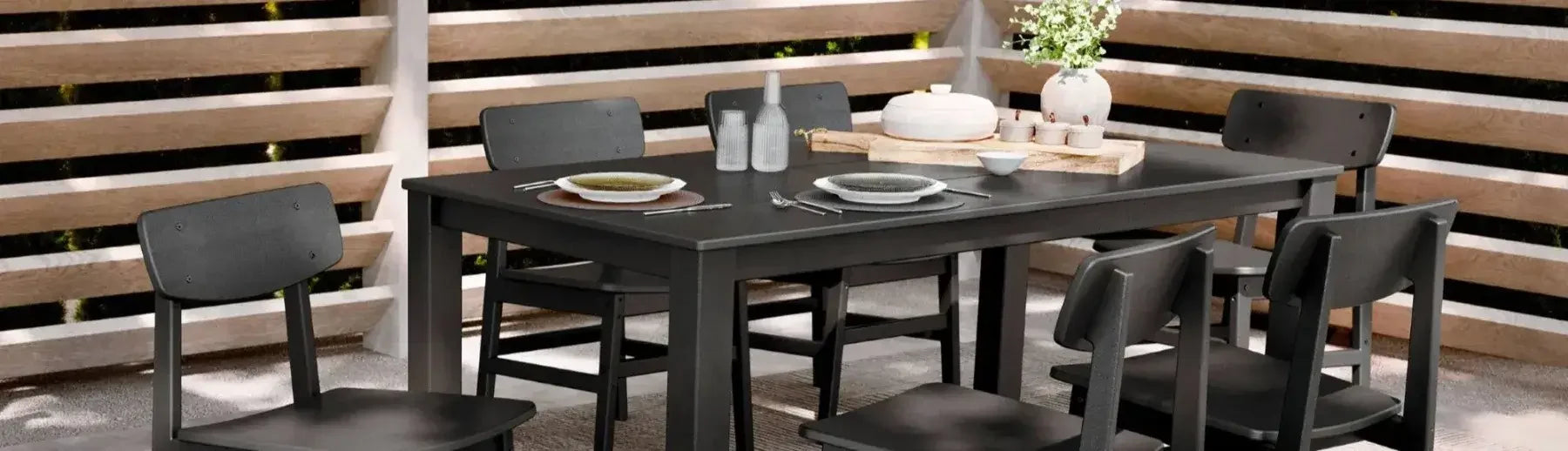
If you like clean lines and a little contrast, it's hard to beat teak and aluminum. Powder-coated aluminum—especially in charcoal, black, or crisp white—adds a modern edge that balances the warmth of natural teak. It's a combination we recommend all the time for contemporary homes, but it works just as well in coastal settings.
One of the biggest advantages of aluminum patio furniture is how visually light it feels. The frames don't block views or compete with the landscape. They almost disappear, letting the teak become the star of the show. Pair black aluminum chairs with a honey-toned teak dining table and you'll end up with a look that's clean, timeless, and surprisingly warm.
There's a practical benefit, too. Aluminum won't rust, so it complements teak's weather resistance just as well as it complements its appearance.
Teak and Wicker: Relaxed, Comfortable, and Timeless

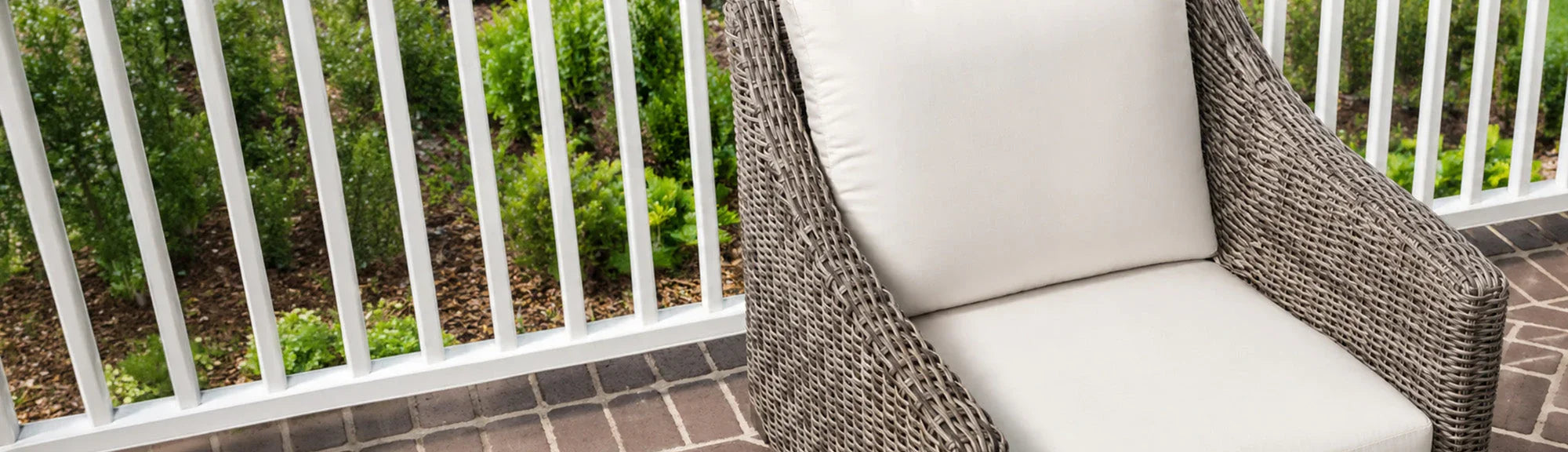
Teak and all-weather wicker create a completely different mood. The wood provides structure and permanence; wicker softens everything around it. If your goal is a comfortable outdoor room where people naturally gather for hours, this pairing is hard to beat.
We especially like it in lounge spaces. A woven sectional with a substantial teak coffee table feels balanced without looking overly coordinated. It has texture. It has warmth. Most importantly, it feels lived in.
Pay attention to color, though. Fresh golden teak looks beautiful with warm brown or driftwood wicker. Once teak begins developing its silver-gray patina, lighter gray weaves usually feel more natural. The transition looks effortless because the materials age together.
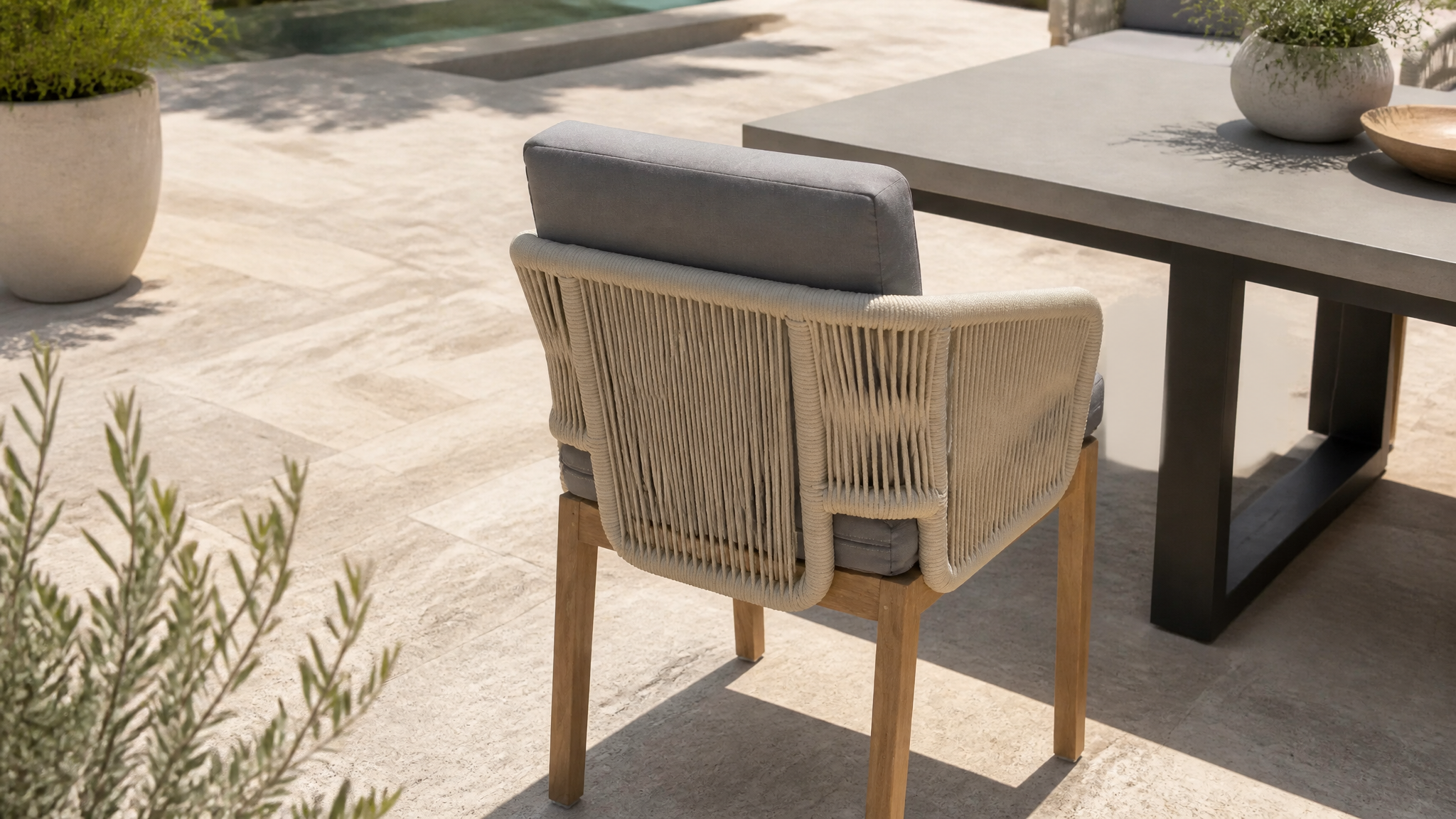
Teak and Rope: Light, Contemporary, and Surprisingly Comfortable
Rope furniture has become incredibly popular over the past several years, and we don't see that changing anytime soon. It brings a lighter visual weight than traditional sling or upholstered seating while adding texture that immediately catches your eye.
We love using rope accent chairs alongside teak tables because each material highlights the strengths of the other. The wood feels solid and grounded. The woven rope keeps everything feeling open and relaxed. It's a combination that shows up again and again in boutique hotels and luxury resorts for good reason. It just works.
What Our Designers Usually Recommend
After helping homeowners furnish patios for nearly twenty years, a few combinations have become clear favorites.
- For a modern backyard: A solid teak dining table with black aluminum dining chairs. Clean, architectural, and incredibly versatile.
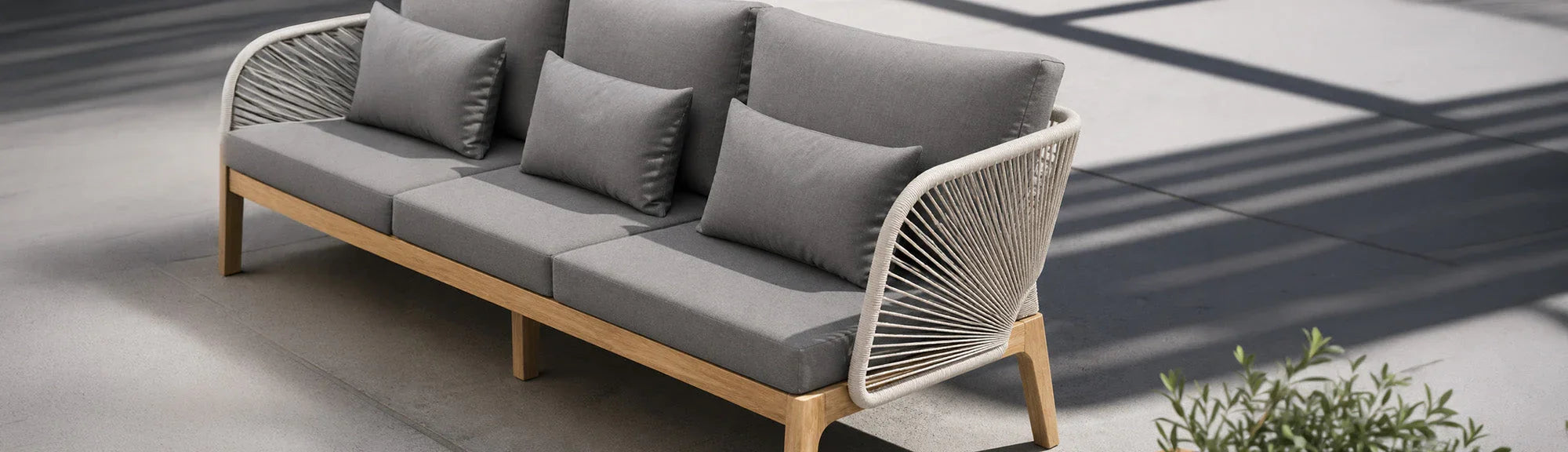
- For the ultimate lounge space: A deep teak sofa with two woven rope lounge chairs. The teak grounds the room while the rope keeps it feeling open.
- For smaller patios: A round teak bistro table with two wicker dining chairs. Comfortable, inviting, and easy to live with.
- For a quiet garden corner: A teak bench, oversized ceramic planters, and a couple of outdoor throw pillows. Simple. Comfortable. Hard to improve upon.
Still not sure? Our complimentary Design Services team helps homeowners put these combinations together every day. Sometimes all it takes is a second set of eyes.
What We See Homeowners Get Wrong
After nearly twenty years, we've noticed a few mistakes that come up again and again. Fortunately, they're easy to avoid once you know what to look for.
Mixing too many wood species. We love natural wood, but combining teak with cedar, acacia, eucalyptus, and other species usually creates more visual noise than visual interest. Every wood has a different grain pattern and undertone. Choosing one wood and mixing it with aluminum, wicker, or rope almost always produces a cleaner result.
Thinking only about today's maintenance. A patio isn't a one-year purchase. It's something you'll hopefully enjoy for a decade or longer. That's one reason we like pairing teak with premium aluminum, rope, and all-weather wicker. They tend to age at a similar pace and require similarly modest maintenance. If you're curious what that looks like over the long term, our guide on how long teak furniture lasts is a good place to start.
Ignoring the little details. Furniture isn't the only thing people notice. Black window frames, exterior lighting, cabinet hardware, planters, and even house numbers all contribute to the overall look. When those details complement your furniture, the entire patio feels more intentional.
Match Your Furniture to Your Home's Architecture

Great patios rarely happen by accident. In most cases, they're responding to something else; the architecture of the home.
Before we recommend furniture, we usually look at the house itself. Is it modern with black-framed windows? Traditional with painted brick? Coastal with white trim and natural stone? Those details should influence which material combinations you choose. You want the furniture to feel like it was planned alongside the house, not dropped in later.
Homes with lots of concrete, stucco, or stone usually benefit from the warmth that teak brings. The wood softens those hard architectural lines and keeps the patio from feeling cold. Aluminum makes an excellent supporting material here because it echoes the home's contemporary finishes without competing with the teak.
Traditional homes usually have a little more flexibility. Wicker adds softness to a brick exterior; rope seating introduces a more updated look without feeling out of place. The goal isn't to match your house perfectly—it's to make the patio feel like it belongs there.
One detail that's surprisingly easy to overlook is hardware. Black aluminum furniture often looks right at home when the house has black windows, dark lighting fixtures, or matte black door hardware. Those subtle connections aren't always obvious at first, but they help the entire outdoor space feel more intentional.
Don't Forget About Evening Entertaining
Most people shop for patio furniture during the day. Most people enjoy their patio in the evening.

That changes how you should think about materials.
Teak naturally reflects warm light, which is one reason it feels so inviting around sunset. Pair it with soft landscape lighting, lanterns, or warm-white LED fixtures, and the grain comes alive. Wicker and rope add another layer by casting subtle shadows that create depth around seating areas. It creates a mood you just can't get from a perfectly matched, flat-surface set.
Cool white lighting has the opposite effect. It can flatten natural wood tones and make the entire space feel a little sterile. If you're investing in quality materials, it's worth spending a few extra minutes thinking about how they'll look after dark. That's when your patio is doing some of its hardest work.
Choose Materials That Age Together
Mixing materials shouldn't mean mixing maintenance schedules.
We like combining teak with premium aluminum, rope, and all-weather wicker because they're all built for outdoor living. You aren't pairing a material that will last decades with another that needs constant attention or frequent replacement.
Teak can be left to weather naturally into its signature silver-gray patina, or it can be maintained to preserve its original golden color. Either approach is perfectly valid. The important thing is making that decision intentionally rather than thinking the wood is wearing out. It isn't.
The supporting materials are just as straightforward. Aluminum benefits from an occasional wash with mild soap and water. Wicker and rope can usually be cleaned with the same solution and a soft brush to remove pollen, dust, and everyday debris. Nothing complicated; just a little routine care a few times each season.
If you'd like to learn more about caring for teak over the long term, our Teak Outdoor Furniture Buyer's Guide covers everything from natural weathering to routine maintenance and long-term ownership.