Patio Furniture Buyer's Guide: All You Need to Know
So, you’re ready to start shopping for the perfect patio furniture? That’s great! Buying high-quality patio furniture is the best way to turn your home’s backyard into a beautiful, inviting, and fun outdoor space.
But, you’re probably figuring out pretty quickly that this can be a daunting task. There are so many options to choose from, and surprisingly, a LOT of different materials, brands, styles, and price ranges to consider.
At Patio Productions, we’ve been doing this for over a decade. And collectively, we have over 30 years of experience in the patio industry. We know all the best brands, we talk to the thought leaders in the industry, we even make and customize our own furniture. So we know EXACTLY what kinds of patio furniture you should be shopping for, and what kinds of questions you should be asking.
With that, we wanted to provide our Patio Furniture Buying Guide to our visitors free of charge. No cost, no e-mail signups. Just the best tips to buying patio furniture! Please note that this guide will be updated periodically.
If you have any more questions about buying outdoor furniture – or if you want to know what's new in 2025 – please don’t hesitate to contact us!
Frequently Asked Questions From Our Patio Furniture Buyer’s Guide
Begin with use, space, and materials. Decide how you’ll use the area (dining, conversation, modular lounging), measure carefully, then pick weather-ready materials that fit your climate. Patio Productions distills 30+ years of insights to help you match needs, style, and budget with confidence.
HDPE wicker, teak, and powder-coated aluminum. All-weather HDPE wicker is fadeproof and waterproof. Teak brings natural longevity and classic warmth. Powder-coated aluminum is rust-resistant and easy to clean. Wrought iron is ultra-tough but needs more care. We’ll guide you to the right balance for your climate and routine.
Eco-friendly, low-maintenance, all-weather. Recycled HDPE diverts waste, resists rot and fading, and needs only soap-and-water cleanups. Many wicker lines also use safer, sustainably made resins. We spotlight greener brands and materials so you can furnish responsibly without giving up style.
Aluminum is lighter; iron is heavier and classic. Powder-coated aluminum is rust-proof, easy to move, and simple to maintain. Wrought iron is heavier, great in wind, and timeless—but requires periodic waxing to prevent rust. We’ll help you pick based on look, care, and conditions.
Measure flow; match set to seating needs. Map furniture footprints, leave clear walkways, and size up for regular entertaining. Choose dining sets for meals, conversation or modular sets for lounging. In hot climates, plan shade with umbrellas to keep areas usable longer.
Regular cleanings, smart storage, right sealers. Use mild soap and water, clean spills promptly, and cover or store during severe weather. Seal wood and protect iron annually; powder-coated aluminum and HDPE need minimal care. Routine checks extend lifespan significantly.
Quality umbrellas, cushions, covers, and lighting. Pick market or cantilever umbrellas with marine-grade fabric (we recommend Sunbrella). Choose fade- and mildew-resistant cushions, add breathable covers and deck boxes, and layer outdoor lighting. Our team helps you build a comfortable, durable setup.
Types of Patio Furniture
When it comes to patio furniture, you’ve got options galore! Let’s go through the main categories:
- Patio table and chair sets: These range from simple bistro sets to full dining sets that seat 6-8 people comfortably. Great for eating al fresco!
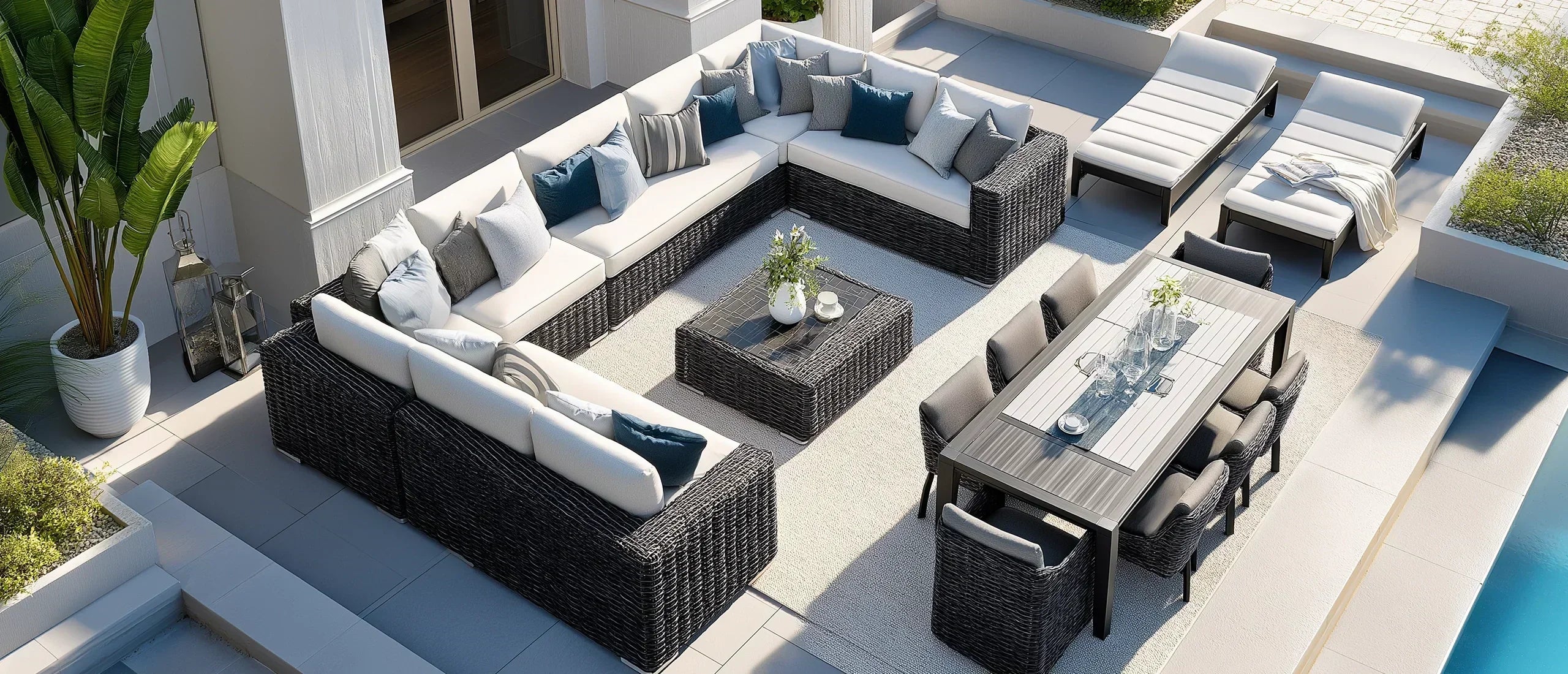
- Conversation sets: Love to host and chat the night away outdoors? Conversation sets with comfy sectionals, loveseats and ottomans are made for that.
- Modular sets: Mix and match modular pieces like chairs, loungers, tables and more to create your ideal layout. The versatility is awesome.
Now for patio chairs, your tush will thank you for choosing something cushy and supportive. I like rockers and cushioned chairs with plush pads. Woven and wicker options work with or without cushions, too.
When it comes to tables, you can buy them individually or as a set. Think about what you’ll use it for - dining, games, or drinks? Do you need an umbrella hole for shade?
Beyond chairs and tables, you’ve got benches, daybeds (yes, please!), gliders, swings and stools. The options won’t stop!
Materials Used in Patio Furniture

Let’s talk materials because this stuff takes weather beating day after day. You want something that lasts. Here are some of the most popular options:
- Wicker: Synthetic wicker made from HDPE is fadeproof, waterproof, and extra lightweight.
- Wood: Teak is the gold standard for its weather resistance and longevity. IPE and acacia are other great patio wood options.
- Aluminum: Powder-coated aluminum frames are rustproof, durable and easy to clean.
- Wrought Iron: Extremely durable but needs more maintenance to prevent rust. Wrought iron has timeless beauty and unmatched strength.
- Plastics: Recycled HDPE and poly-resin require little maintenance. While affordable, they lack the elegance of natural materials.

No matter which material you choose, be sure it’s designed to withstand the climate and elements in your area. Durability is key for patio furniture!
Below, we will briefly provide some buying tips for different furniture material types, and also link off to the full buying guides for those materials. Check them out!
The Recycled Plastic Patio Furniture Buyer’s Guide
Want to furnish your patio with sustainability in mind? The good news is patio furniture brands offer so many eco-friendly designs:
- Look for pieces made from recycled HDPE plastic. This reuses post-consumer plastics that would otherwise end up in landfills.
- Wood options like teak and IPE are renewable resources grown responsibly through forest stewardship programs.
- Choose aluminum over high-impact metals like iron. Aluminum is highly recyclable.
- Search for sustainably produced poly-resin wicker made without toxic substances like lead and bromine.
- Support brands that use recycled materials, energy-efficient manufacturing, ethical labor practices.
By choosing eco-conscious patio furniture, you help reduce carbon footprint on the planet. And green designs blend beautifully with outdoor living spaces!

Composite Patio Furniture

Park 33" x 70" Harvester Picnic Table
From $1,059.00

Park 72" Picnic Table
From $1,659.00

Park 53" Octagon Picnic Table
From $2,199.00

Park 36" Round Picnic Table
From $1,259.00

Park 72" Harvester Backless Bench
From $569.00

Park 48" Backless Bench
From $419.00
Click to Read the Full Plastic Patio Furniture Buyer’s Guide
The Outdoor Wicker Furniture Buyer’s Guide
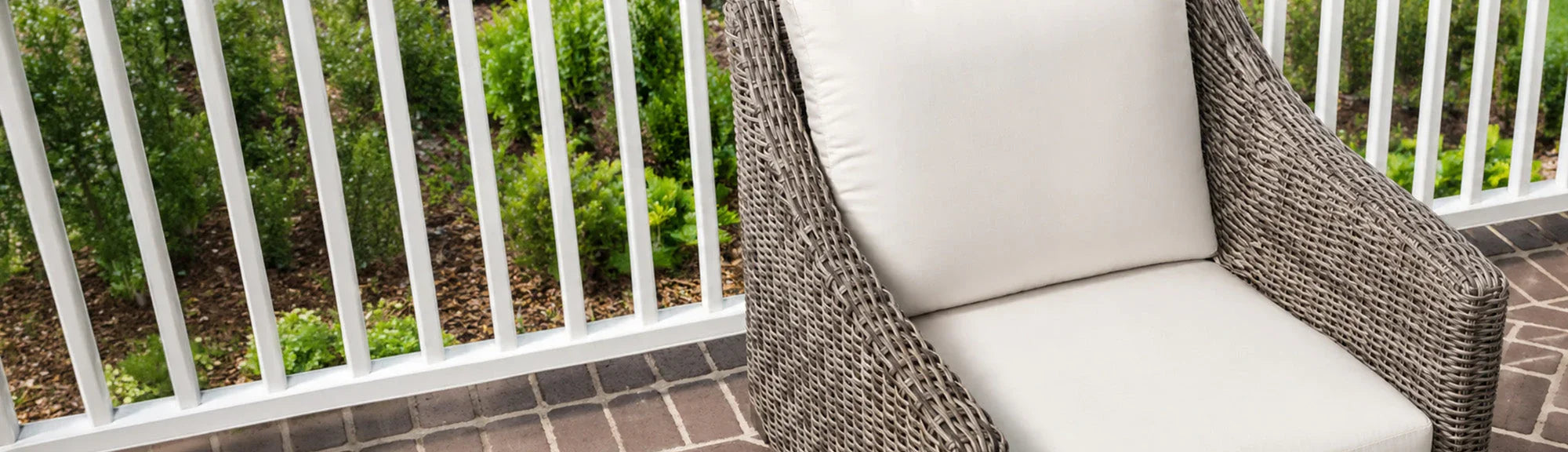
Synthetic, all-weather outdoor wicker is the most popular patio furniture material today, and for good reason. It’s a far cry from real, natural rattan wicker - the stuff you see in a lot of plantation-style homes. Natural rattan is better suited to indoor use, where the plant fibers won’t fray and soften. For that rattan look, but with the toughness necessary to withstand year-round outdoor exposure to sun and weather, outdoor wicker is your best bet.
Outdoor wicker goes by many names - synthetic wicker, resin wicker, all-weather wicker, HDPE wicker, and on and on. It’s mostly all the same stuff. Outdoor wicker is a plastic polymer that simulates the look, and often the texture, of real rattan. Because it is made of a versatile plastic, high quality all-weather wickers resist fading in direct sunlight, and are completely waterproof and snowproof.
Some manufacturers sell ‘outdoor wicker’ furniture that uses PVC wicker. This is a much cheaper option, but we do NOT recommend it. PVC turns brittle in direct sunlight and under constant exposure to water and heat, which completely ruins the longevity of your furniture. For patio furniture that lasts, make sure you choose HDPE wicker. HDPE is nonporous, very pliant, and is UV treated to be all but completely fade-proof. It’s also lighter than PVC, so it’s easier to rearrange your furniture!
Among HDPE wickers, you’ll usually encounter one of two scenarios: in the first, the resin wicker is molded, and then dyed to change its color to the brown, white, or gray hues we commonly see. In this case, you get the durability of HDPE wicker, but the dye is a cheaper method of coloring the final product, and is more prone to fading. Additionally, if any of the resin wicker strands are scratched or cut, the inner material color (usually white or off-yellow) will show through.
In the second scenario, the resin wicker is actually molded by creating individual plastic fibers made from a specific color plastic, and these fibers are then molded together into the wicker “strands” you see, which are then woven into a satisfying pattern over the furniture frame. This process is much more time consuming and results in a more expensive product, but it also means that if you ever scratch your wicker patio furniture, the ‘inner color’ will be uniform with the outer color throughout. Also, this style of HDPE wicker is particularly fade-proof, because the material is not superficially dyed. The color you see is the actual color of the material itself.
As far as maintenance goes, keeping your synthetic wicker in top shape is as easy as can be. It is by far the most “set and forget” of the common outdoor furniture materials. All you need to do to keep it in perfect shape is to just wash it down with a damp cloth and a light application of dish-soap from time to time. This high level of convenience is, in our opinion, the best selling point of synthetic wicker over other patio furniture materials.
Key things to look for when you’re shopping for synthetic wicker furniture:
- Made from HDPE, and not PVC
- Heavy Gauge aluminum frames, avoid steel and iron frames
- Minimal assembly required - frames that are welded in a factory are stronger and longer-lasting than frames that need to be screwed together by the end user.

Overall, resin wicker is a great choice for your patio furniture. It is:
- lightweight
- comfortable, even without cushions
- fadeproof
- weather resistant
- kid and pet friendly
- very customizable - available in a broad range of styles, patterns, colors, and thicknesses


Click to Read the Full Patio Wicker Furniture Buyer’s Guide
The Aluminum Patio Furniture Buyer’s Guide
Aluminum is currently the most popular metal for patio furniture. Aside from being a common frame material for outdoor wicker and wood patio sets, cast aluminum furniture is also a popular option for the ‘wrought iron’ look without the wrought iron price.
Aluminum is lightweight, easy to care for, and all but completely rust-proof - it is by far the most weather resistant of the metals.
Aluminum is fairly easy to work into various shapes and styles, leaving the consumer with a lot of aesthetic options to choose from. Cast aluminum can be shaped into almost any form, in a process similar to the wrought iron shaping method.
There are essentially two types of aluminum outdoor furniture: extruded aluminum, and cast aluminum. “Extruded” aluminum is hollow, whereas cast aluminum is solid. Extruded aluminum is shaped by hand or by a machine, whereas cast aluminum is poured into a mold. The main qualitative differences between the two are:
- extruded aluminum is lighter, but also more prone to denting and bending
- cast aluminum is heavier, but also sturdier
- cast aluminum allows for more detailed, intricate shapes and patterns
- extruded aluminum tends to be less cost-prohibitive
Both are perfectly viable options, so long as you are aware of the differences. And again, make sure that any aluminum patio furniture you are looking to buy is powder-coated to maximize its lifespan and its resistance to inclement weather.
Caring for aluminum furniture is relatively easy. Aluminum does not rust, though it does oxidize in the presence of high salt content and other pollutants, so if you live near a coast or in a high-pollution area you may need to clean and care for your aluminum furniture more frequently. As long as the aluminum is powder-coated, a lot of these averse effects are mitigated anyway. One to three times per year, we recommend wiping down your aluminum furniture with a damp, non-abrasive cloth. No soap or sealer necessary. You can just hose it off as well, but you risk missing some of the dirt that may have accumulated on the frame over time.

Overall, aluminum is a great choice for your patio furniture. It is:
- lightweight
- very strong
- rustproof and weather resistant
- very easy to clean and care for, provided it is powder-coated
- beautiful - cast aluminum allows for all sorts of creative styles, and even extruded aluminum sets can be pretty sleek and unique


Click to Read the Full Aluminum Patio Furniture Buyer’s Guide
The Wrought Iron Patio Furniture Buyer’s Guide
Wrought iron is the oldest patio furniture material in this guide. For centuries, wrought iron has been used for tools, machines, and furniture. It is one of the toughest and most durable metals, and it can be shaped or molded into all sorts of beautiful shapes. Most wrought iron furniture is molded by machines these days, though if you want hand-hammered iron furniture, you can still find that in many boutique workshops.
When comparing the two major patio furniture metals, wrought iron tends to be more expensive than aluminum. It is also heavier and sturdier, making it less prone to denting and less likely to be blown around in high winds.
Unlike aluminum furniture though, wrought iron is NOT rust proof. It requires more attention and maintenance. But if you are willing to put the time into keeping it clean and cared for, your wrought iron furniture will truly last a lifetime. Plus, while cast aluminum molding methods make it so aluminum furniture can be quite ornate and beautiful, there’s just something about genuine wrought iron garden furniture that can’t be denied - it is the original “fancy furniture” material and it still looks timeless.
Caring for wrought iron furniture is a bit more complicated than aluminum, but taking the extra time and effort will reward you in the long run. Once per year, ideally prior to the rain season, you will want to wipe your wrought iron furniture with a damp non-abrasive towel and diluted dish soap, and then seal the furniture with applied spray wax. Thoroughly waxing your wrought iron furniture is essential to protect it from rain damage and rust.

While we tend to prefer aluminum for its convenience, wrought iron is a great choice for your patio furniture. It is:
- the most durable outdoor metal on the market
- GREAT for windy areas
- very beautiful and ornate - a classic, artisanal look
- fadeproof
- with proper maintenance, it will outlast most other materials
Click to Read the Full Wrought Iron Patio Furniture Buyer’s Guide
The Teak Outdoor Furniture Buyer’s Guide
Teak is a wood patio furniture favorite thanks to its natural weather resistance and beauty. Here’s what to look for:
- Grain patterns: Tighter grains have more oils, boosting durability.
- Color variations: Teak ranges from blonde to caramel. Color doesn’t affect quality.
- Grades: Grade A teak has few knots and defects. Lower grades have more variations.
- Maintenance: Unfinished teak will weather to a silvery gray. Sealing retains golden color.
- Origins: Teak from Indonesia and Central/South America offers comparable quality.
- Assembly: Mortise and tenon joinery creates sturdy, long-lasting furniture joints.
While pricier than other woods, teak’s longevity and resilience make it a worthwhile investment for gorgeous outdoor furniture.