
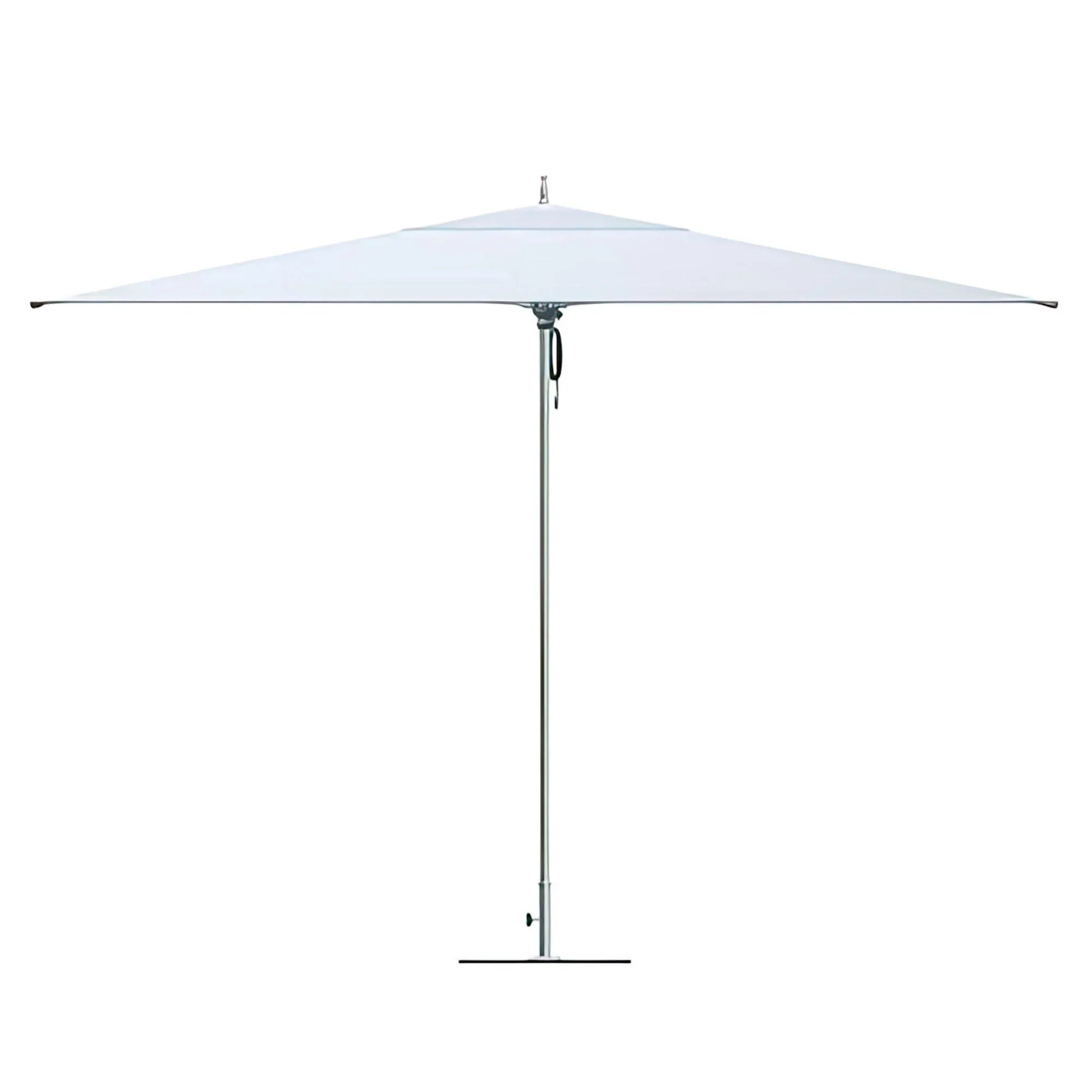
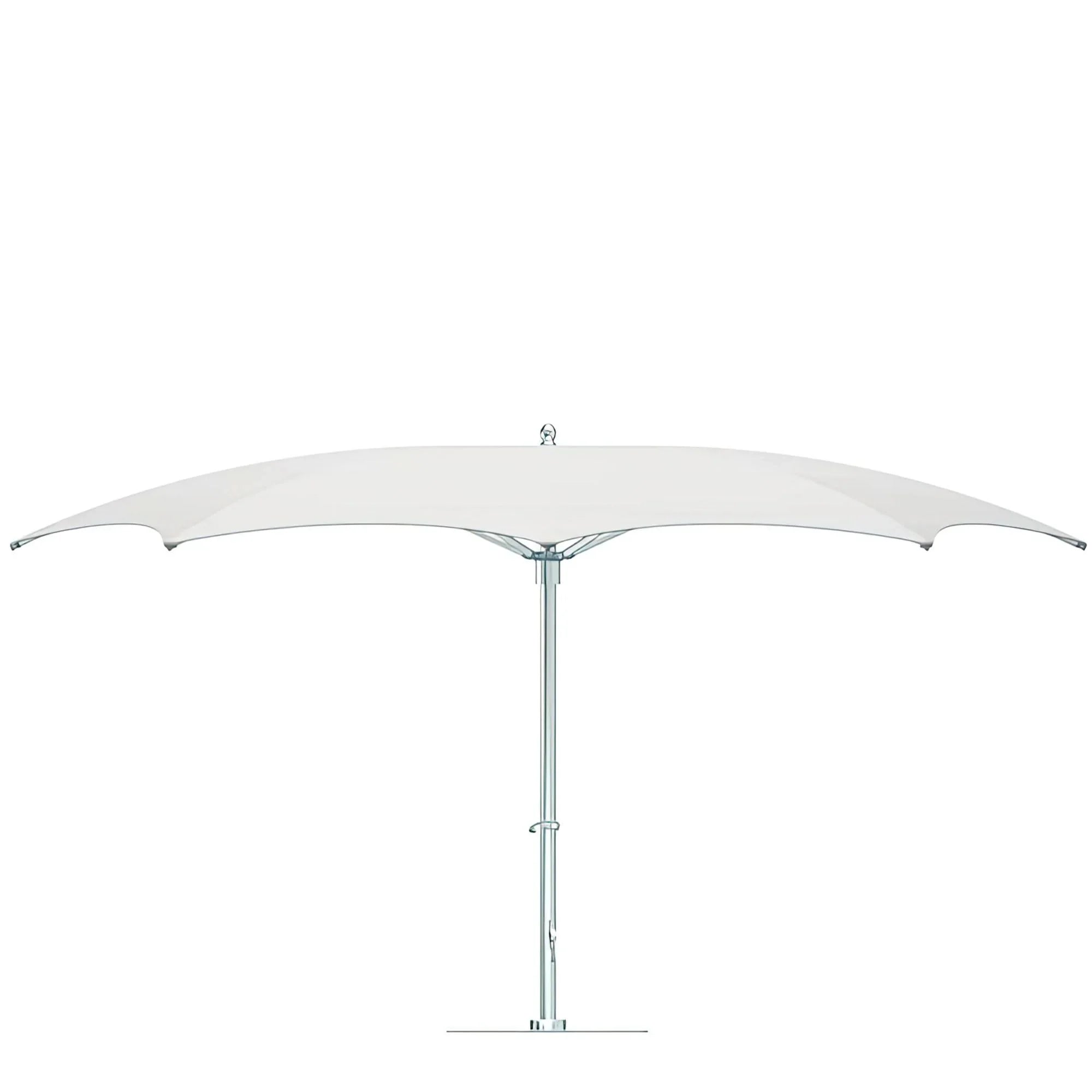
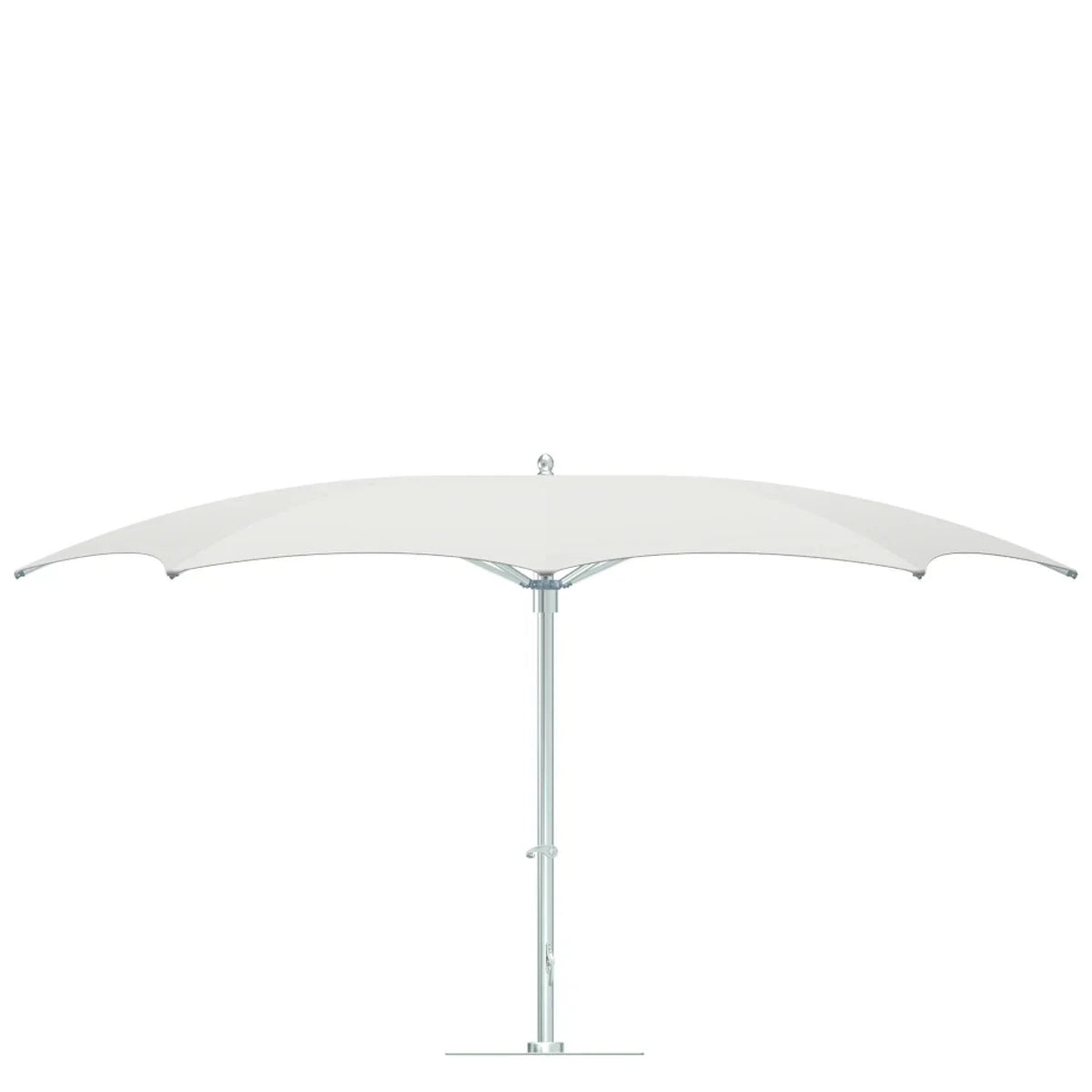
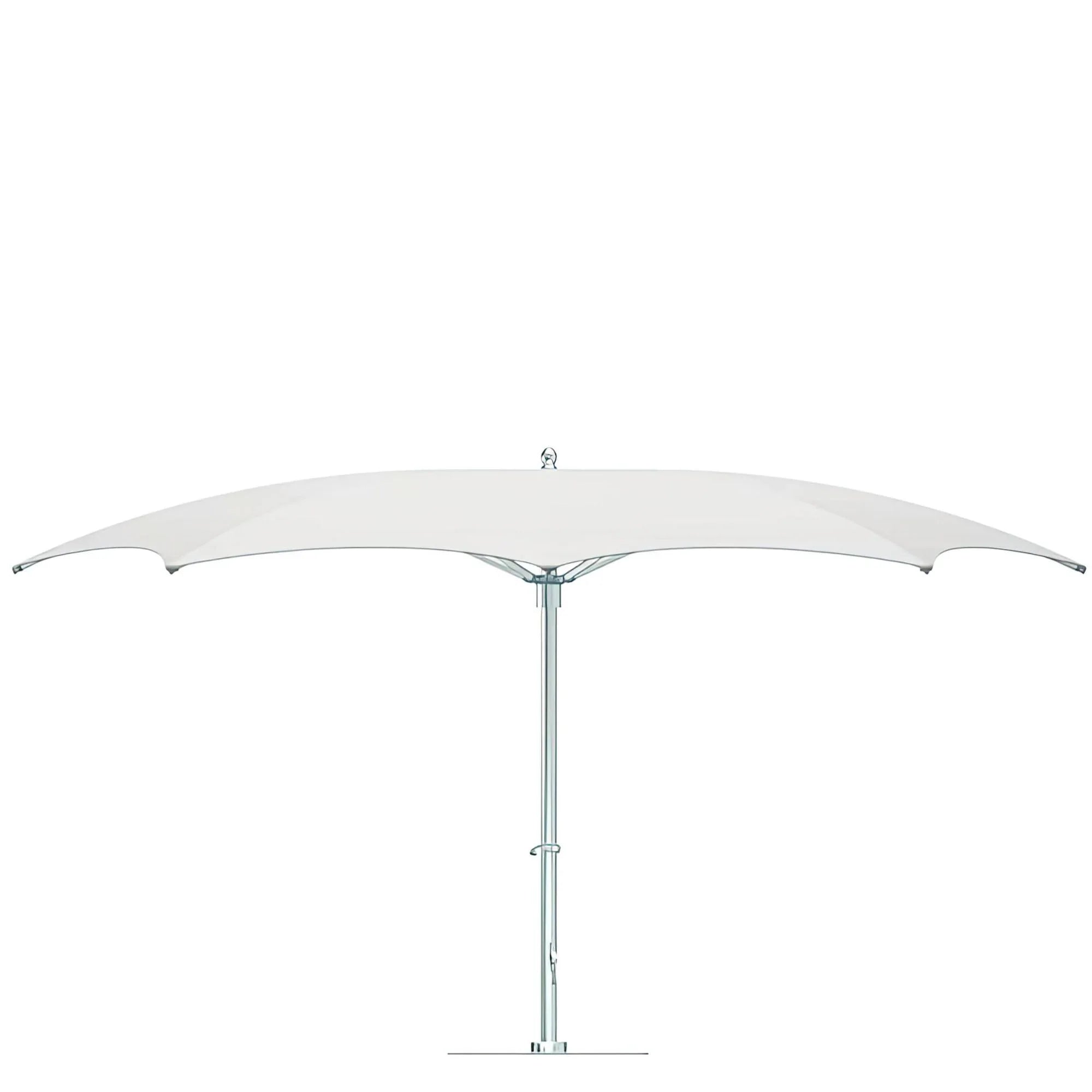
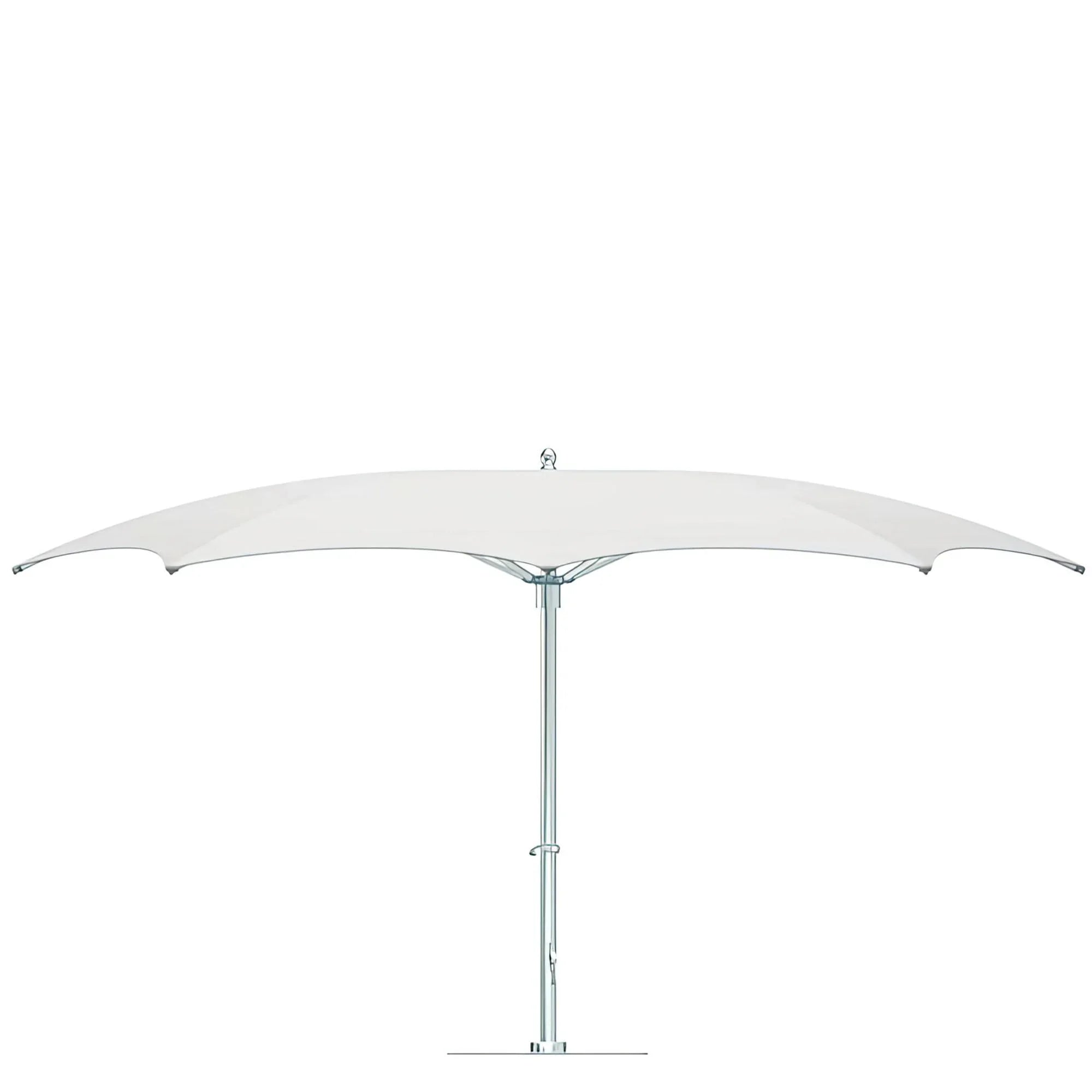
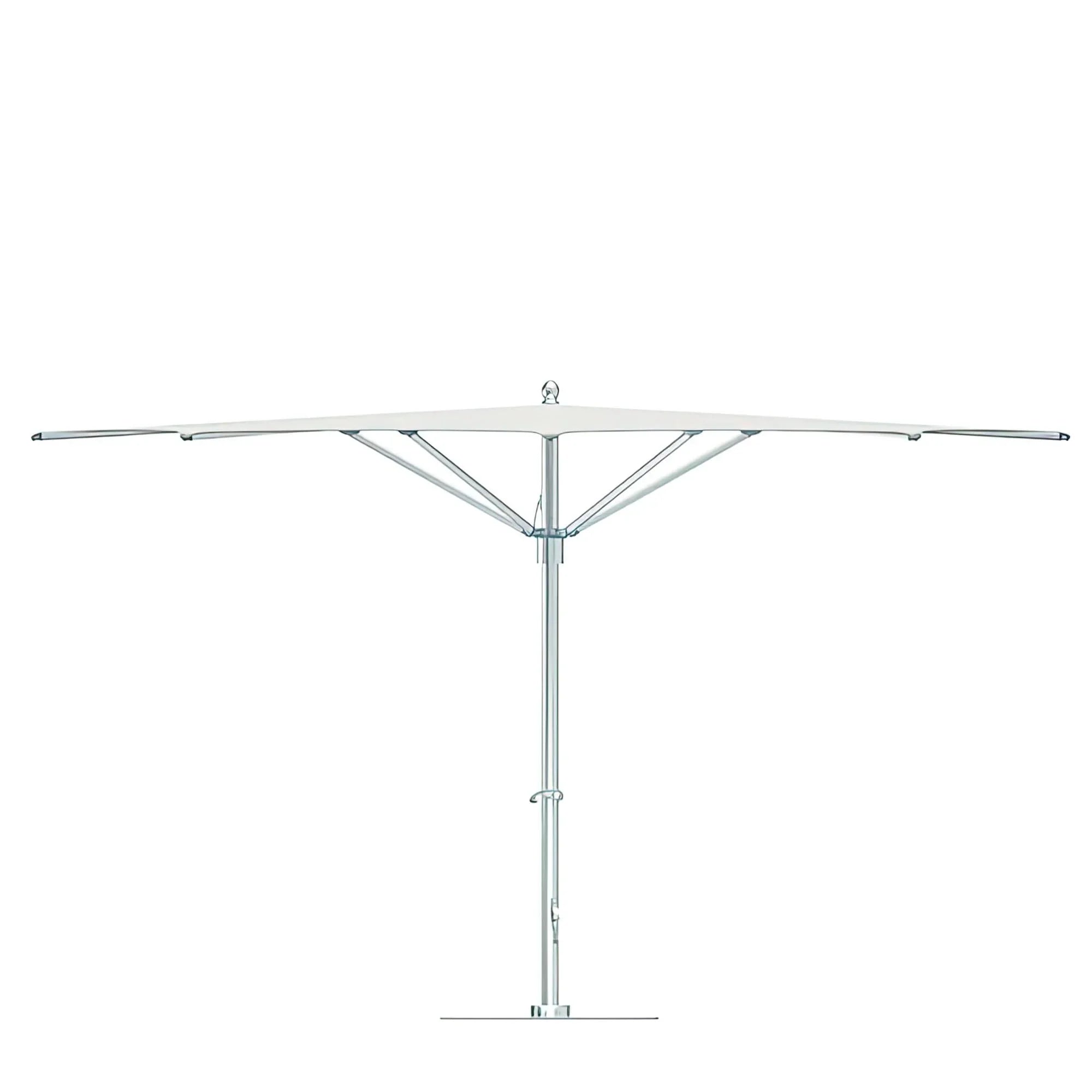
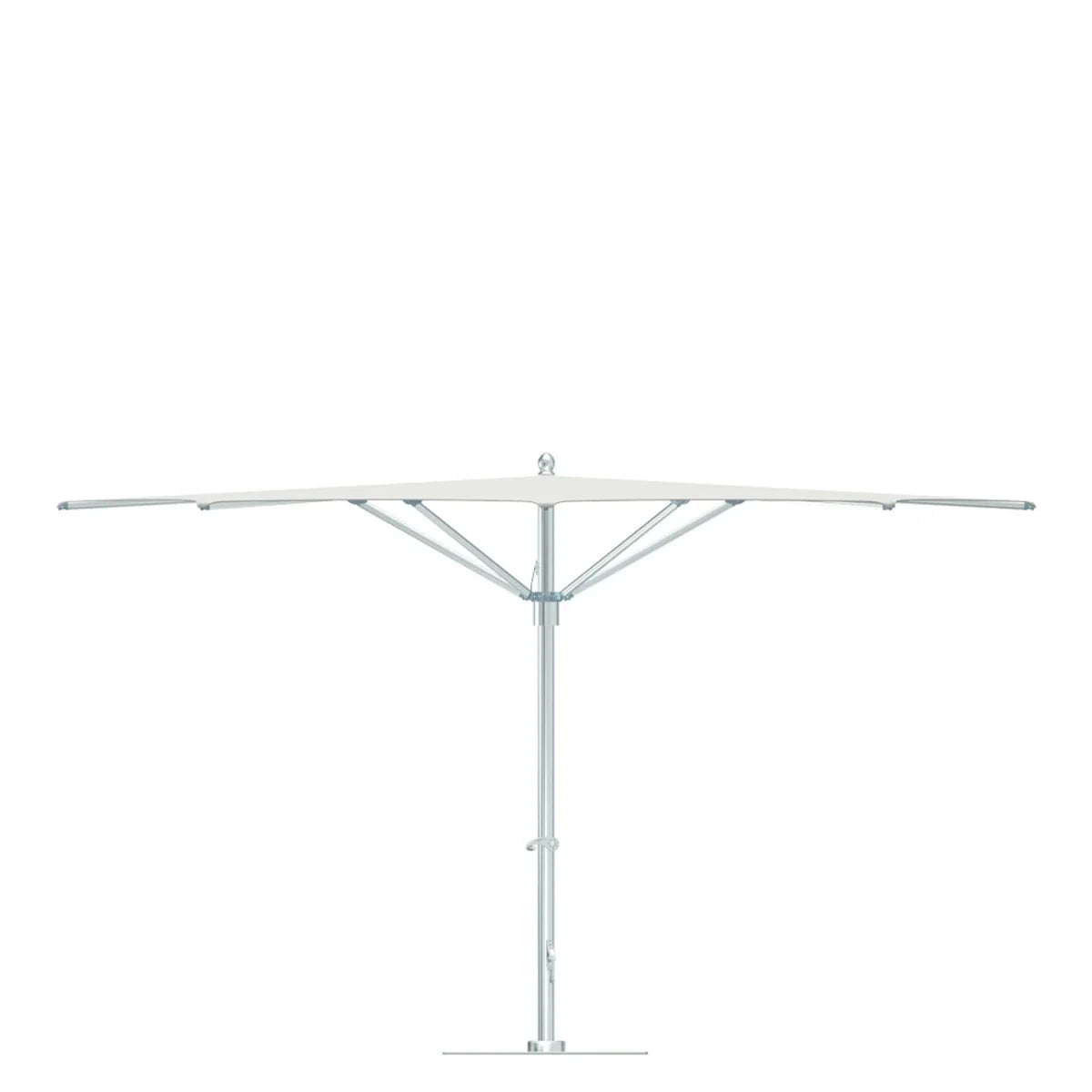
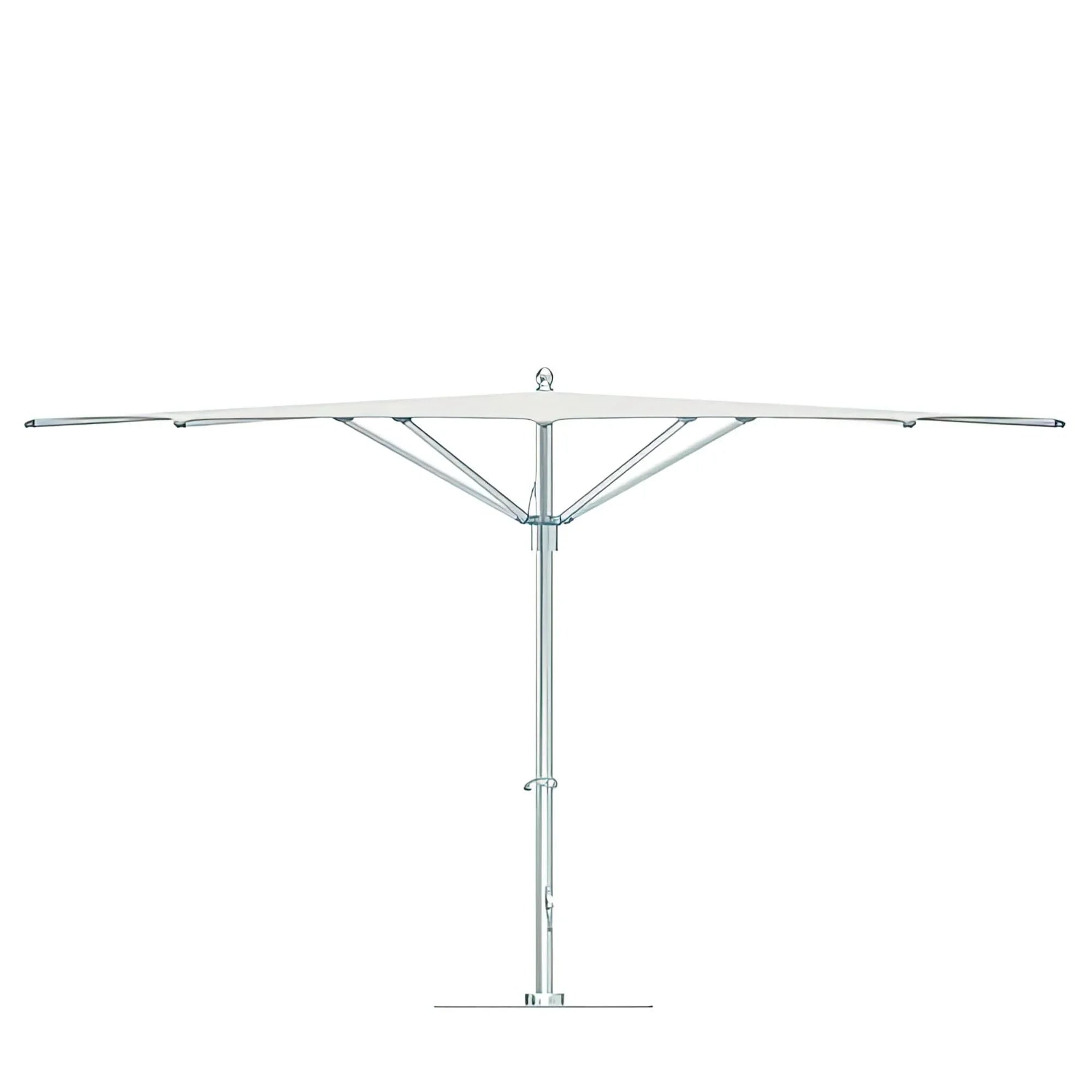
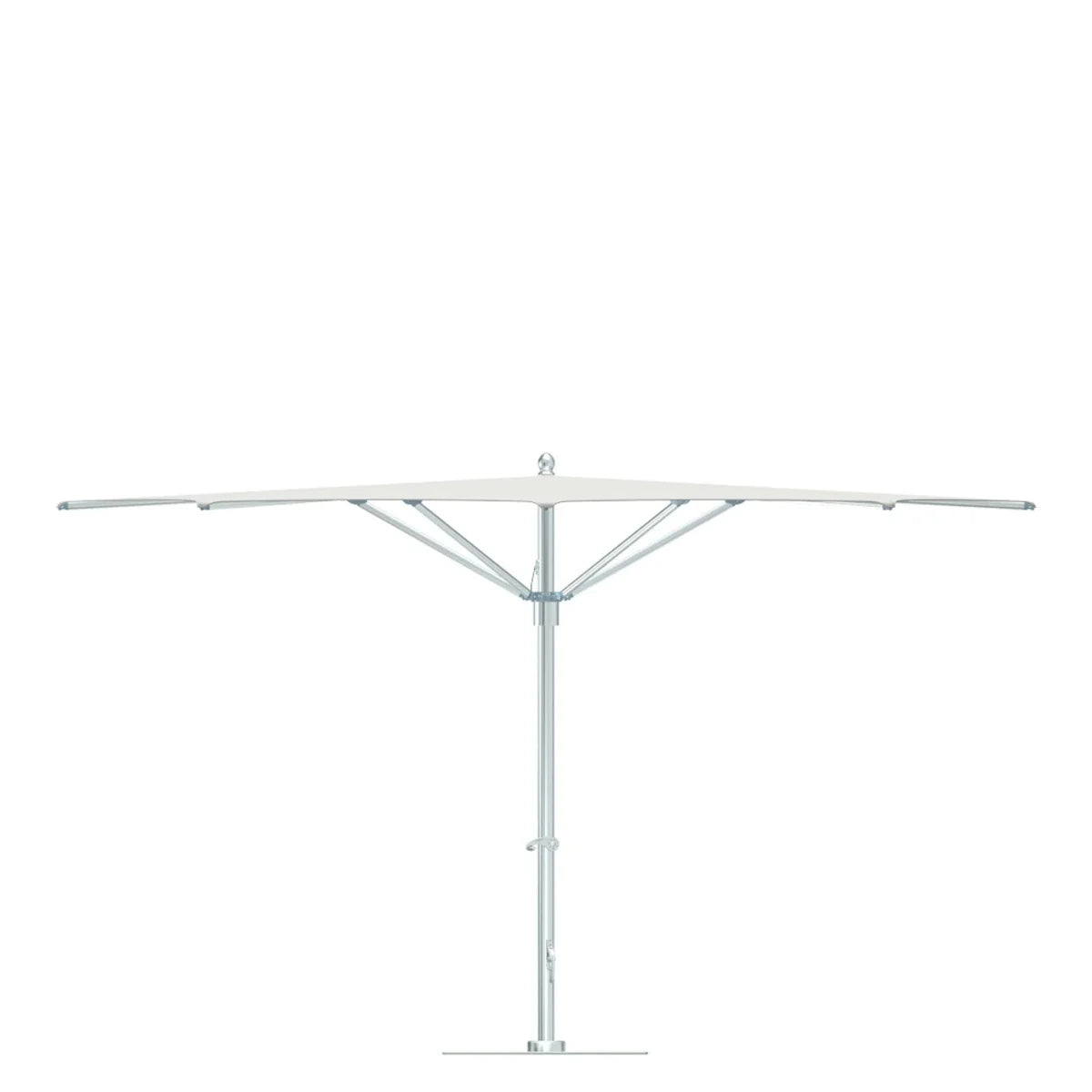
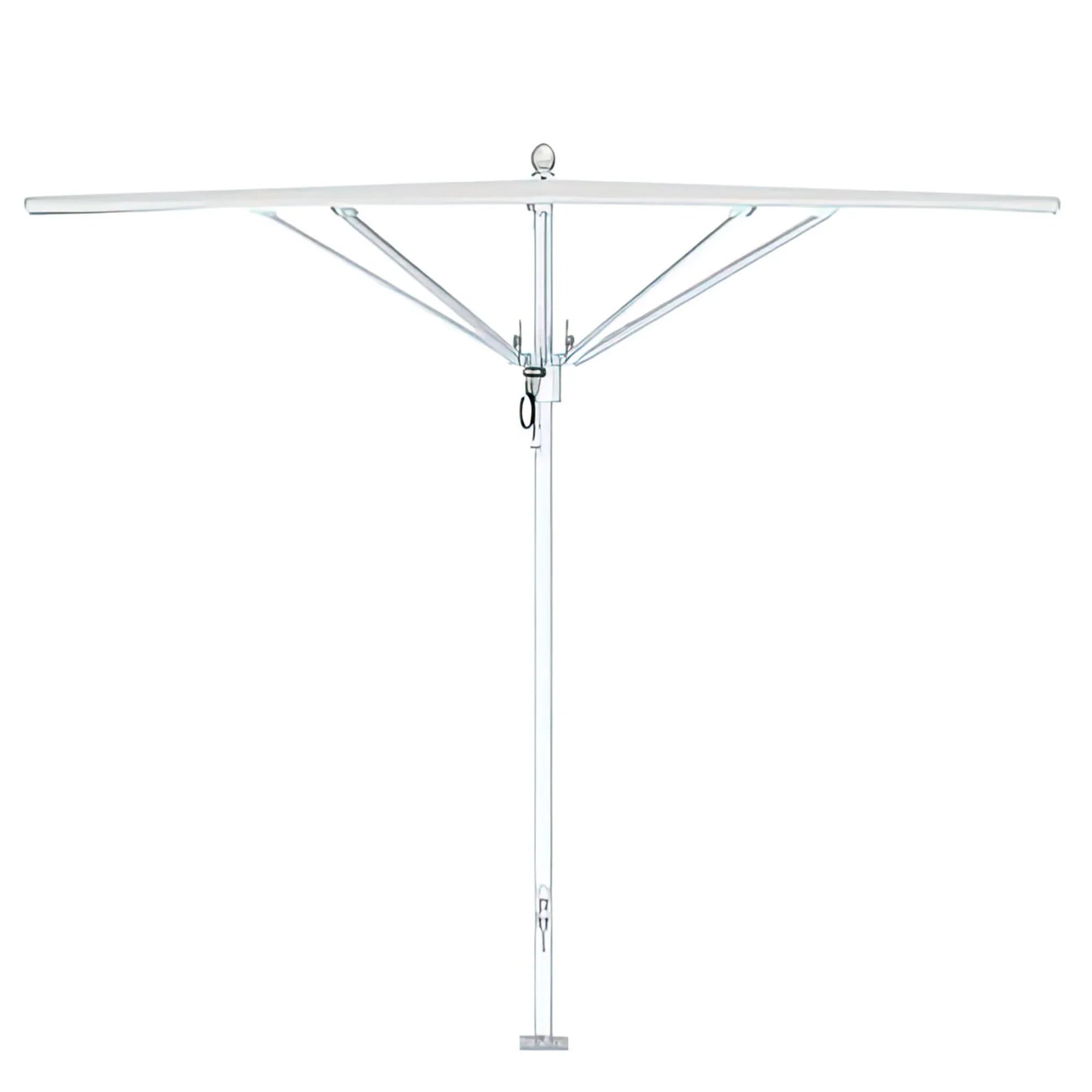
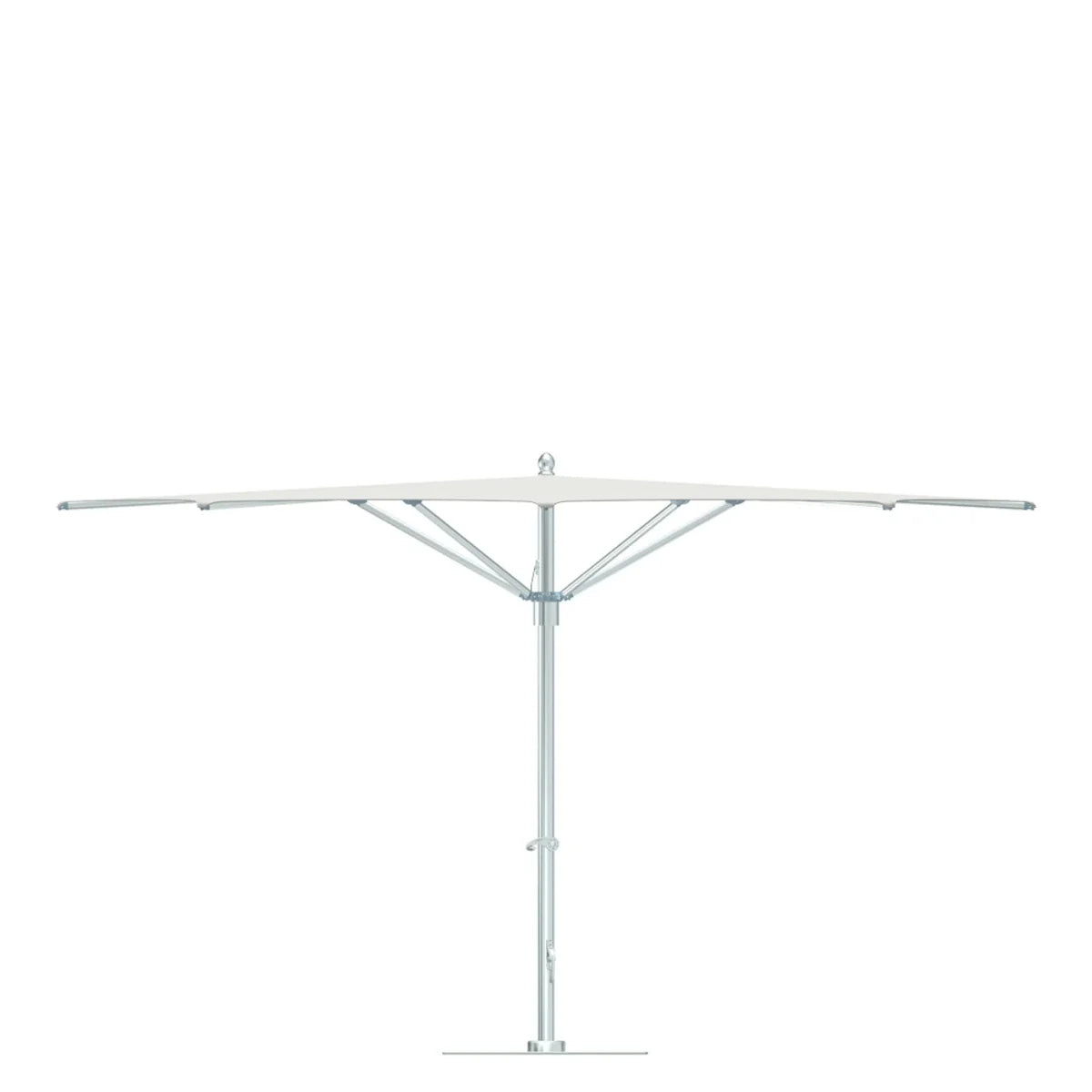
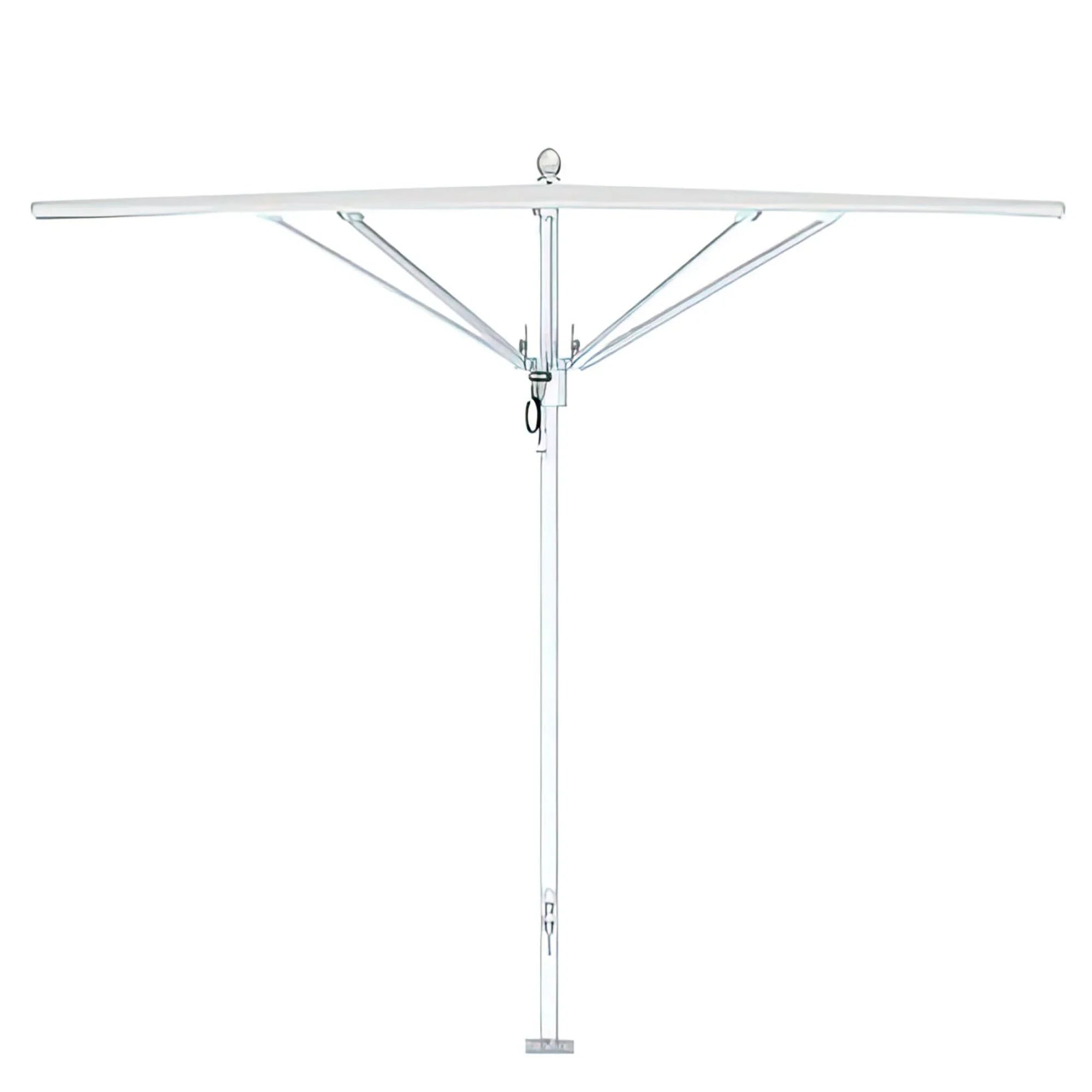
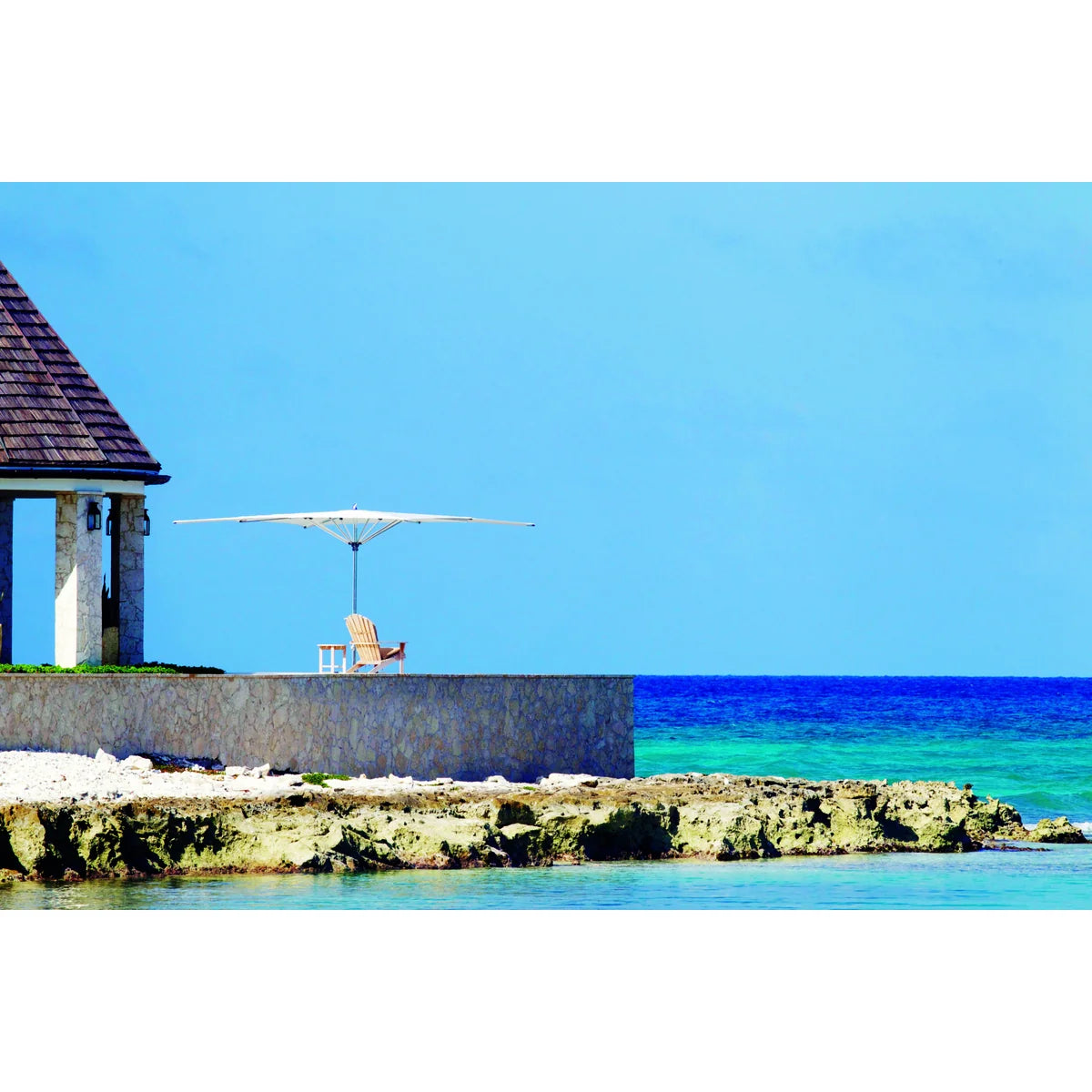
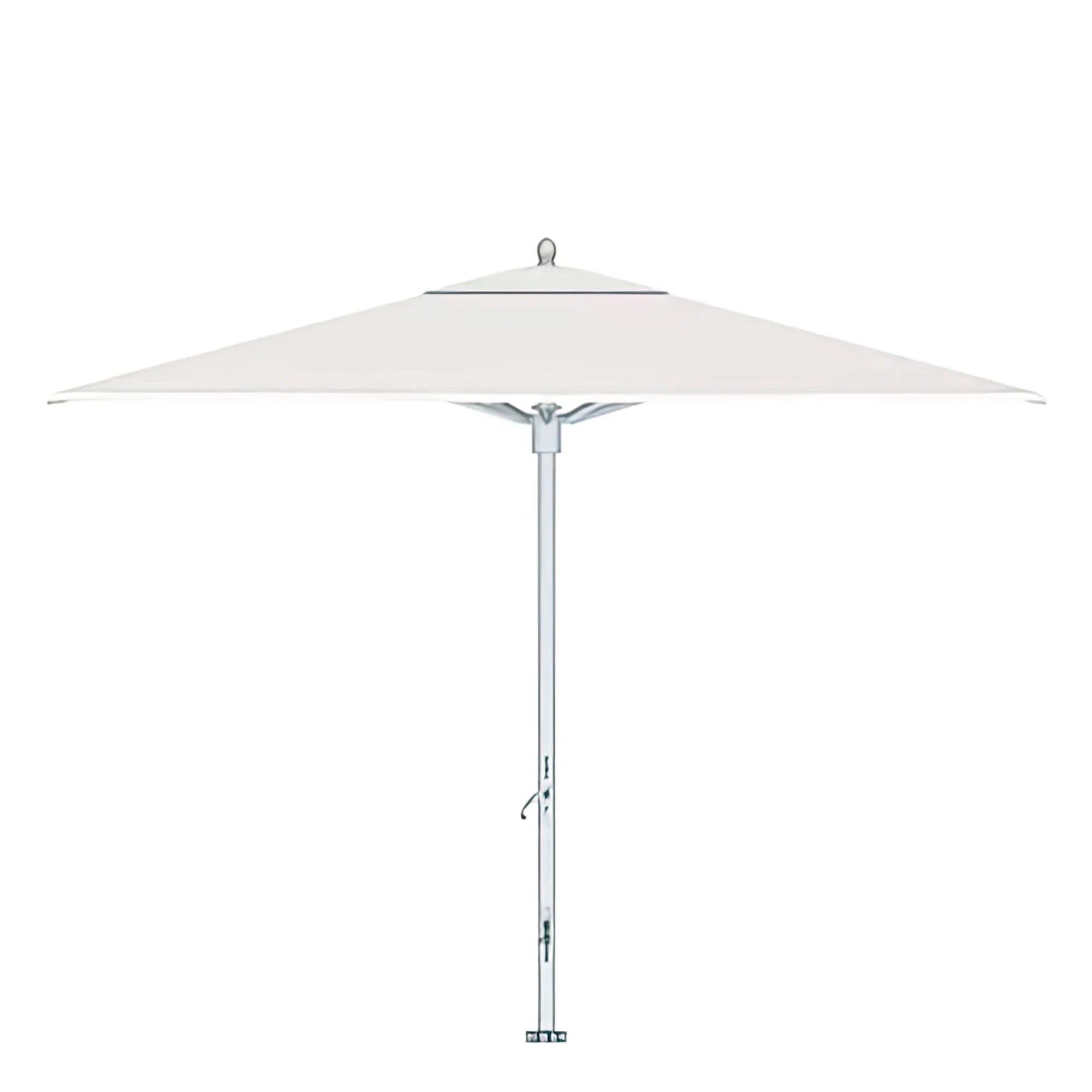
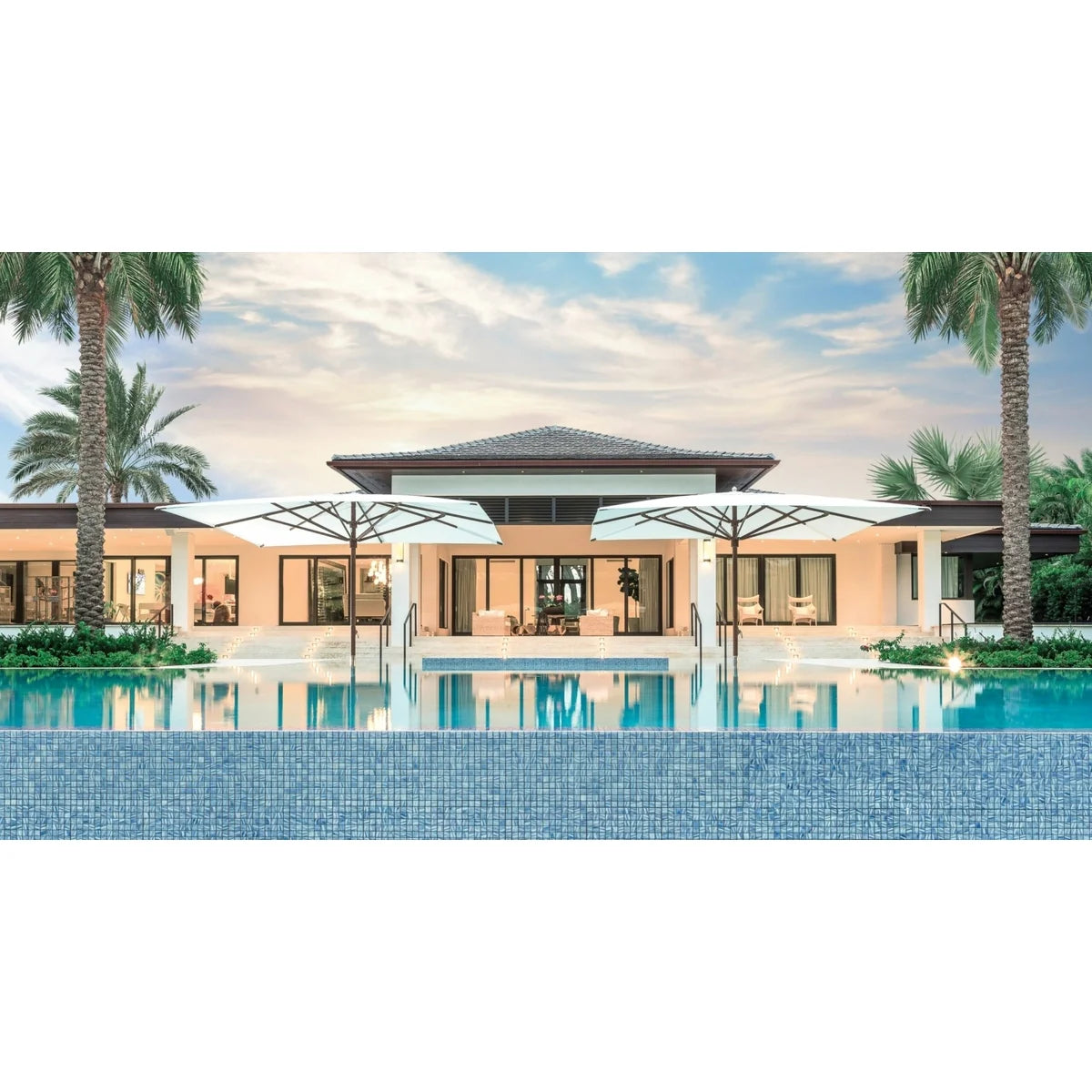
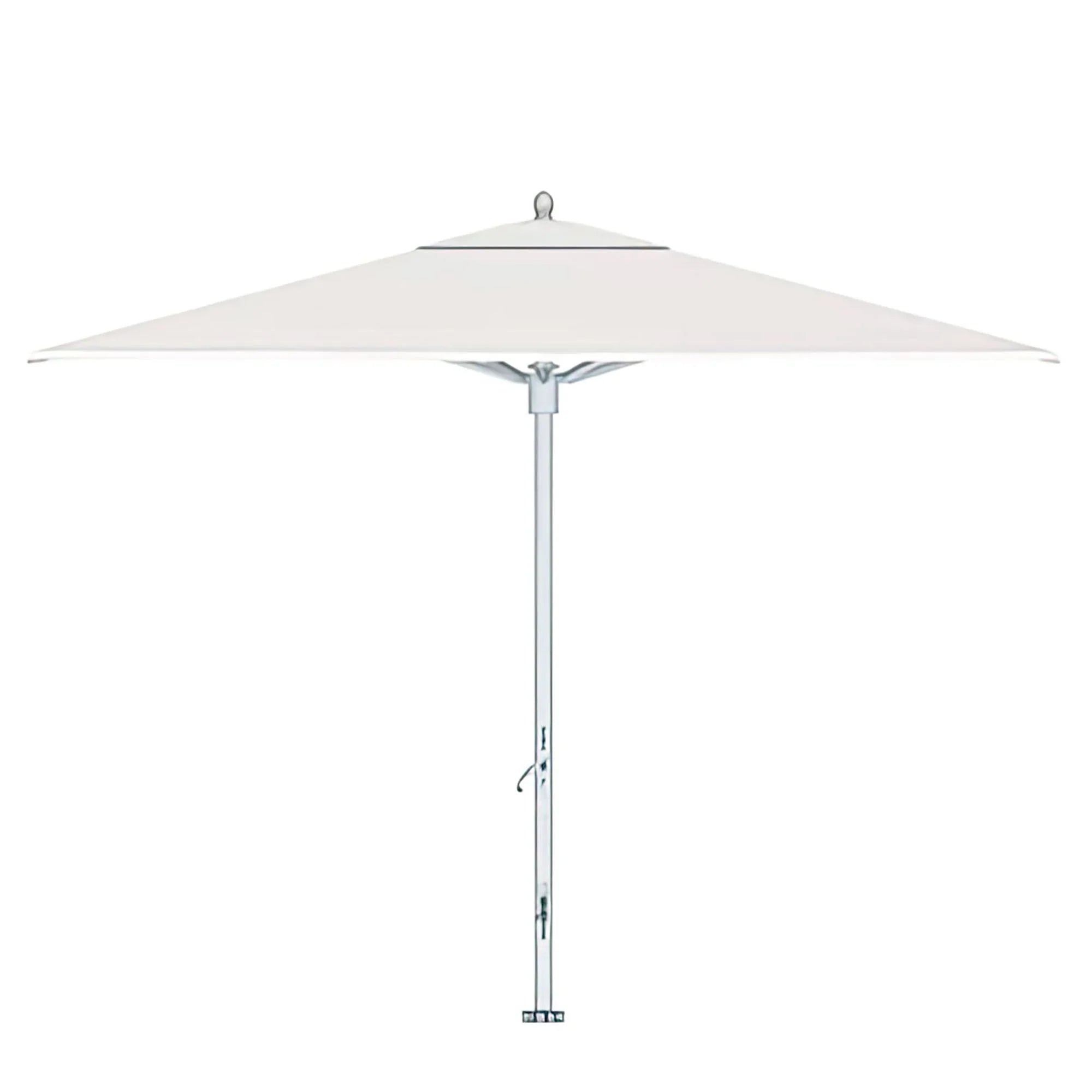
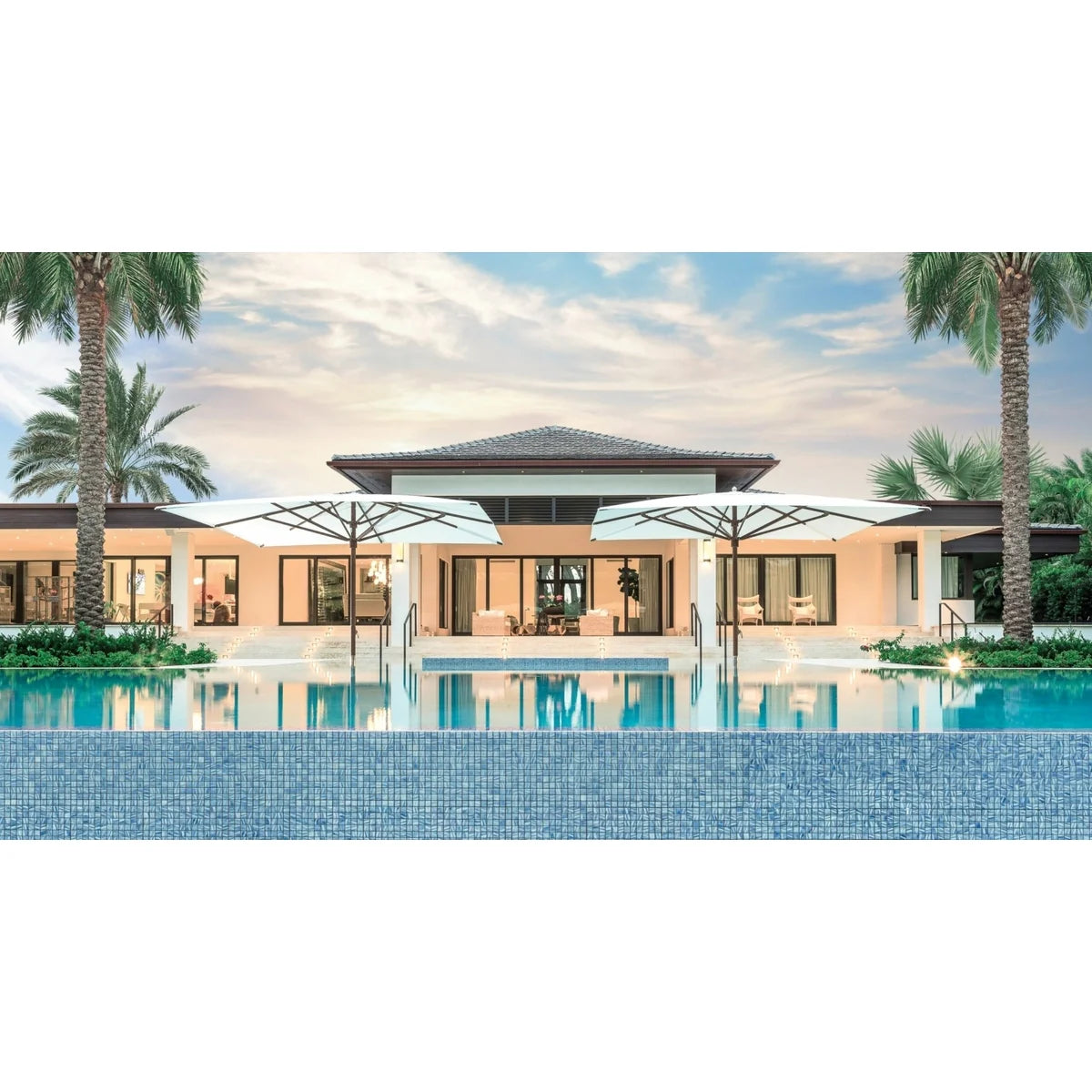
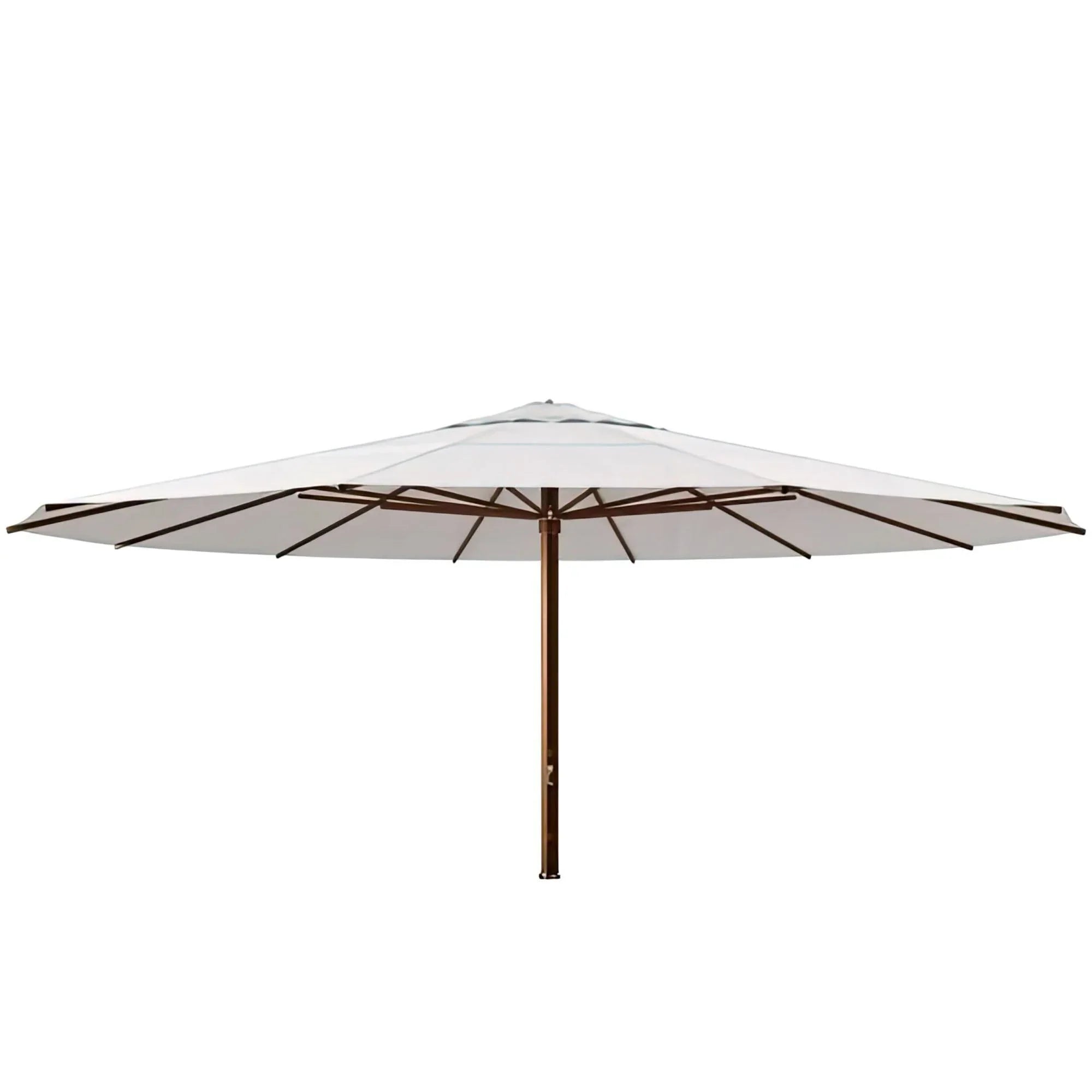
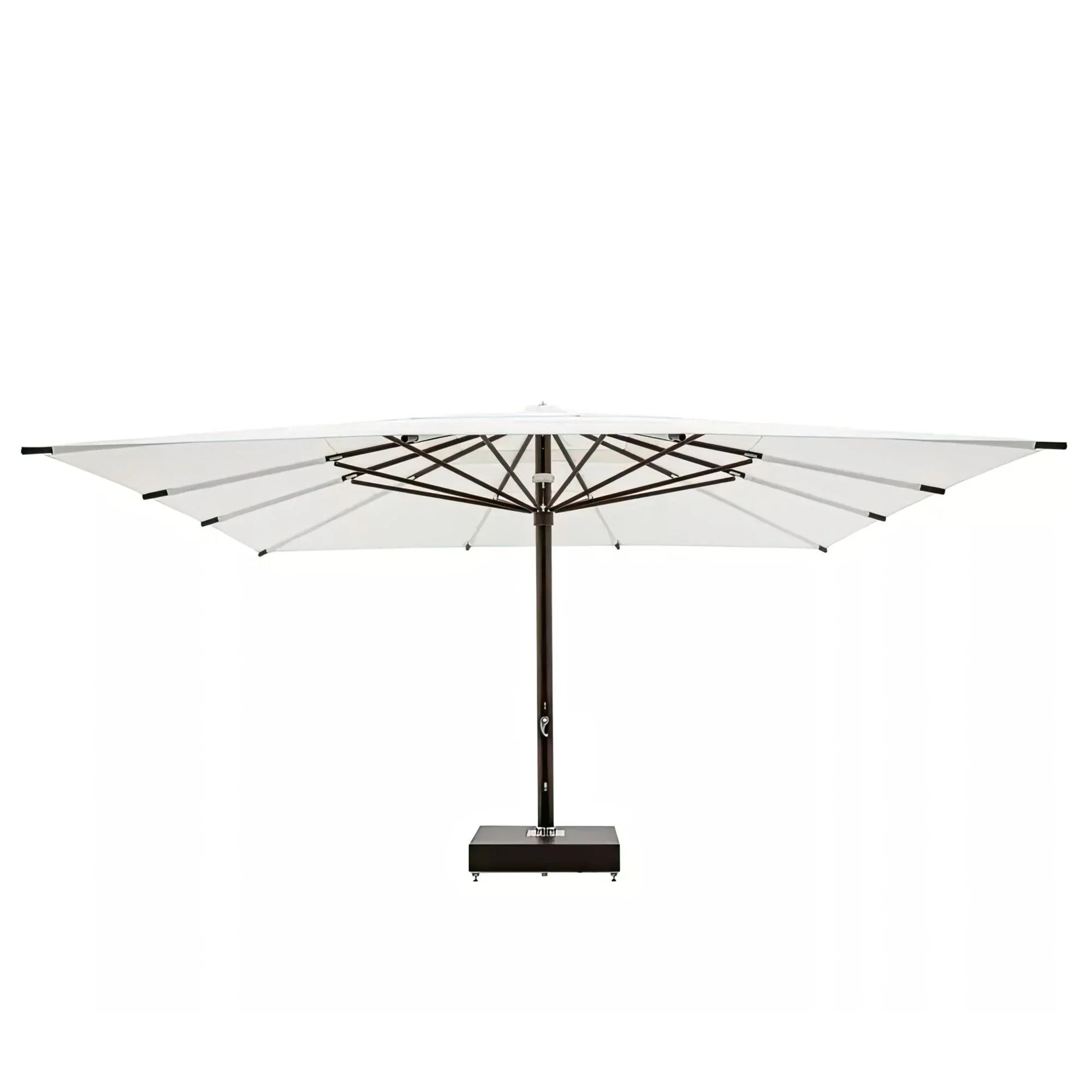
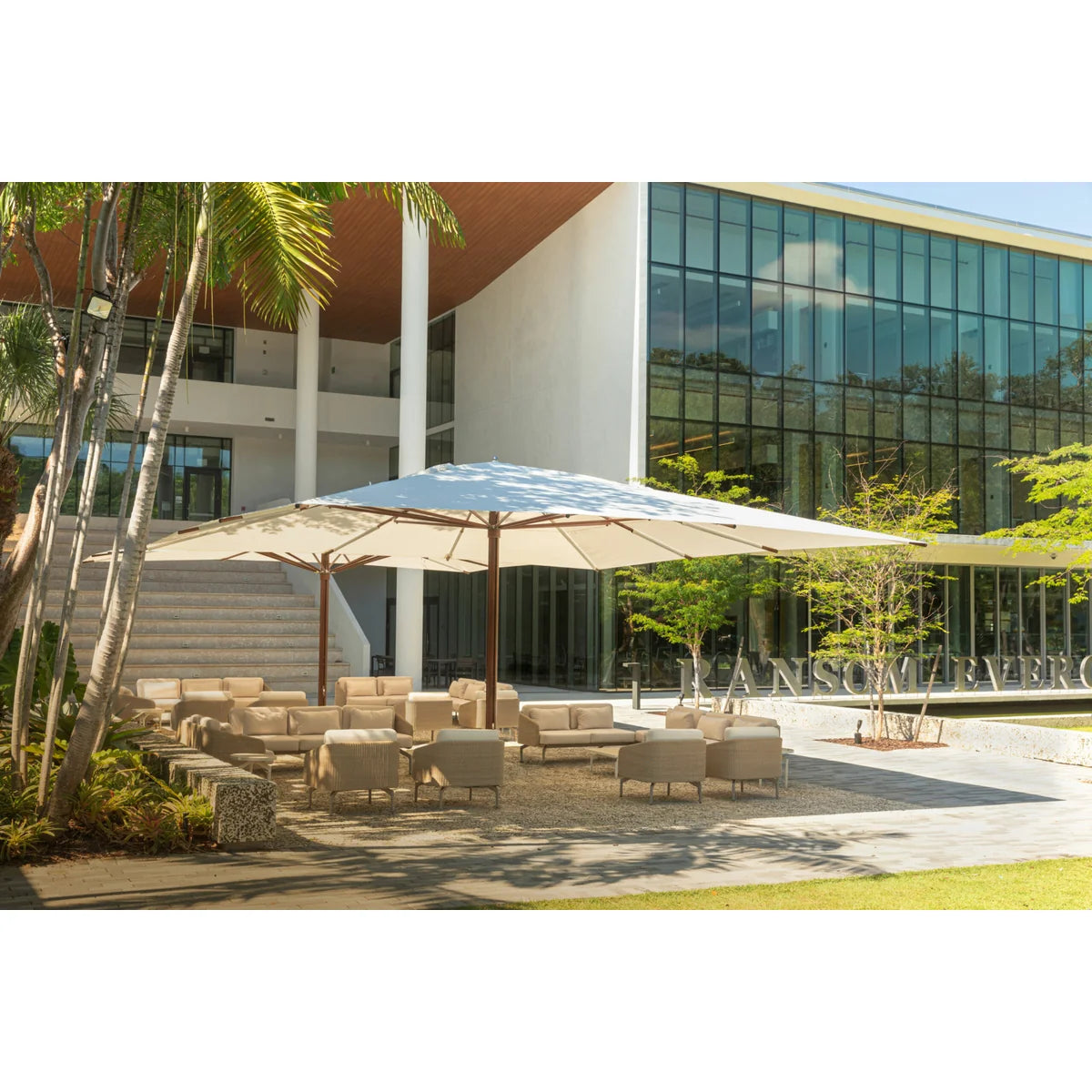
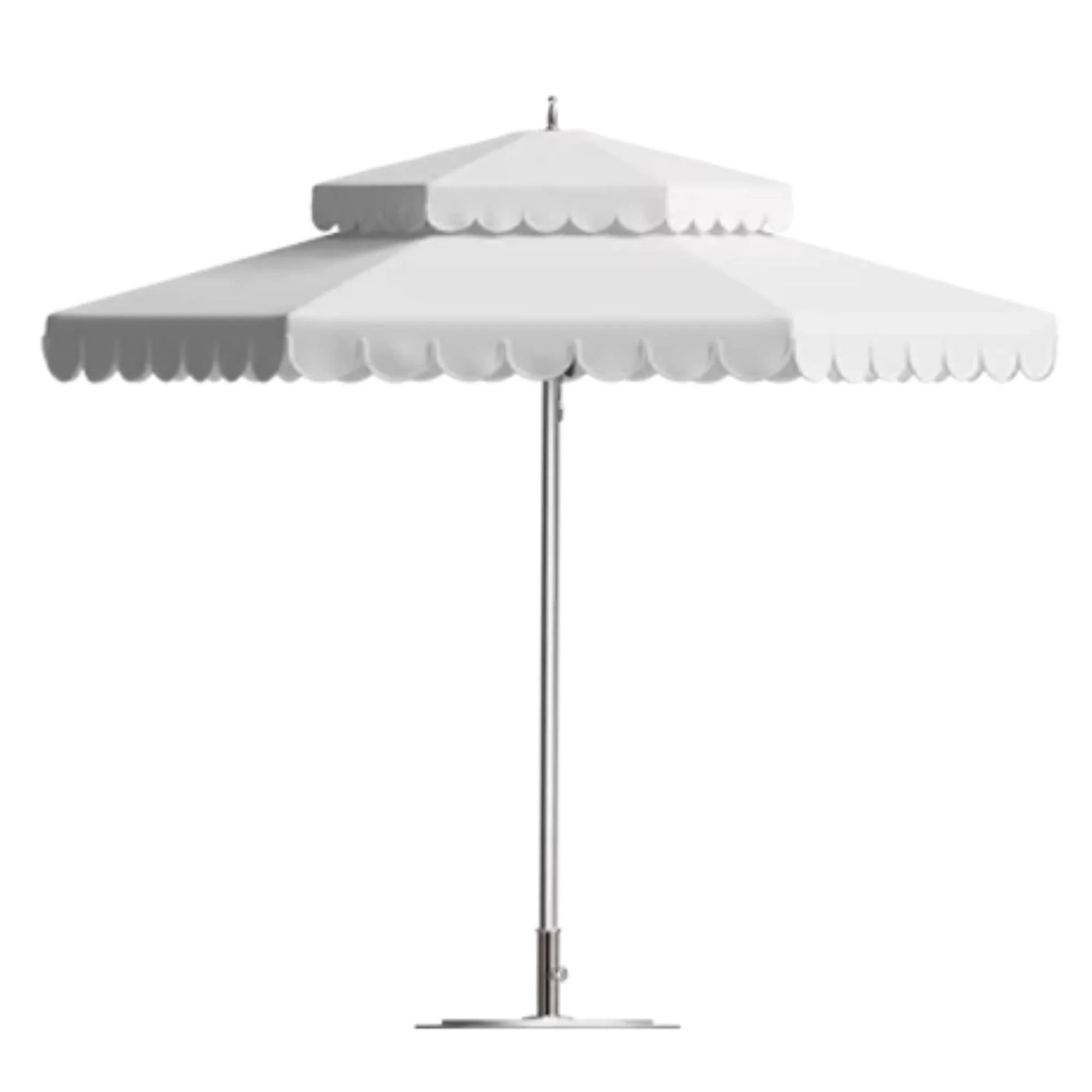
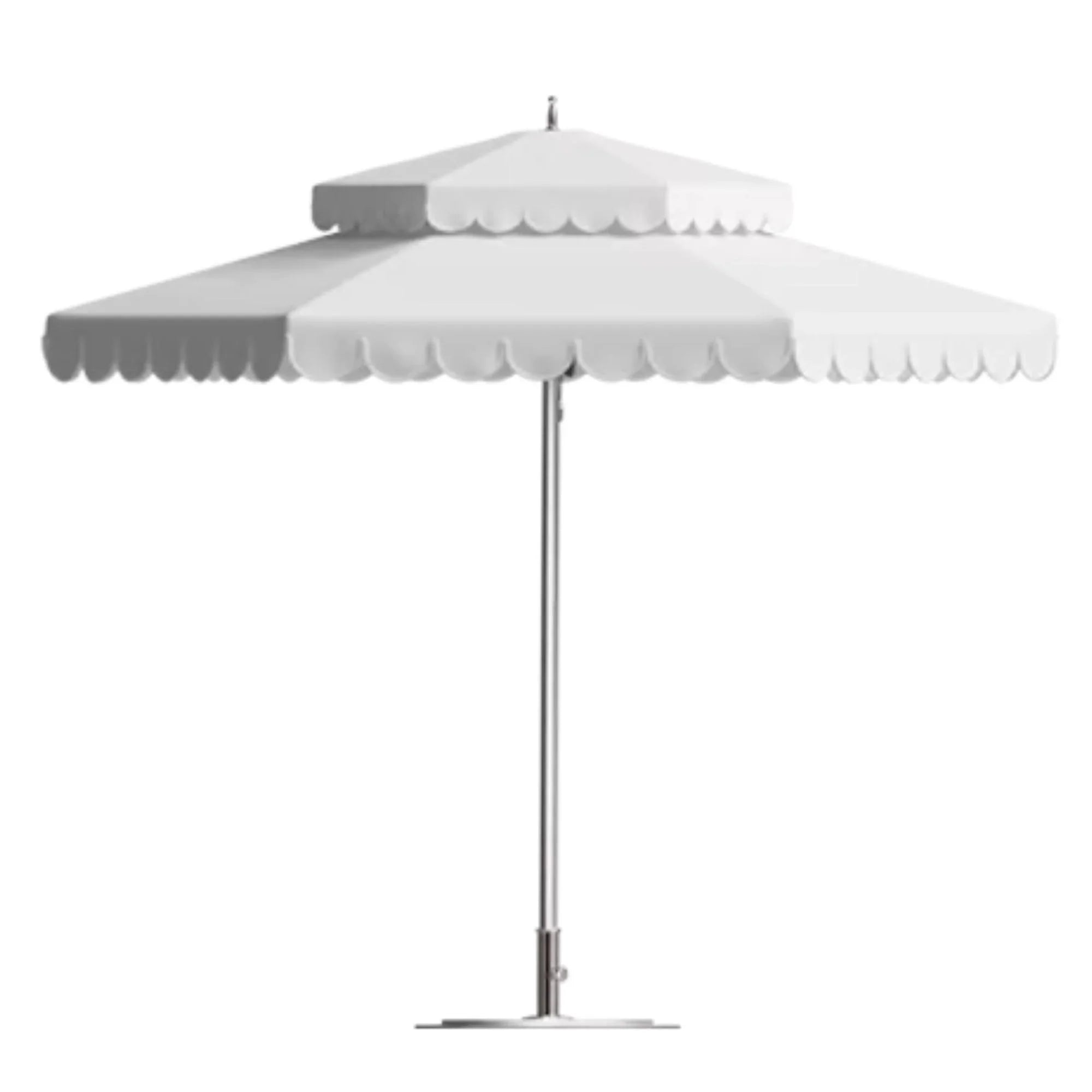
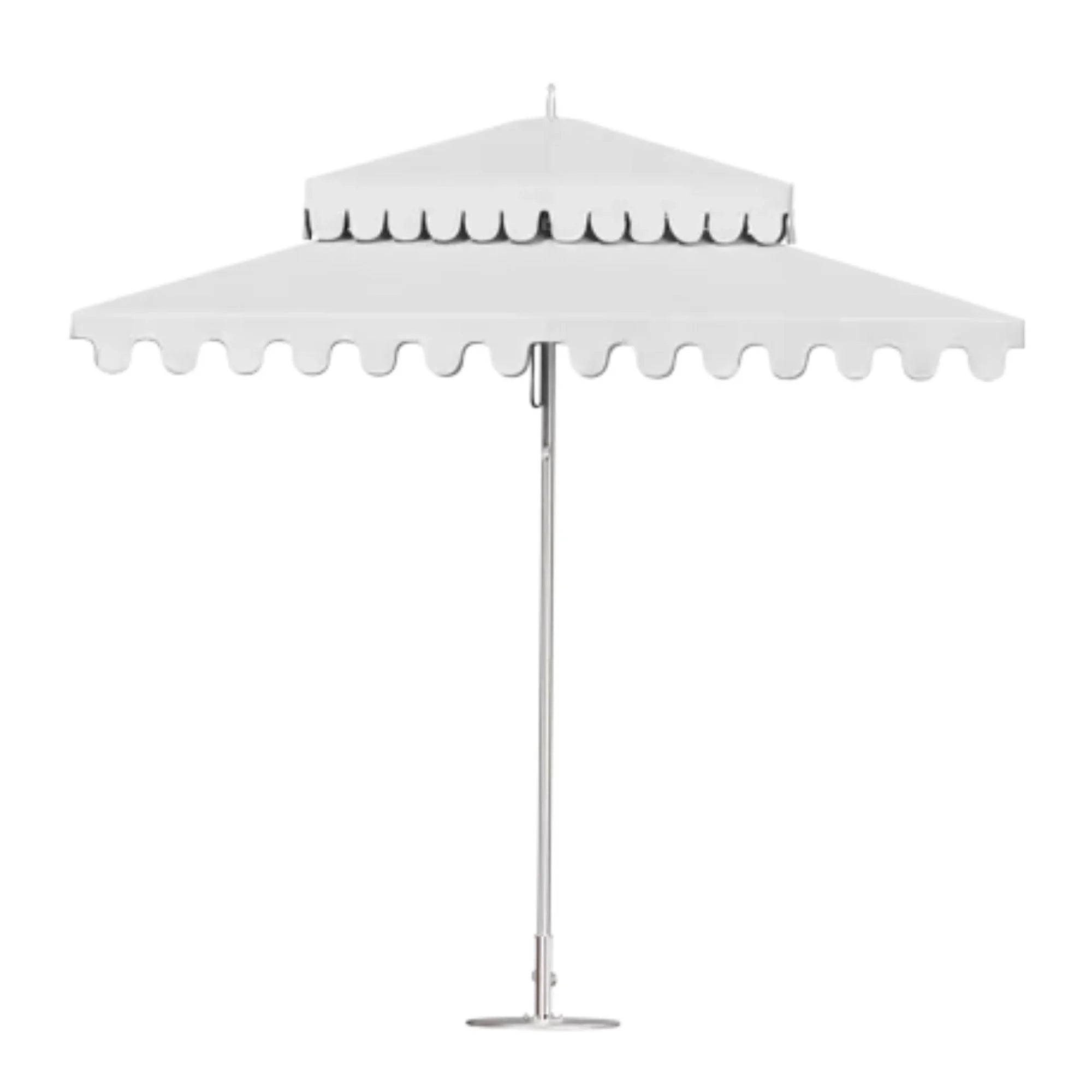
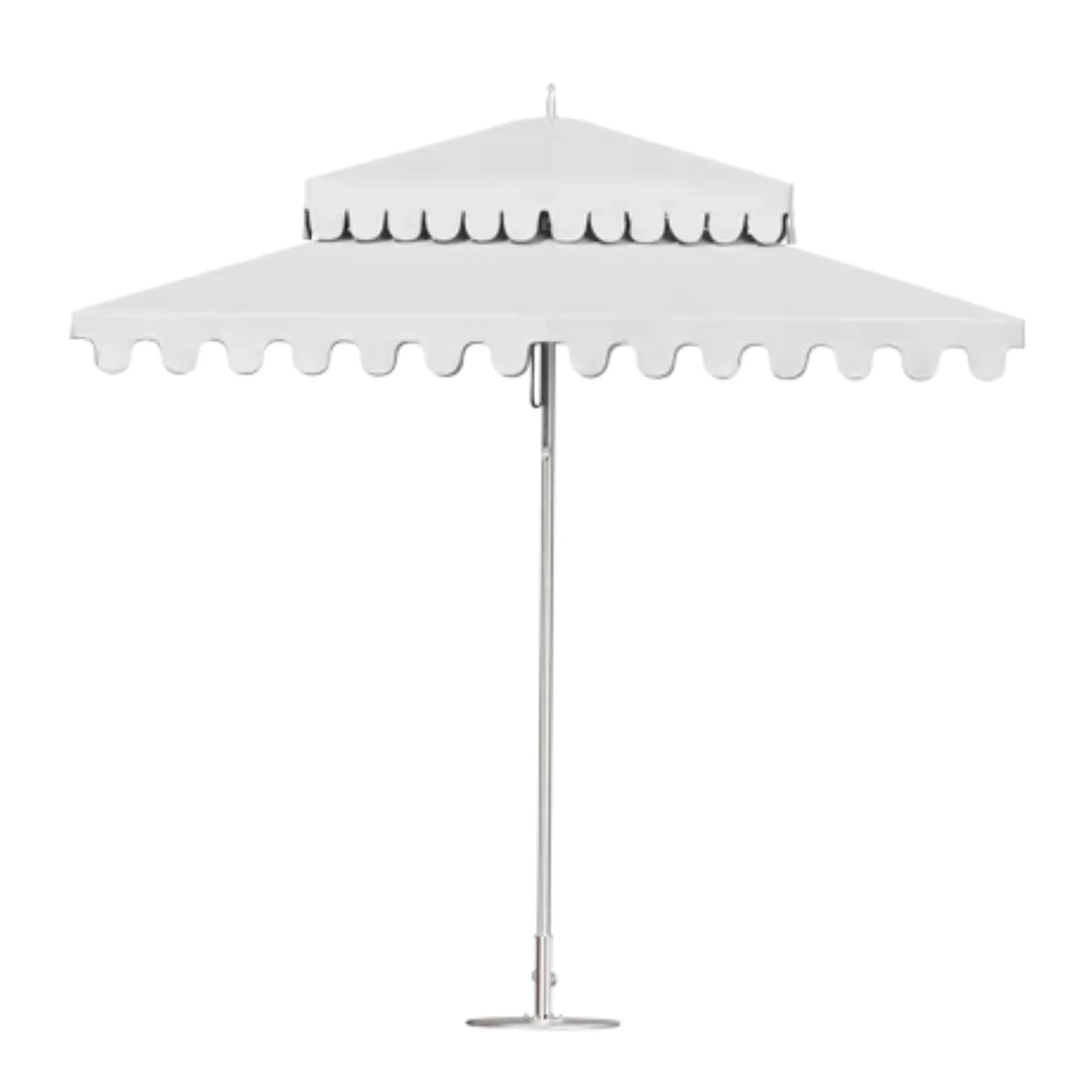
Commercial Patio Umbrellas Built for Daily Hospitality Operation
A restaurant patio turning tables twice at lunch. A resort pool deck deployed by 8am every morning. A hotel courtyard serving brunch and evening cocktails on the same footprint. These spaces put shade structures through demands that residential umbrellas were never designed to meet, and it shows the first season a property tries to make a backyard umbrella survive commercial hours. Commercial patio umbrellas close that gap: heavier-gauge aluminum or steel poles, mechanisms built for hundreds of open-and-close cycles a season, and Sunbrella solution-dyed acrylic canopies rated for 6 to 10 years of UV exposure that stay bleach-clean safe for food service environments. If you're specifying shade within a larger outdoor program, browse the full range of commercial patio furniture to see how umbrellas fit the complete picture.
What Separates Commercial from Residential Construction
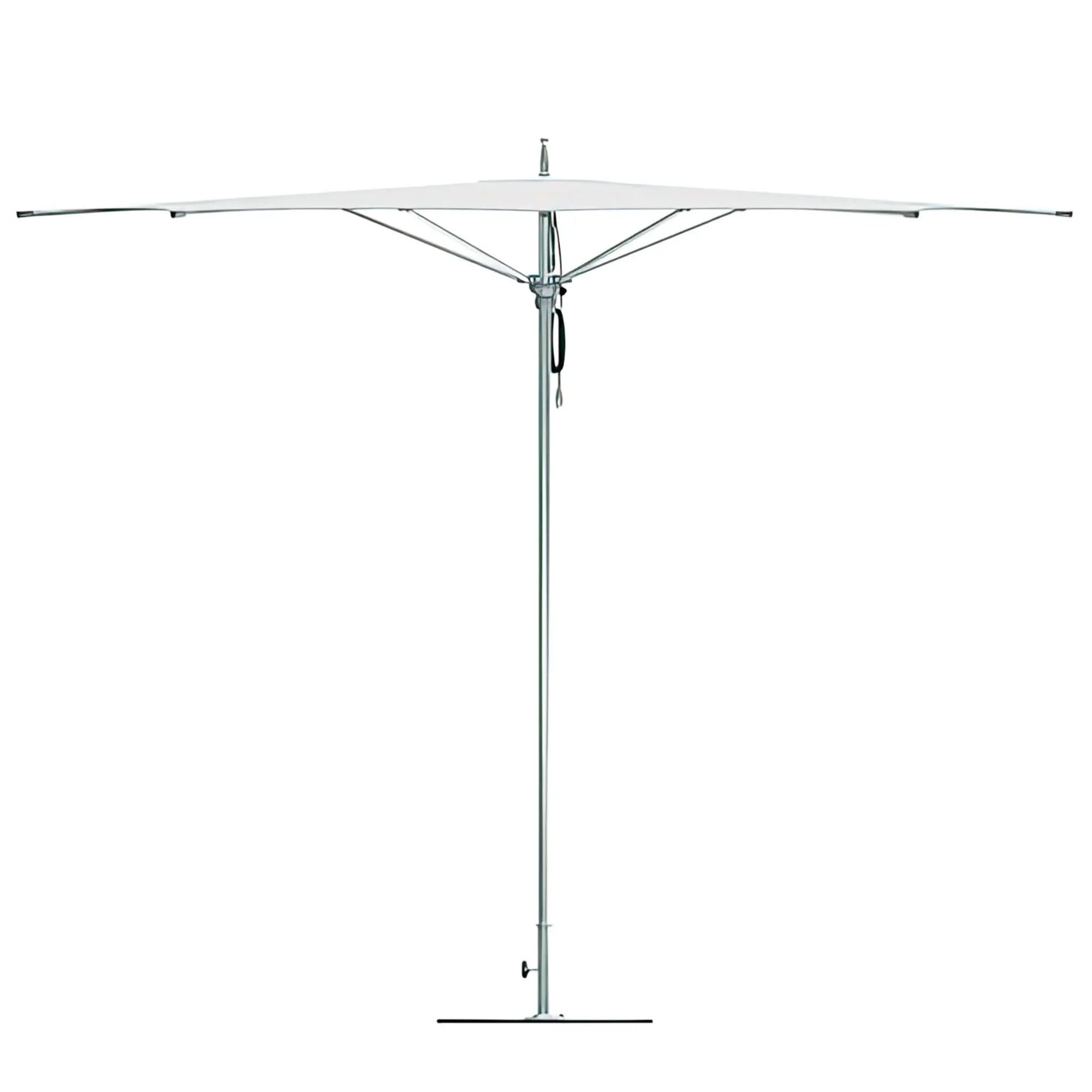
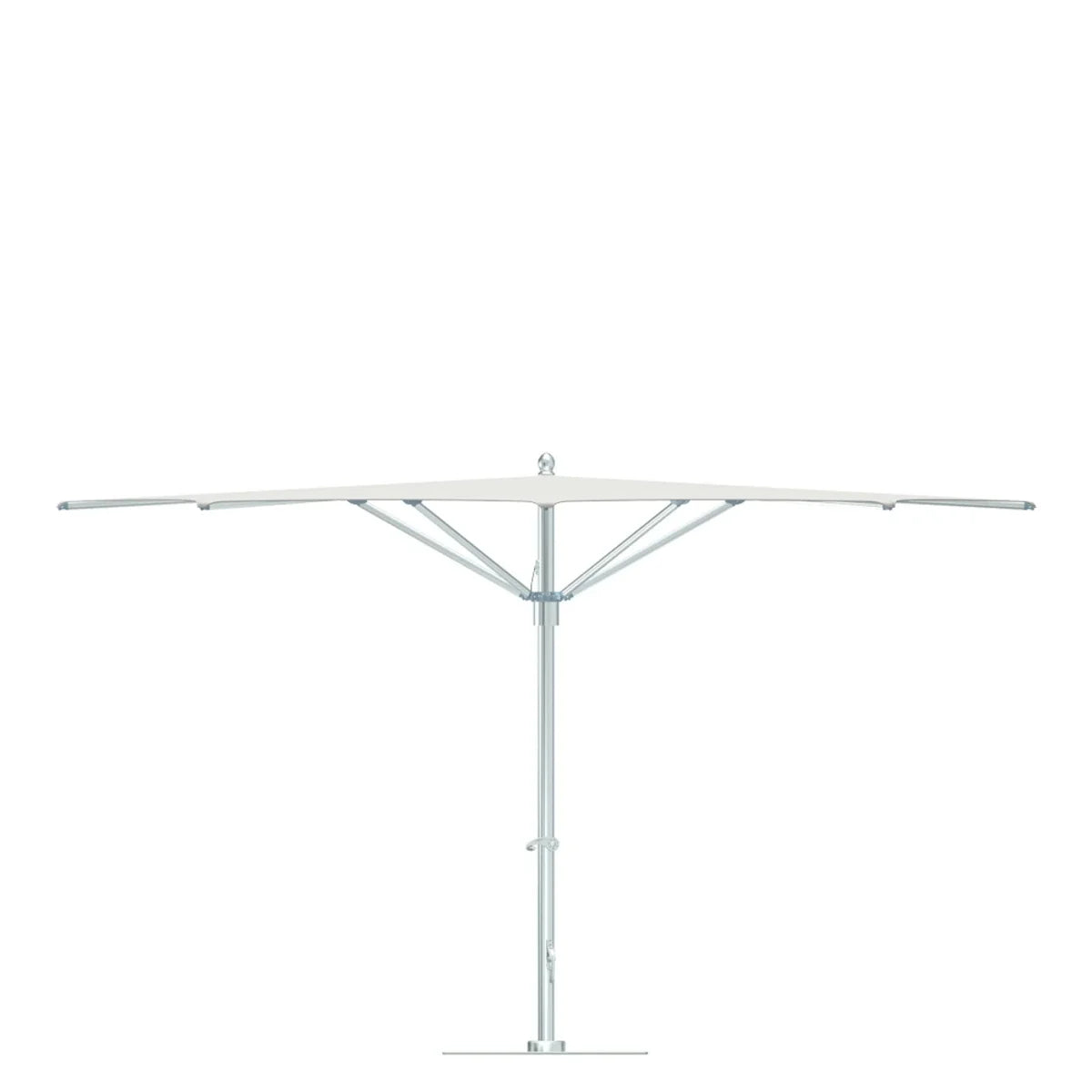
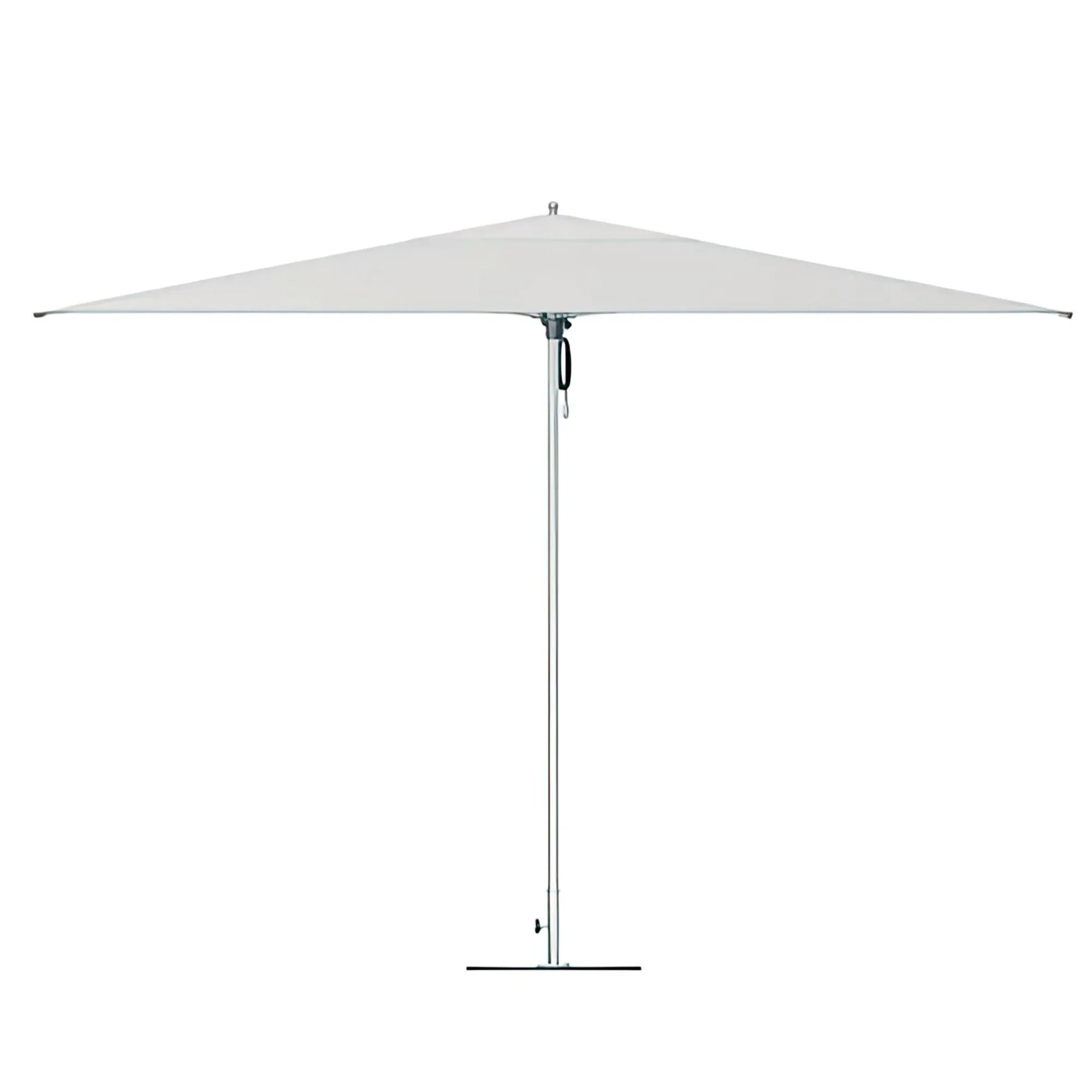
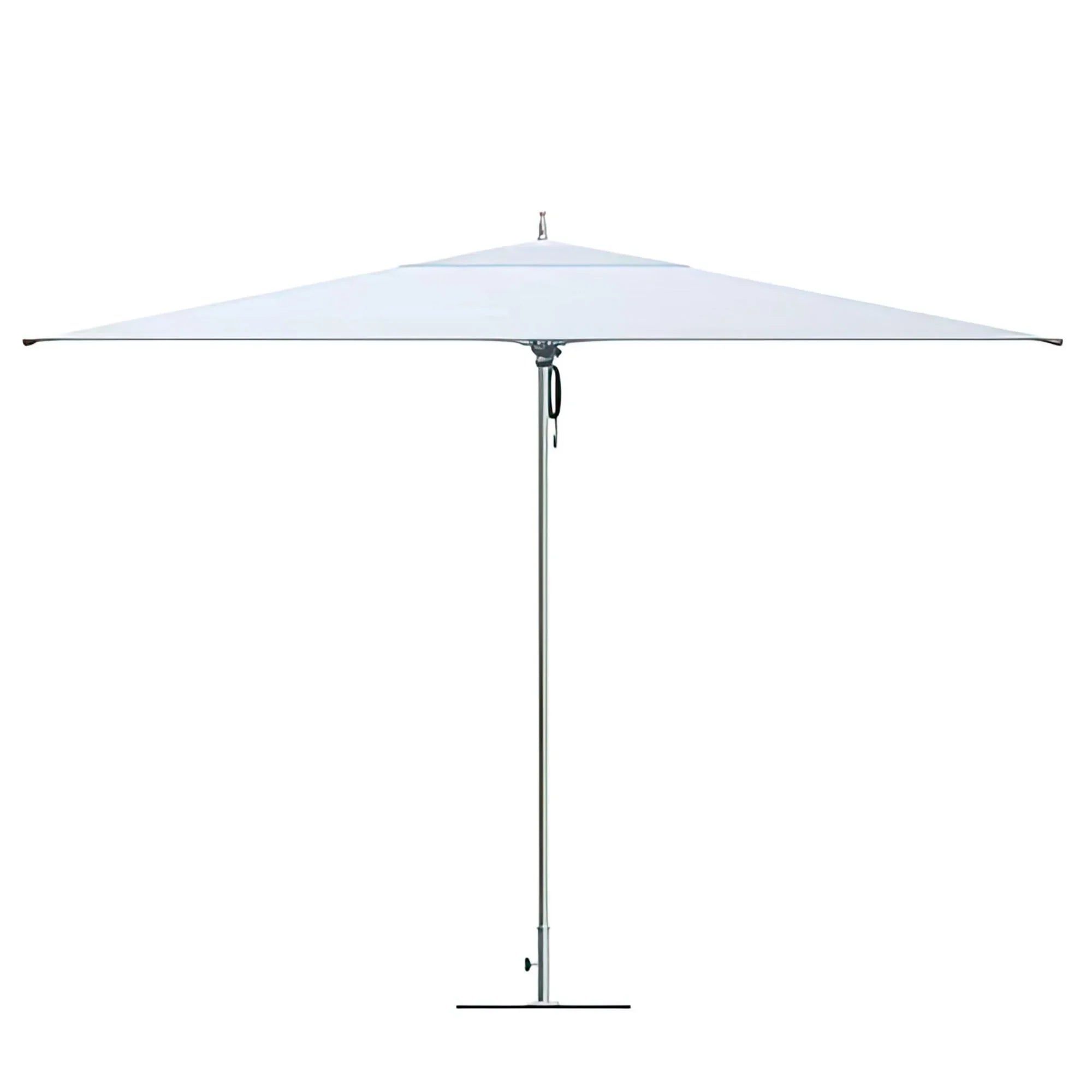
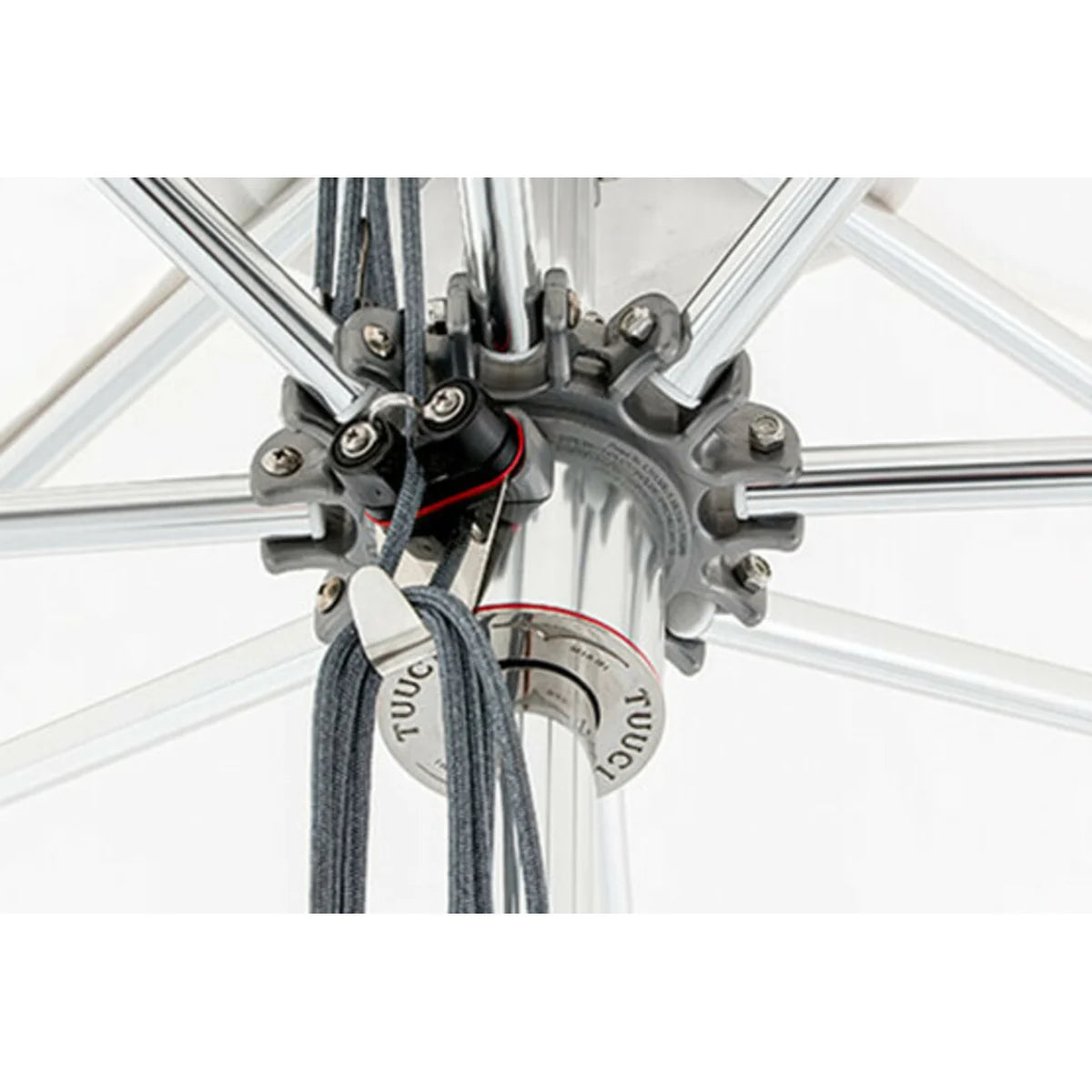
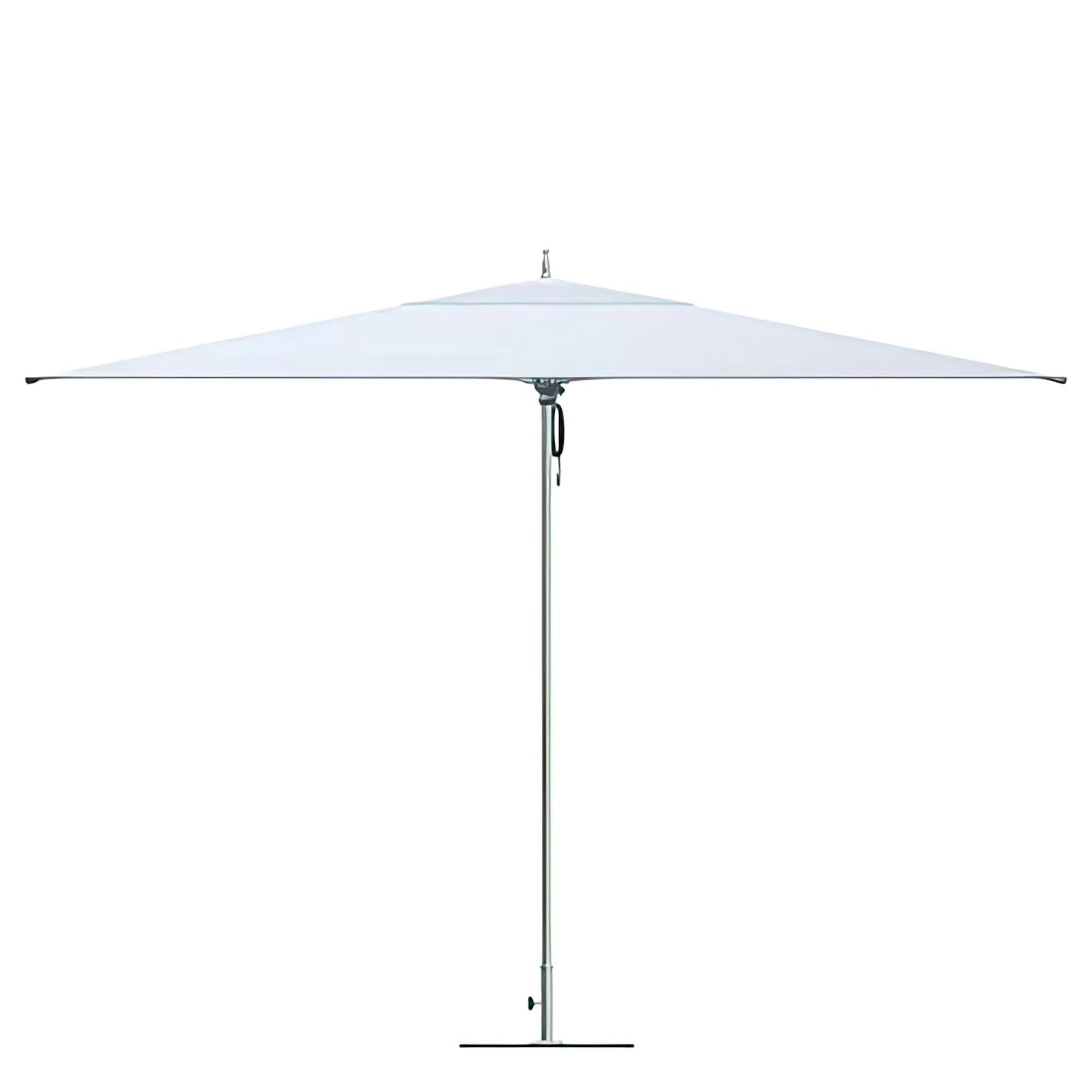
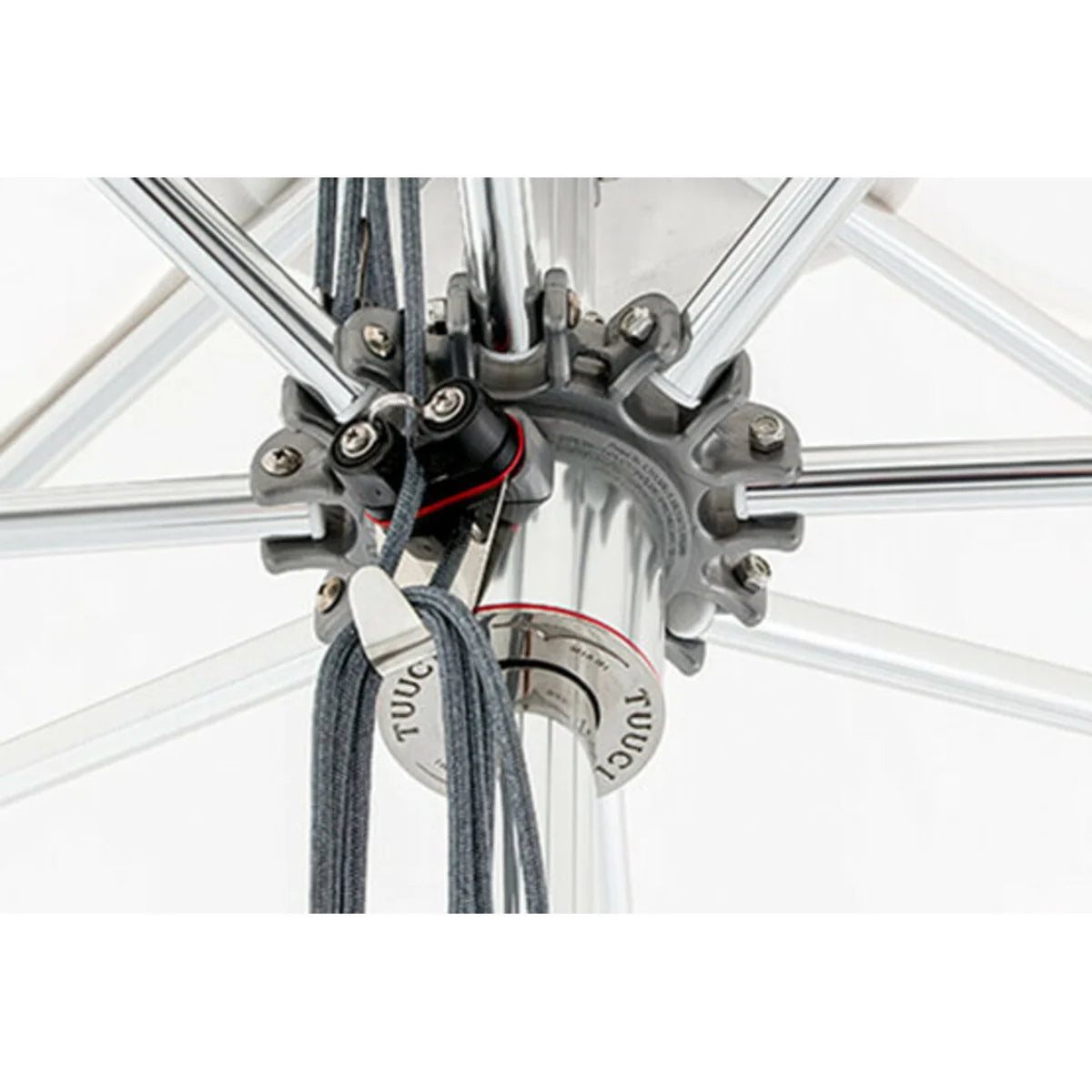
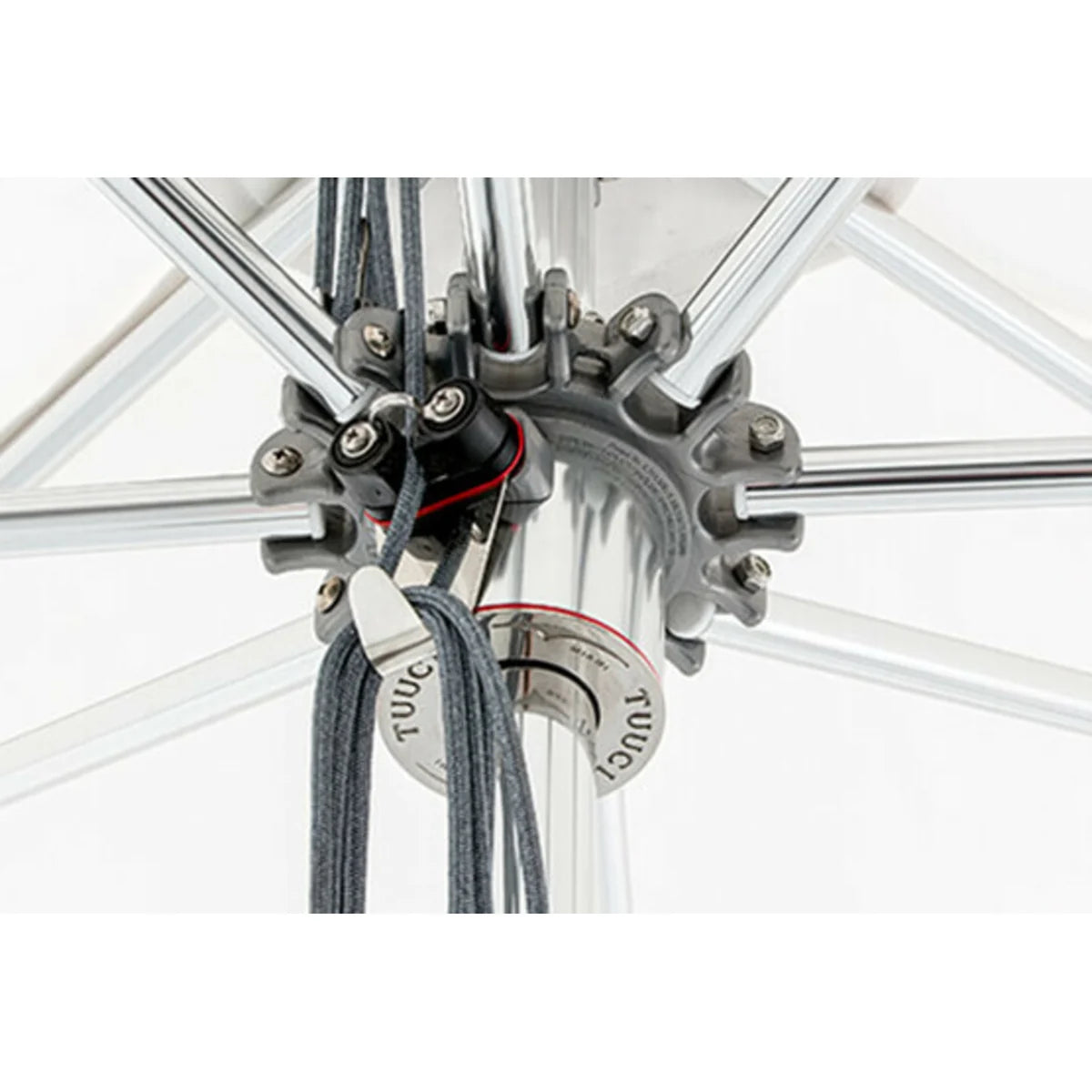
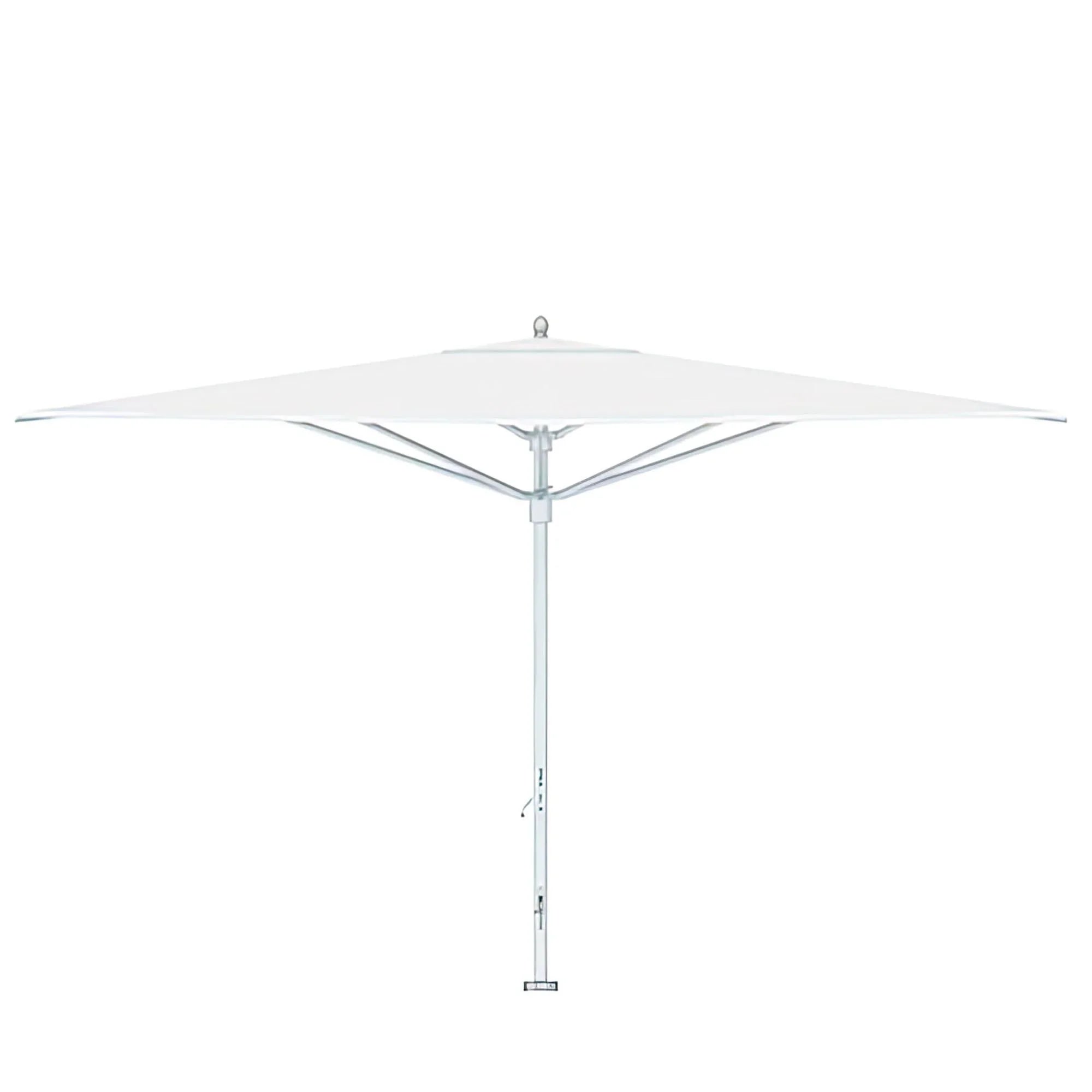
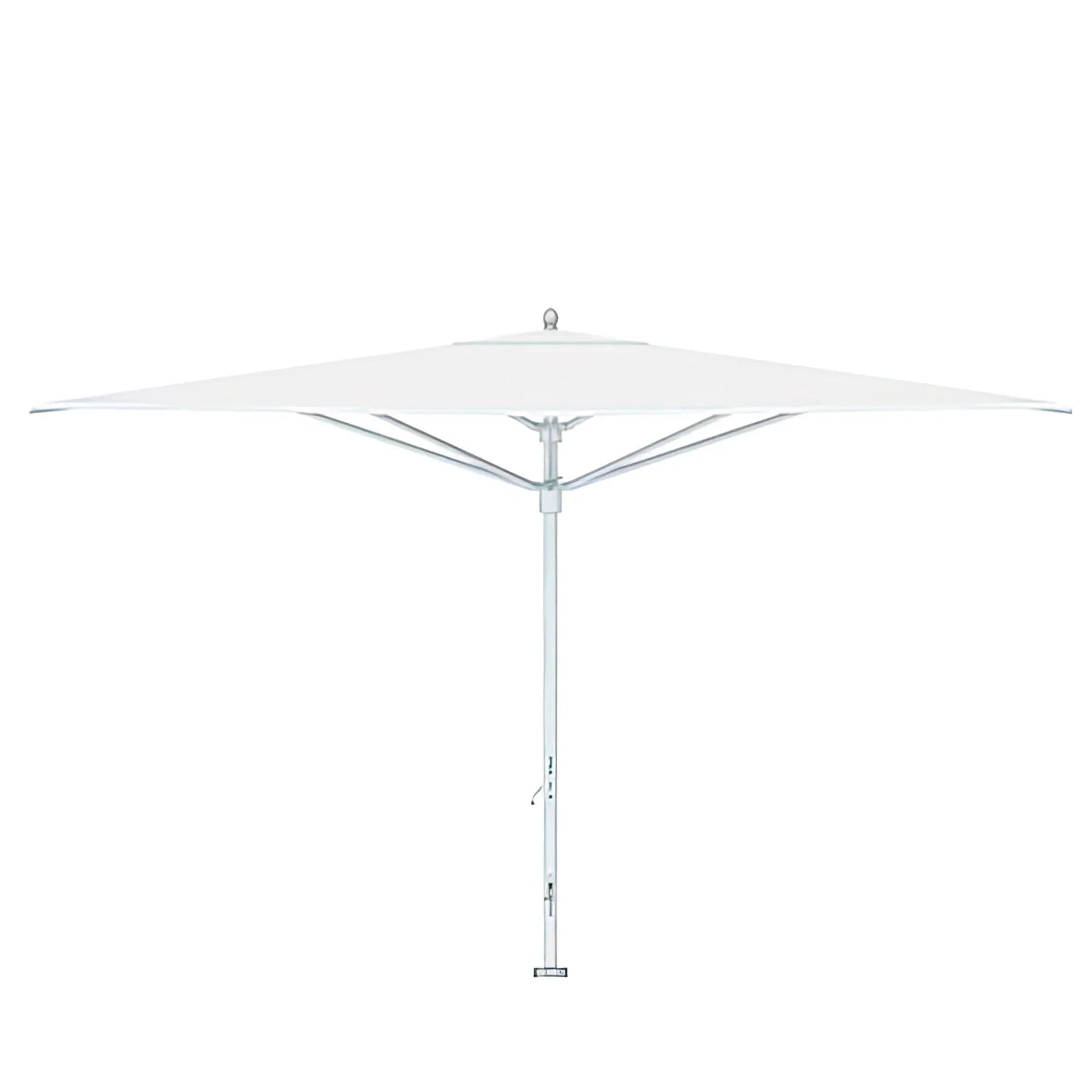
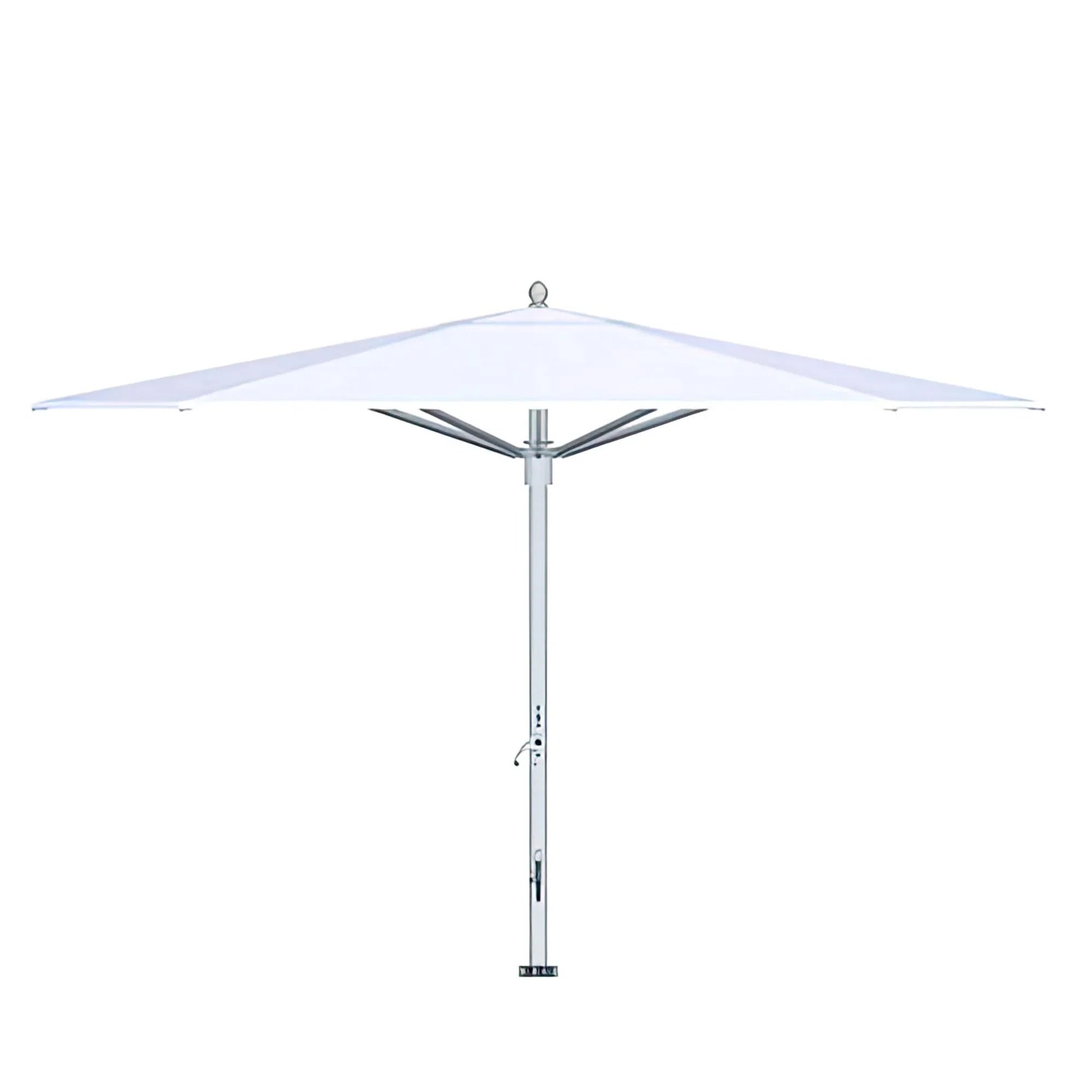
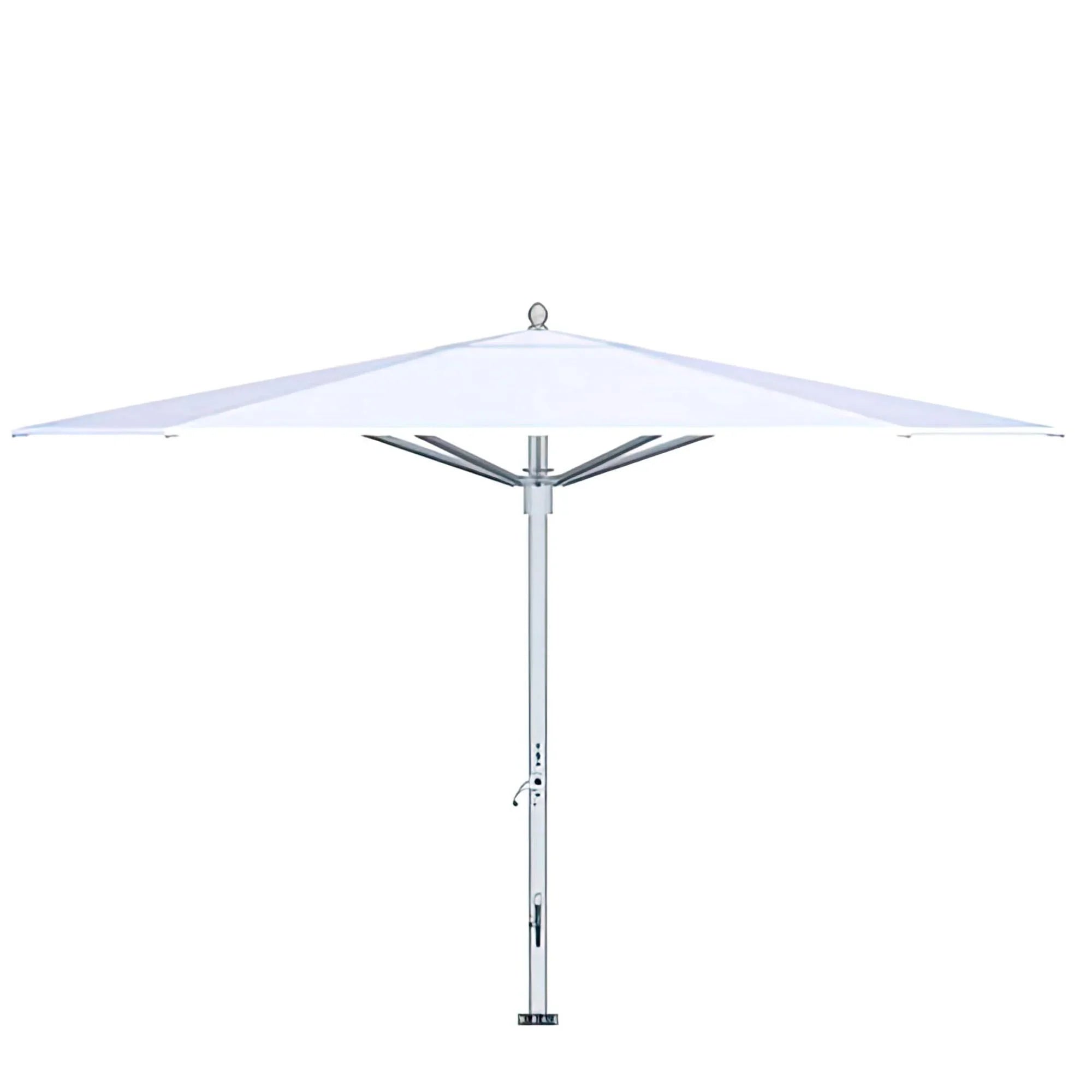
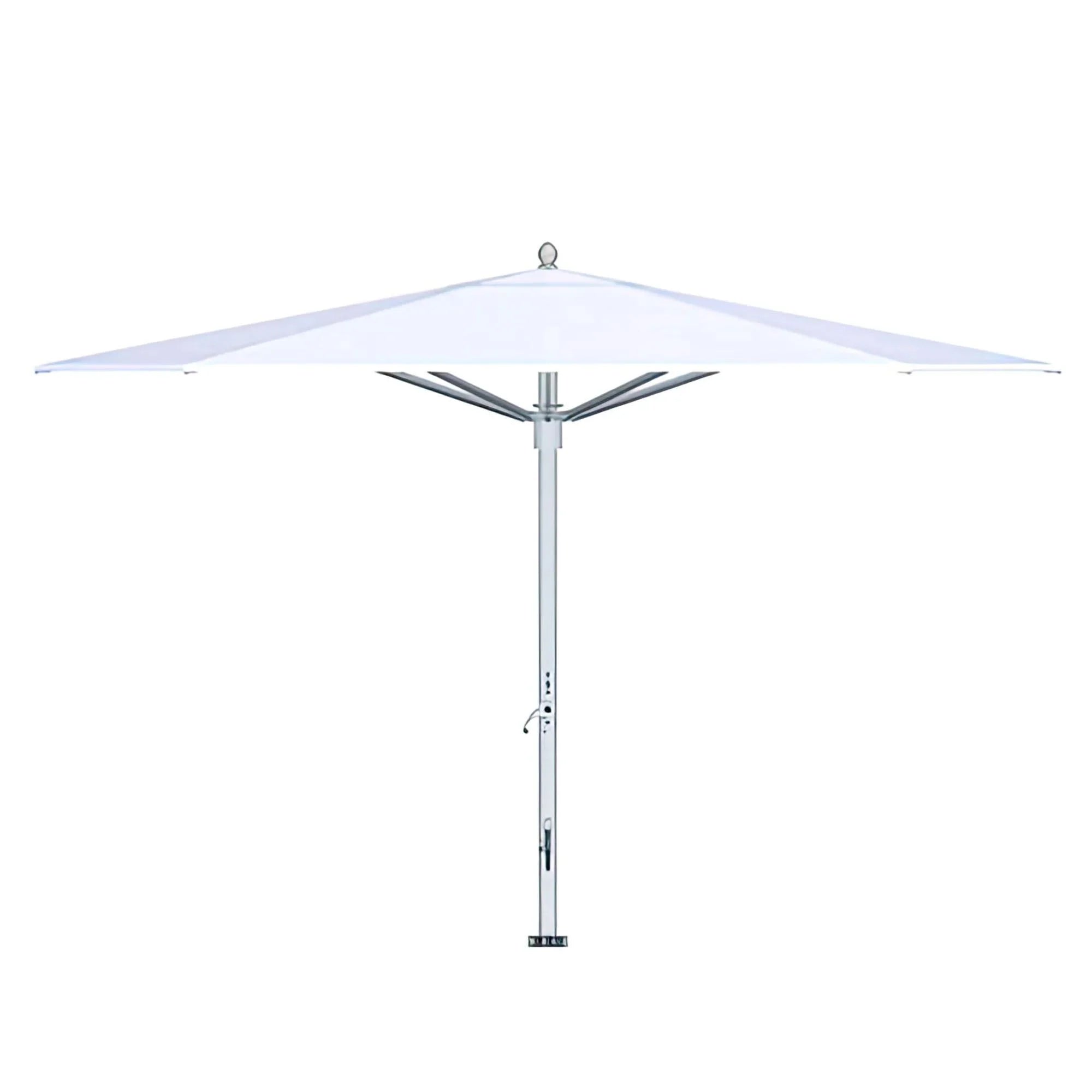
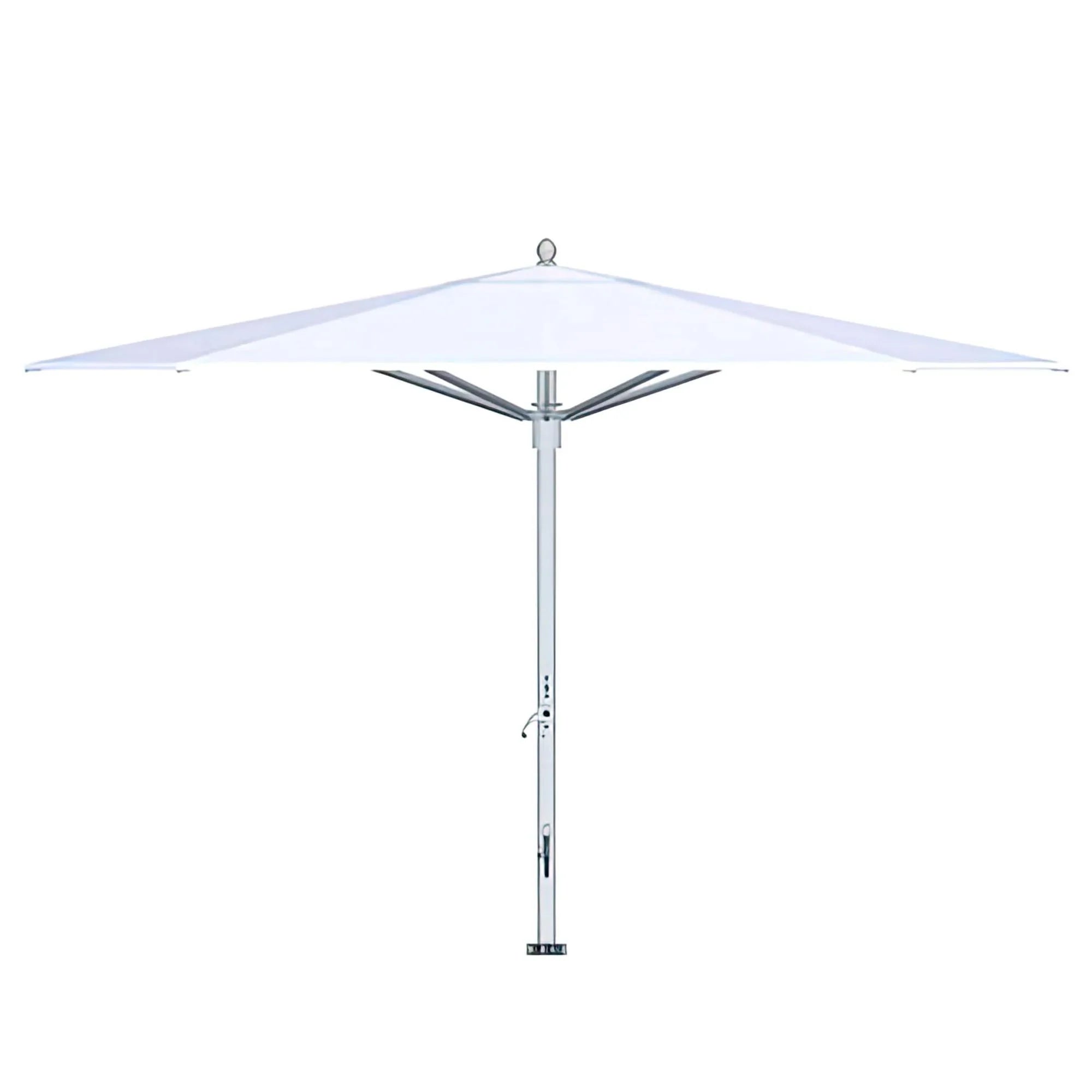
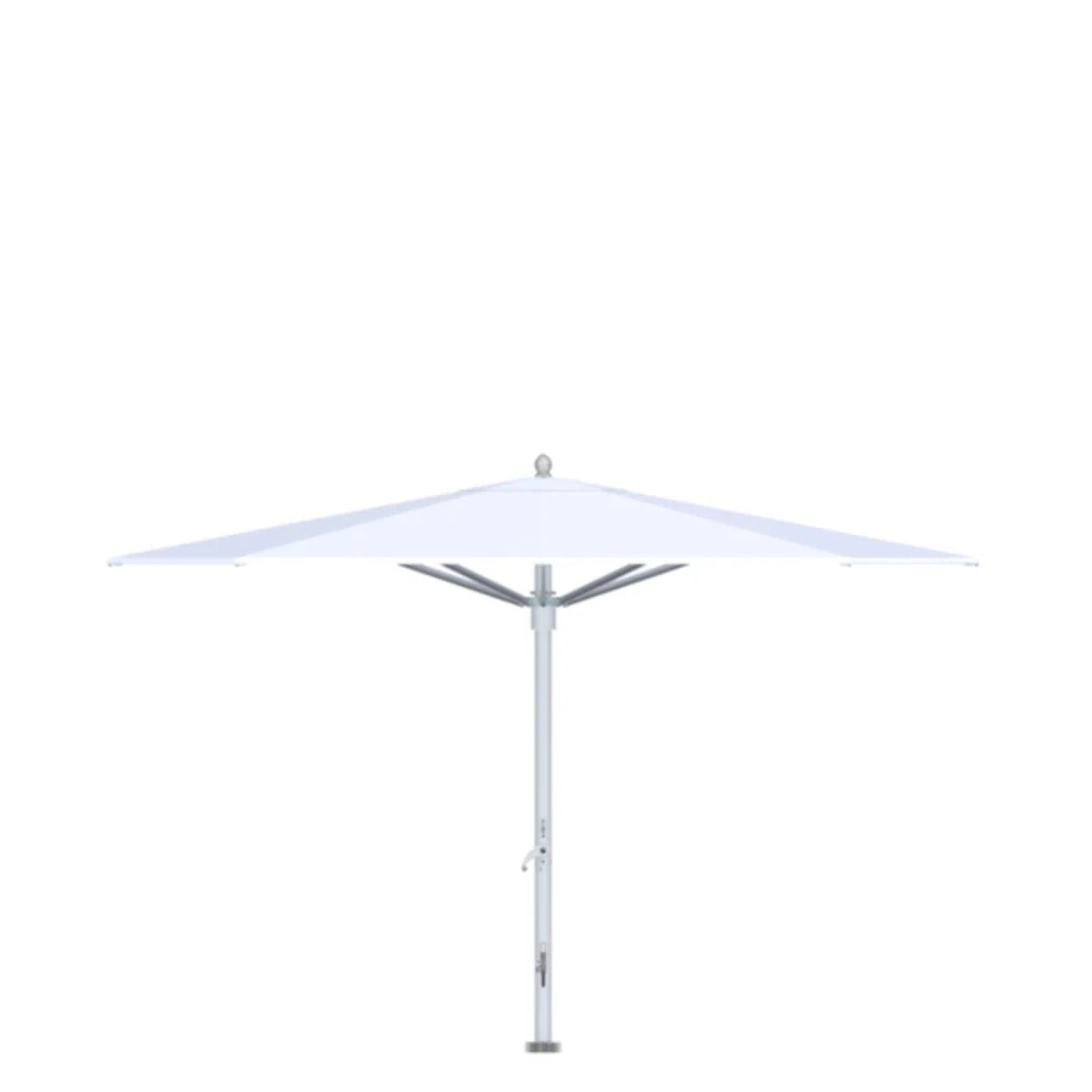
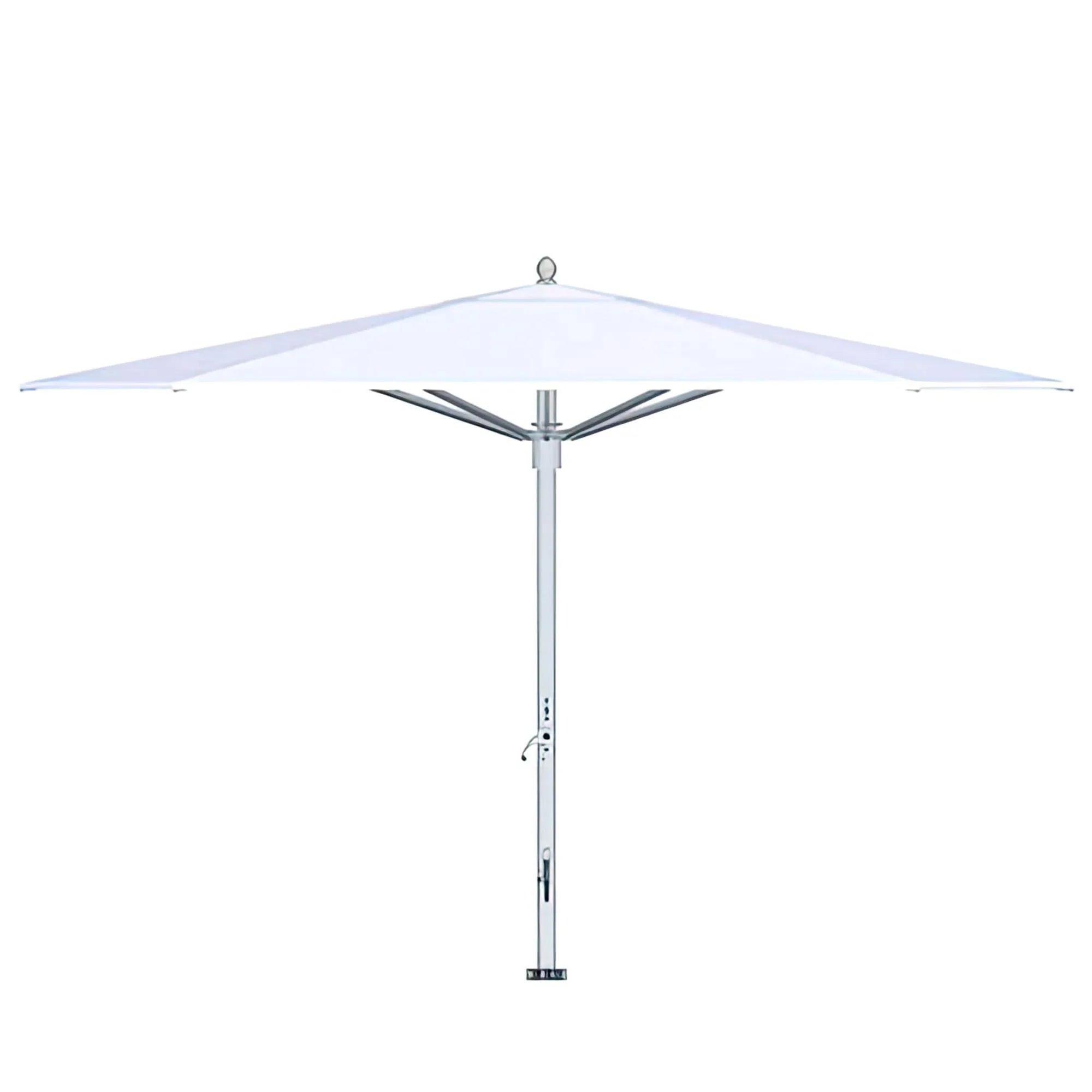
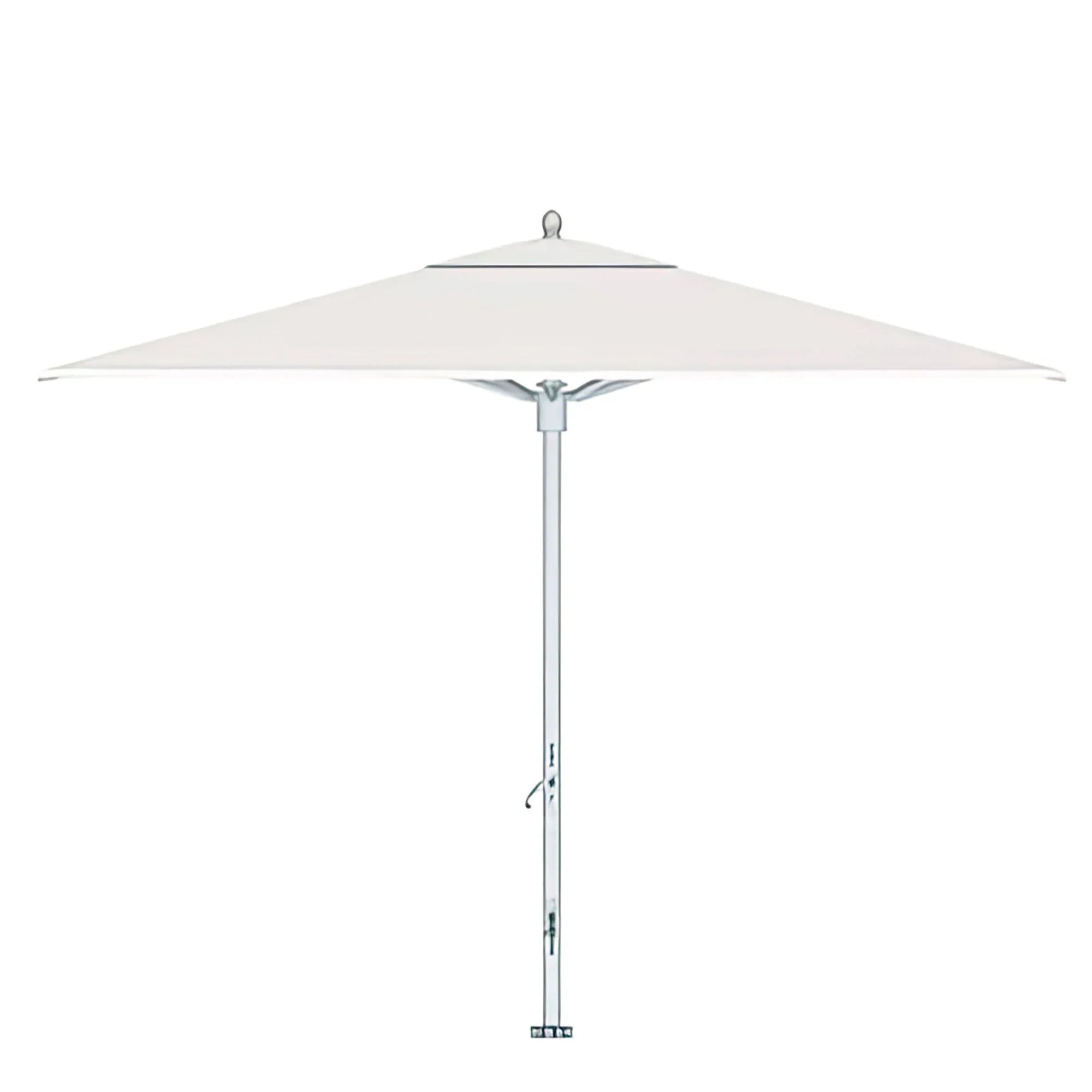
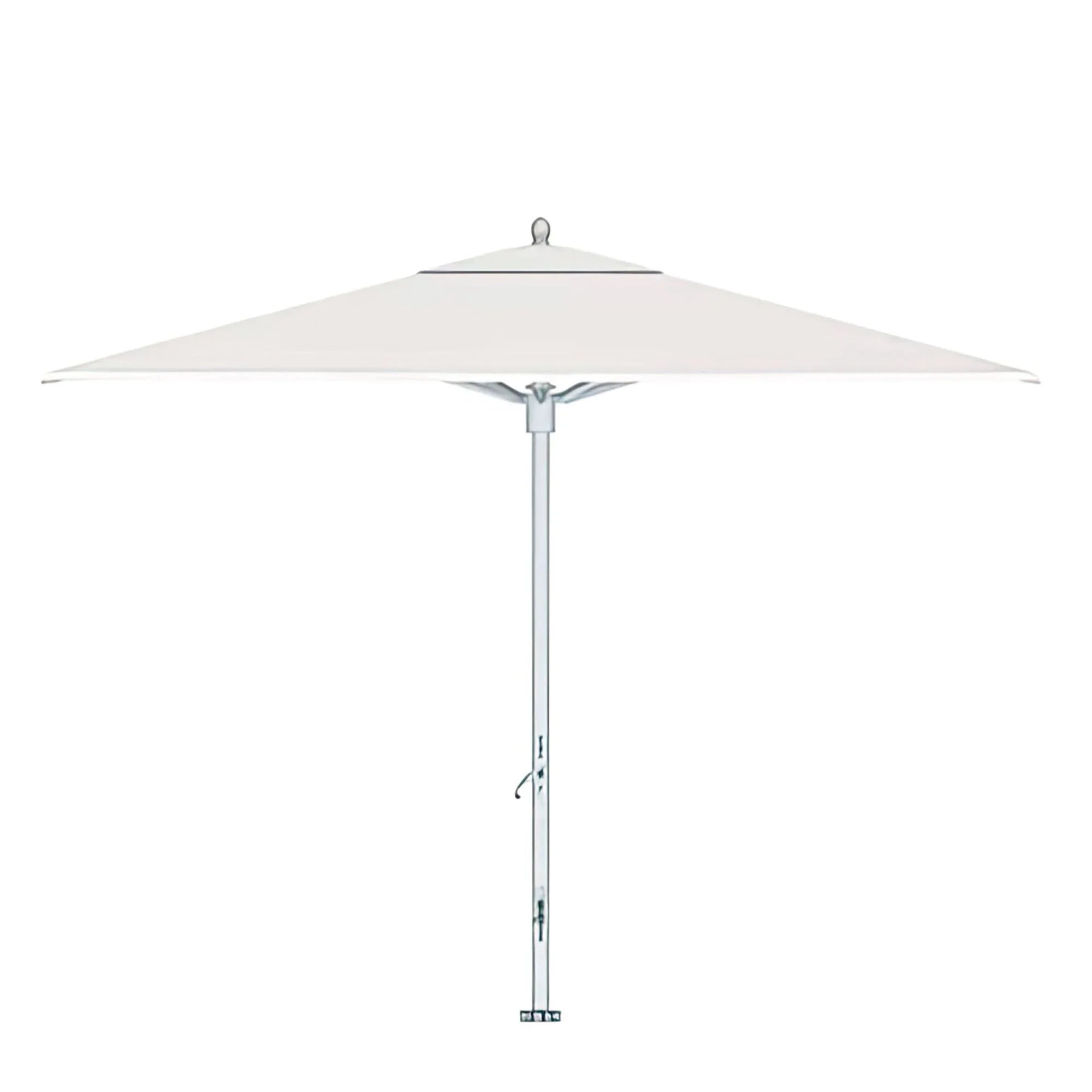
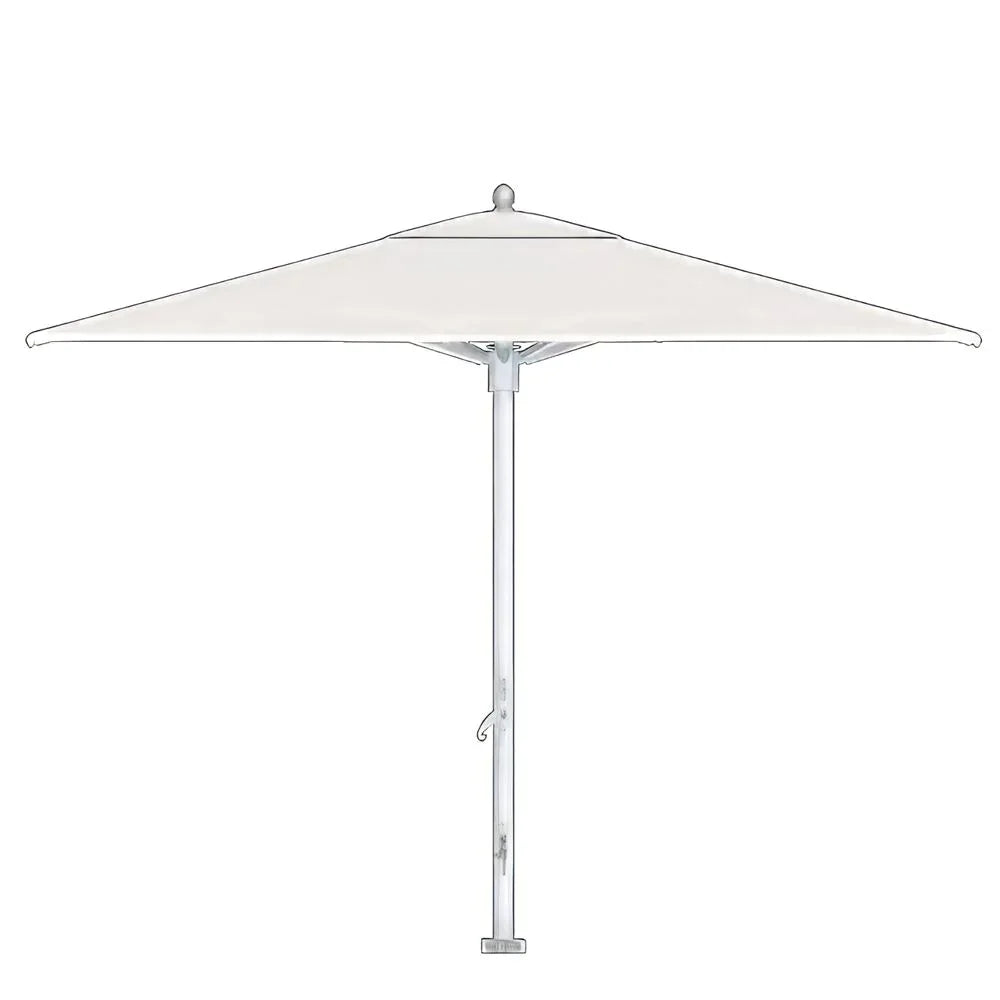
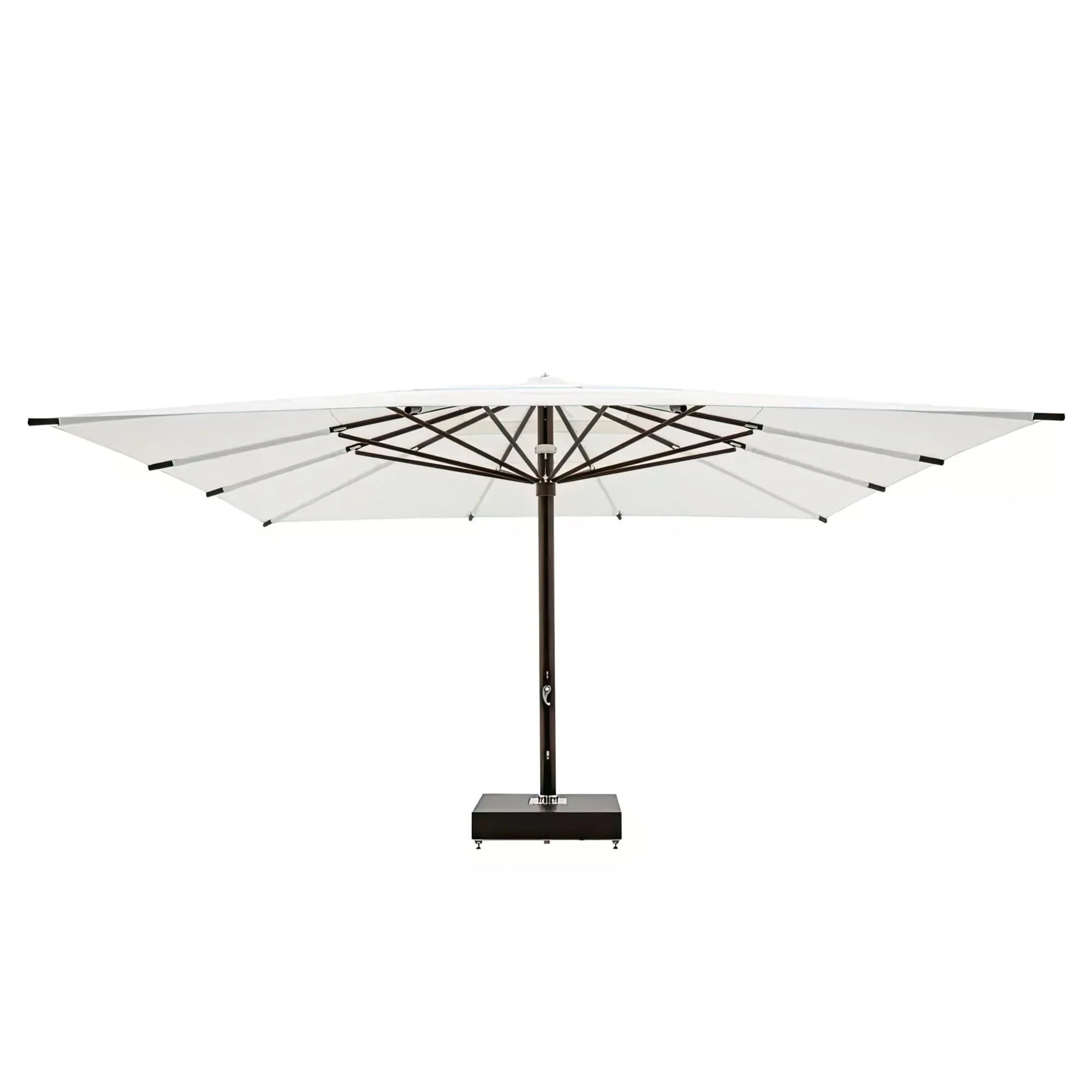
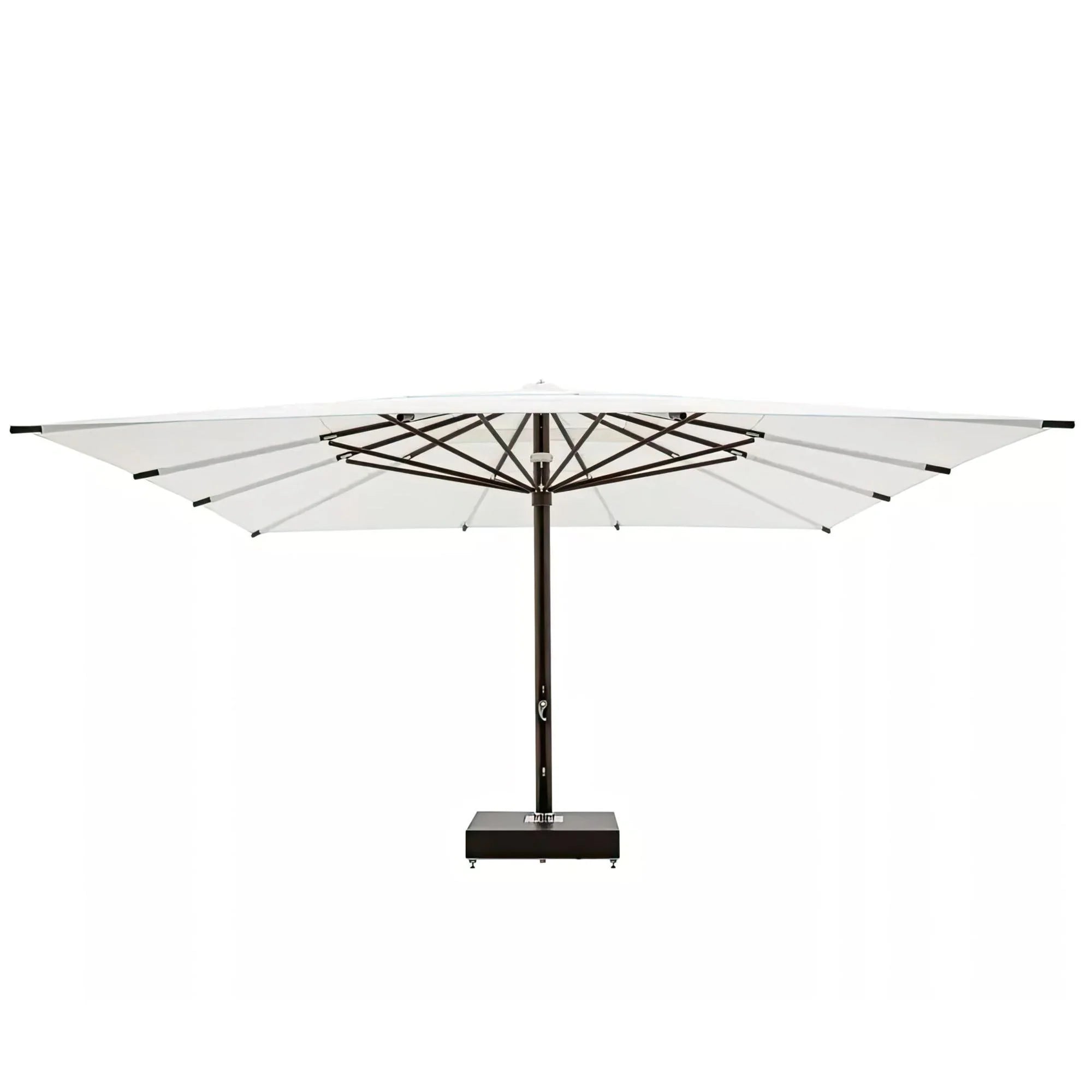
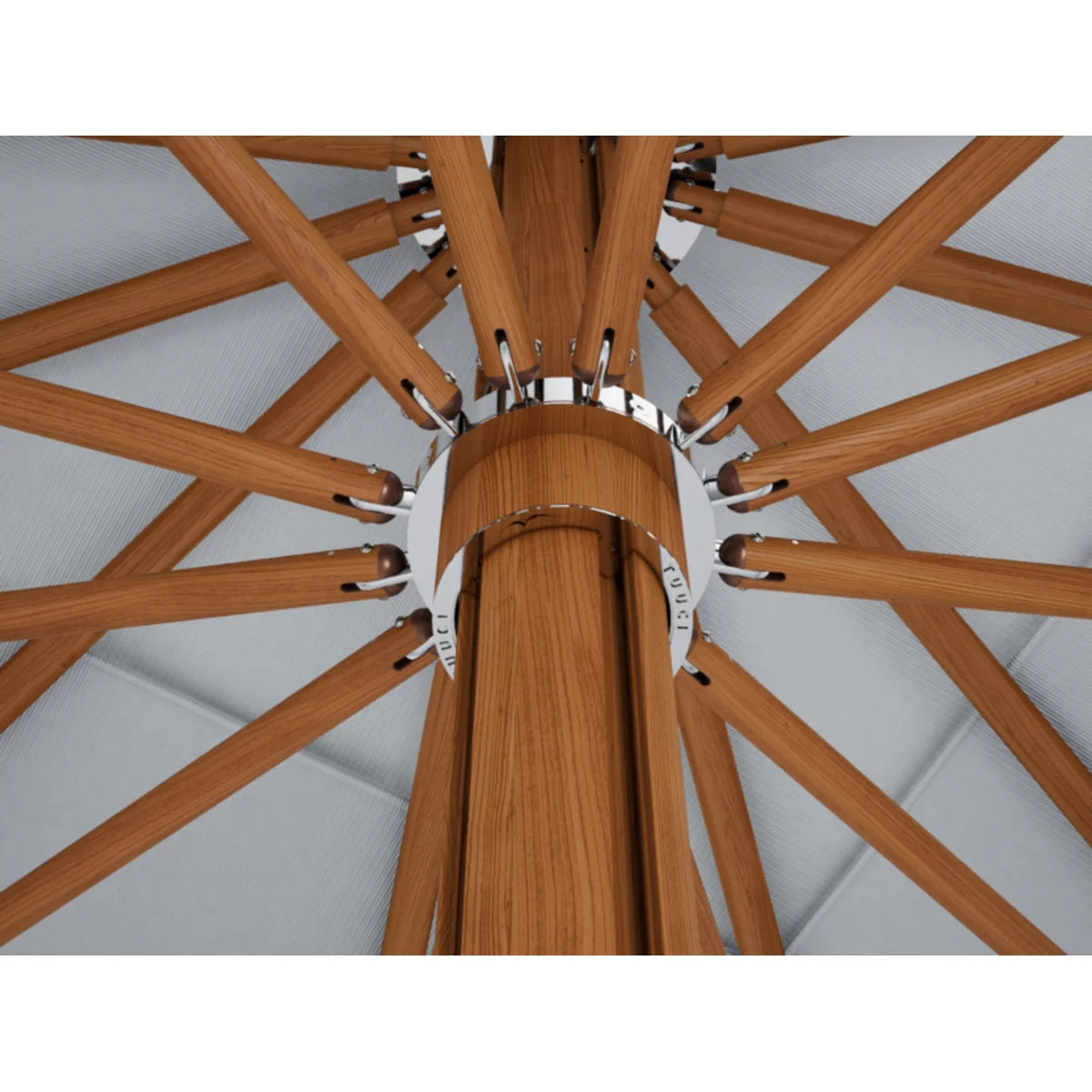
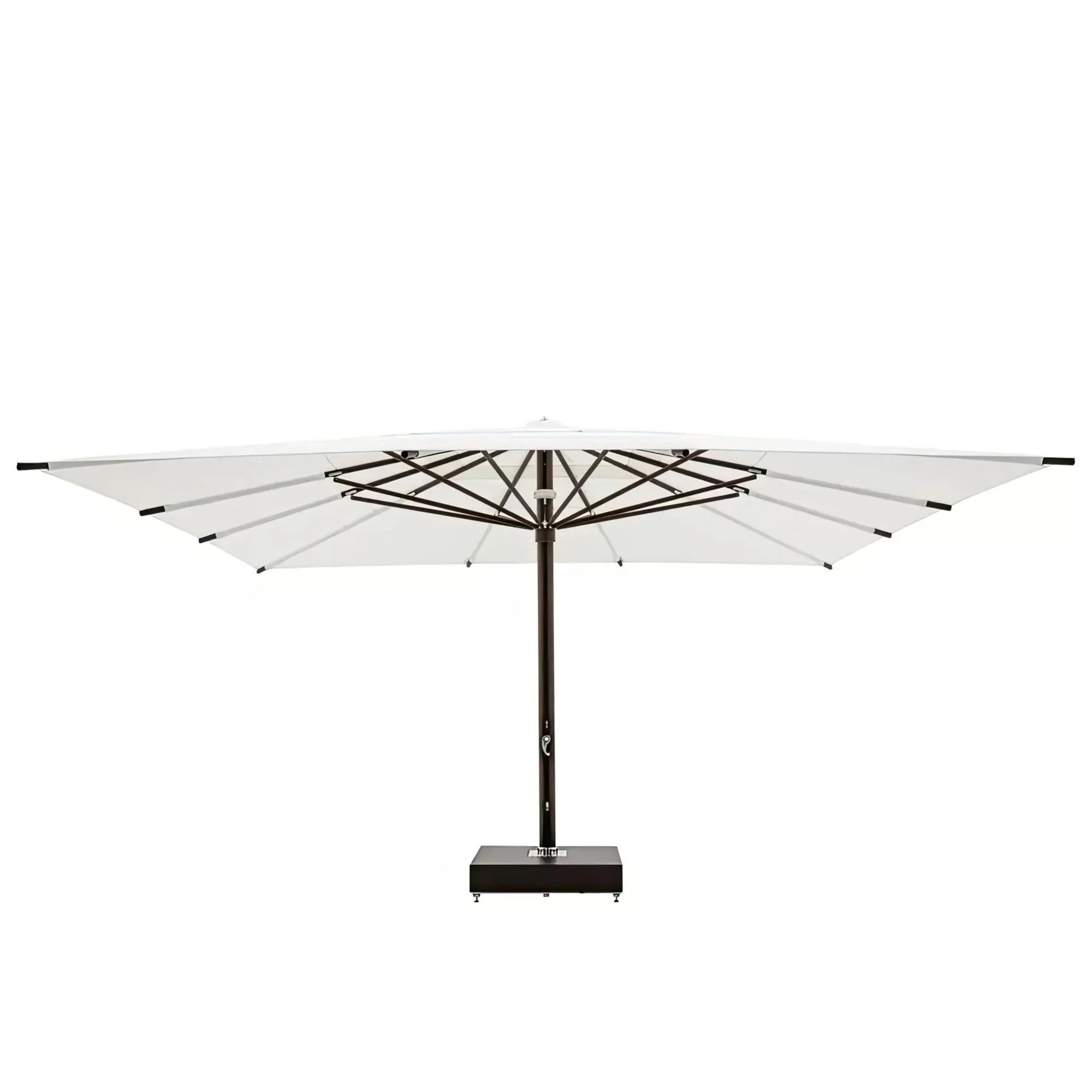
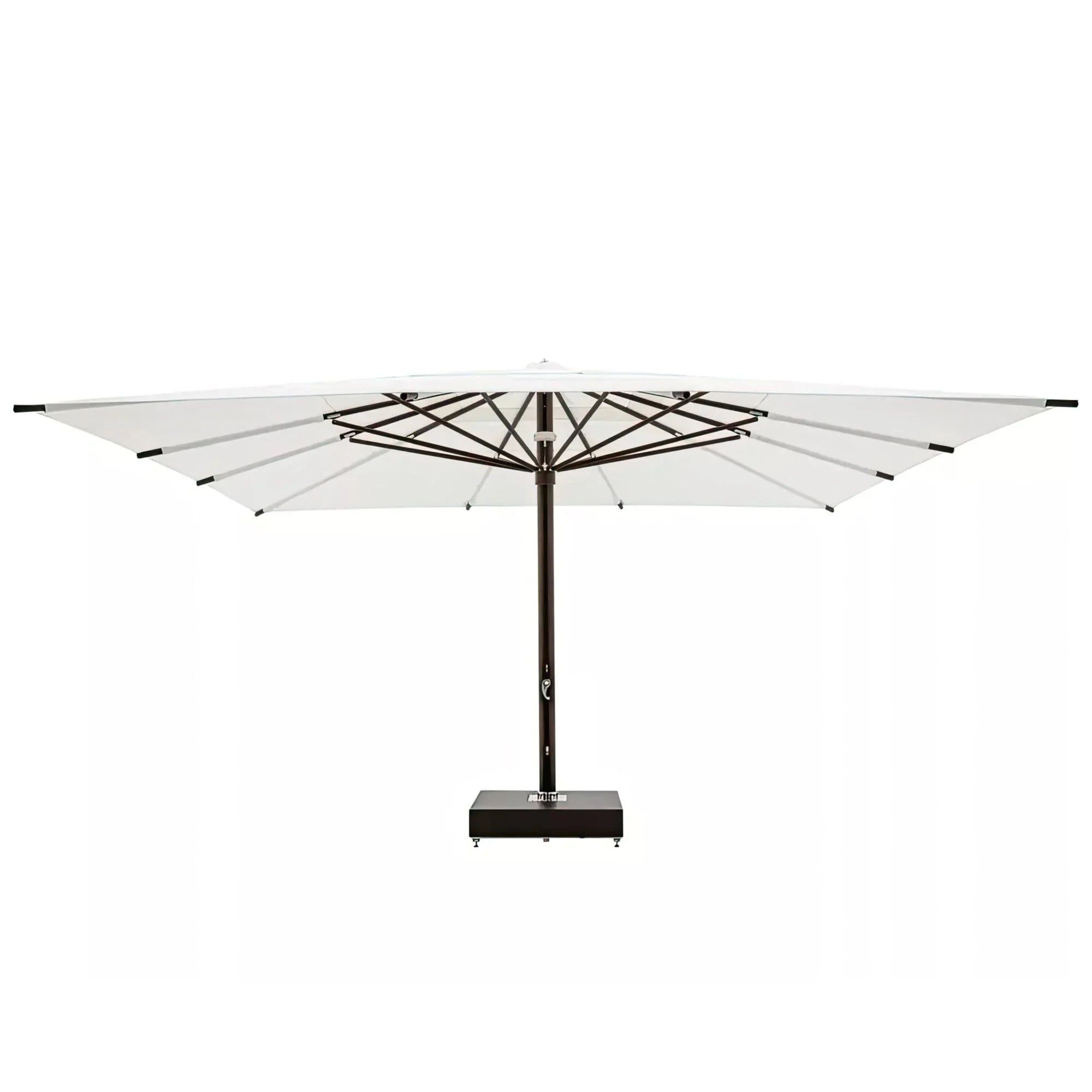
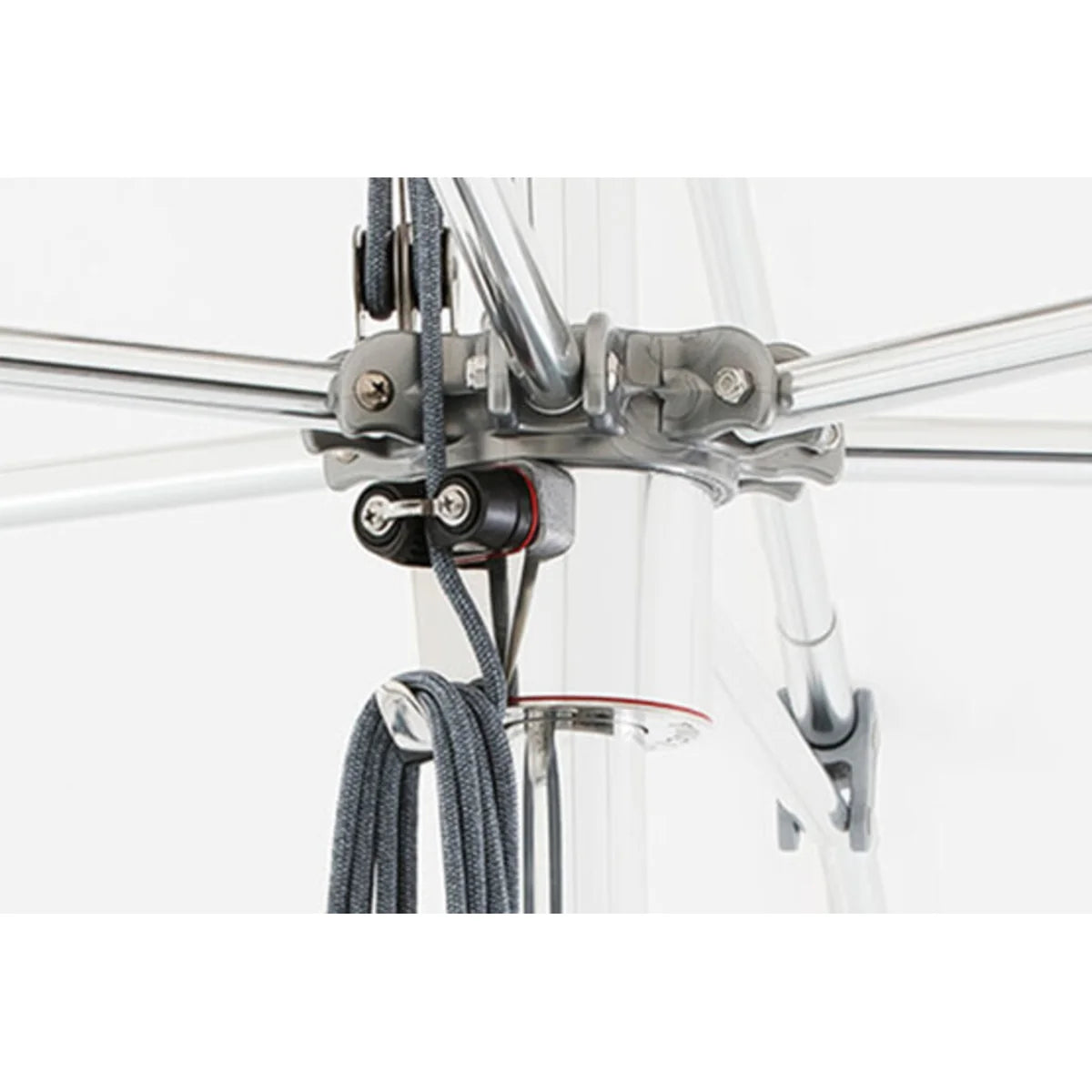
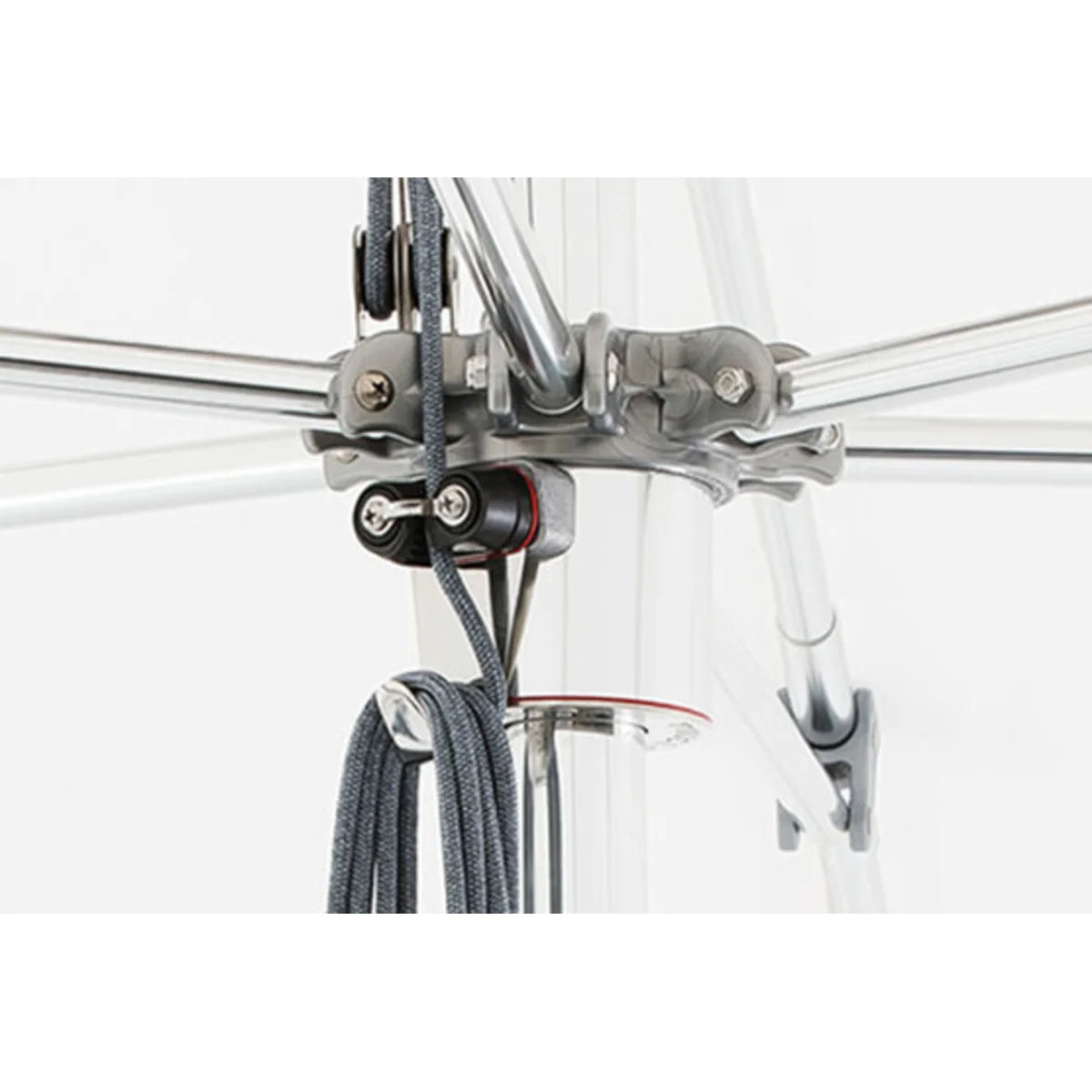
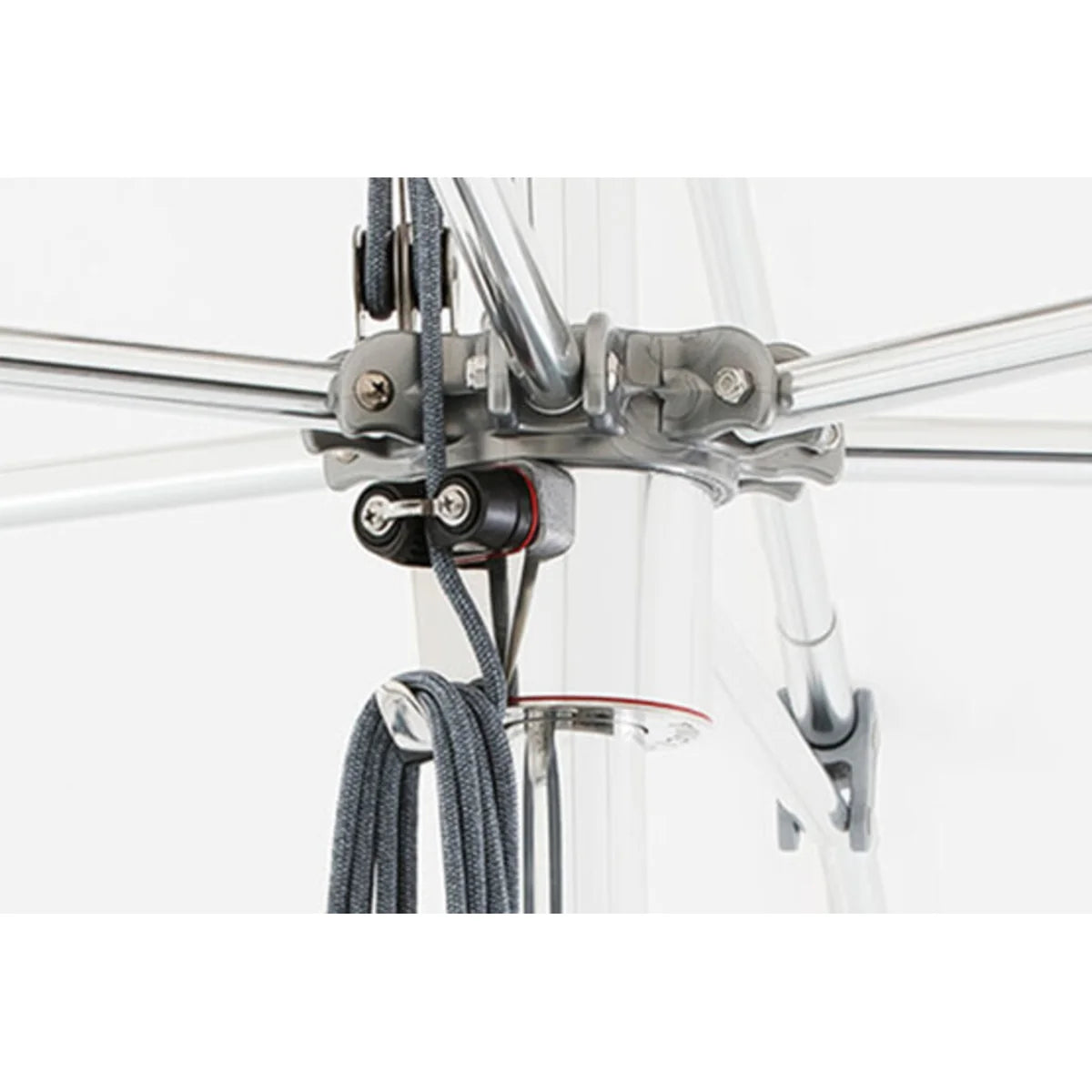
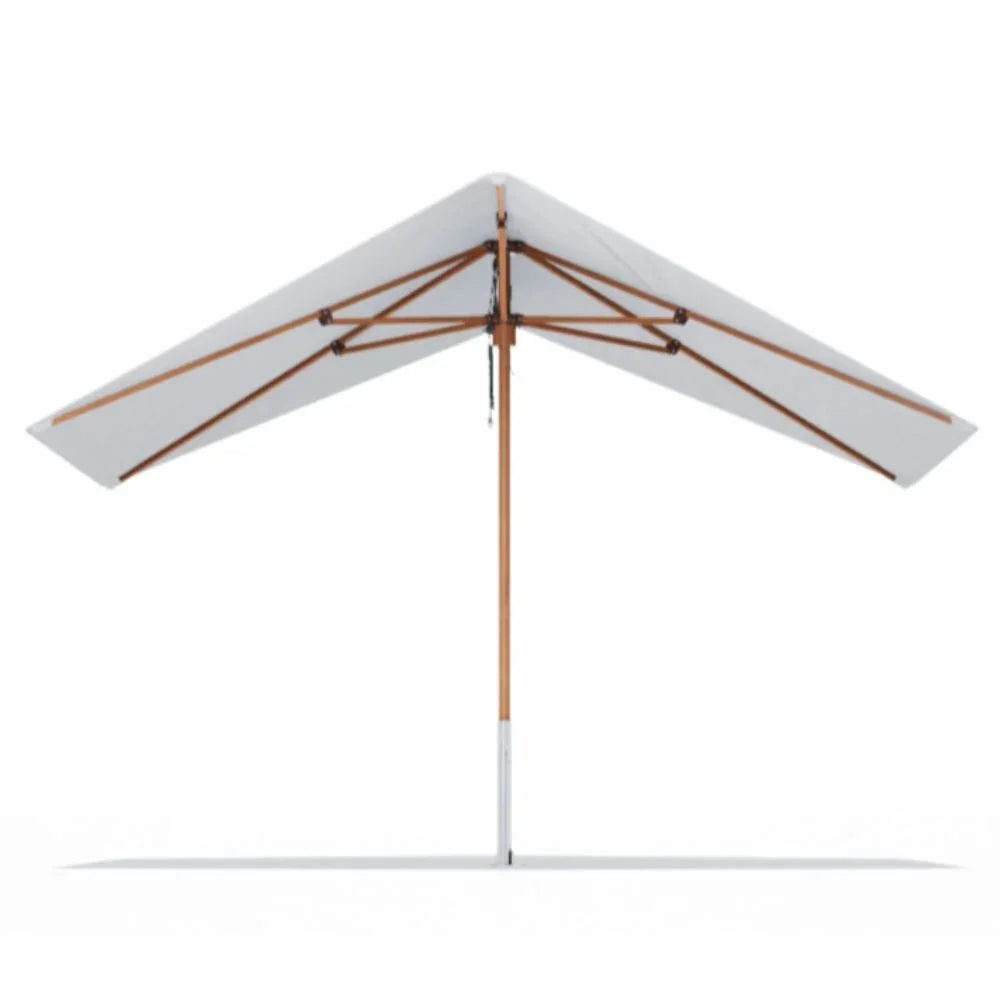
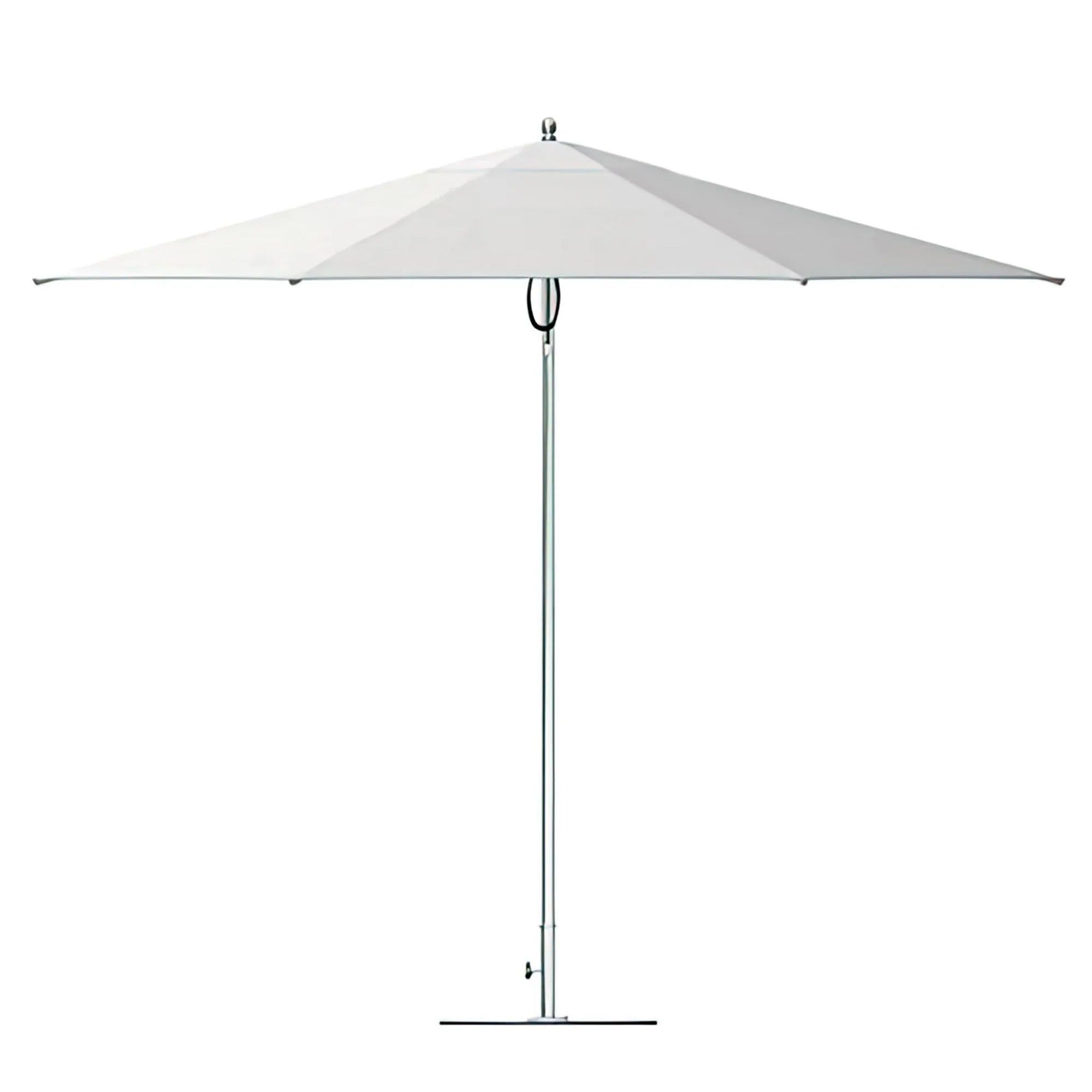
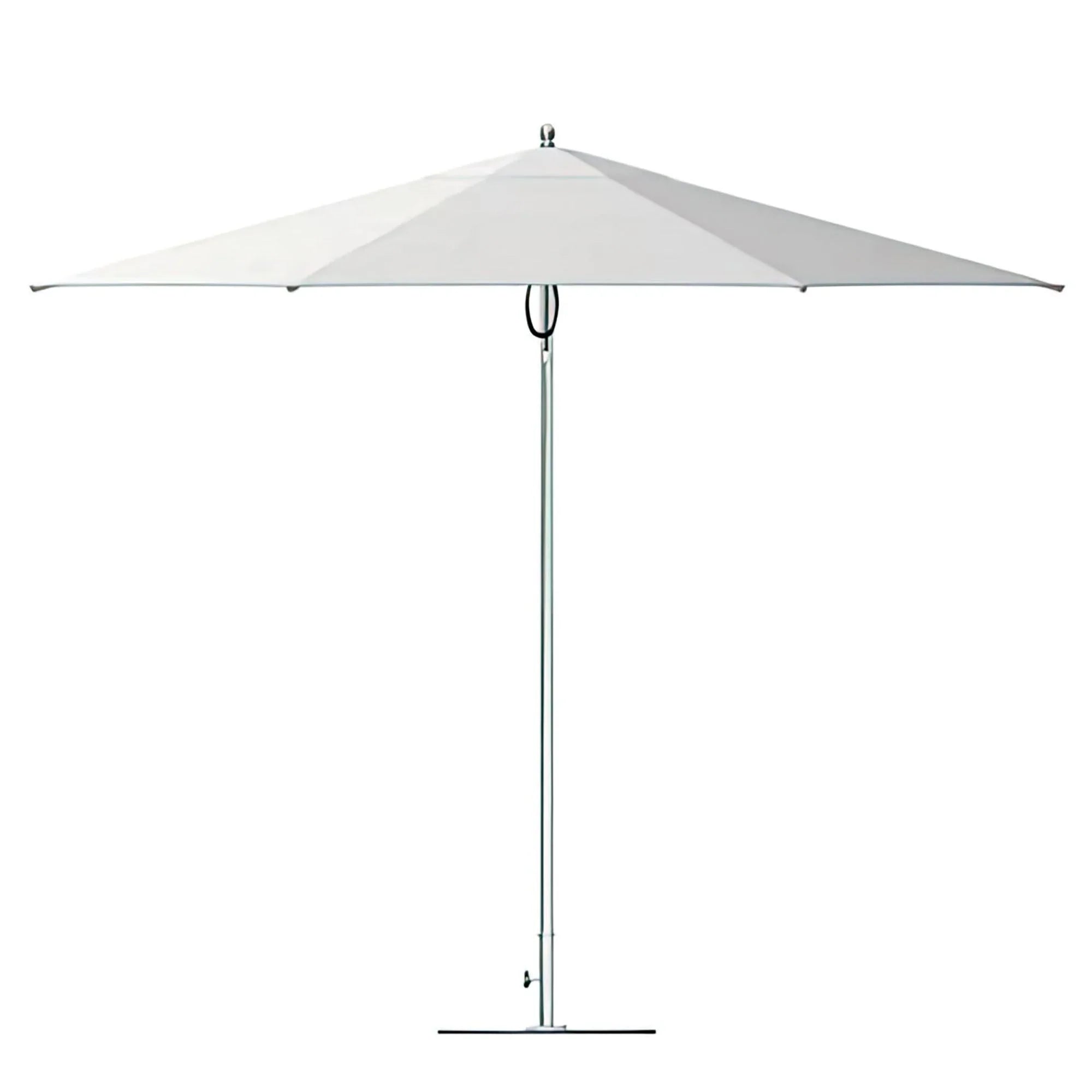
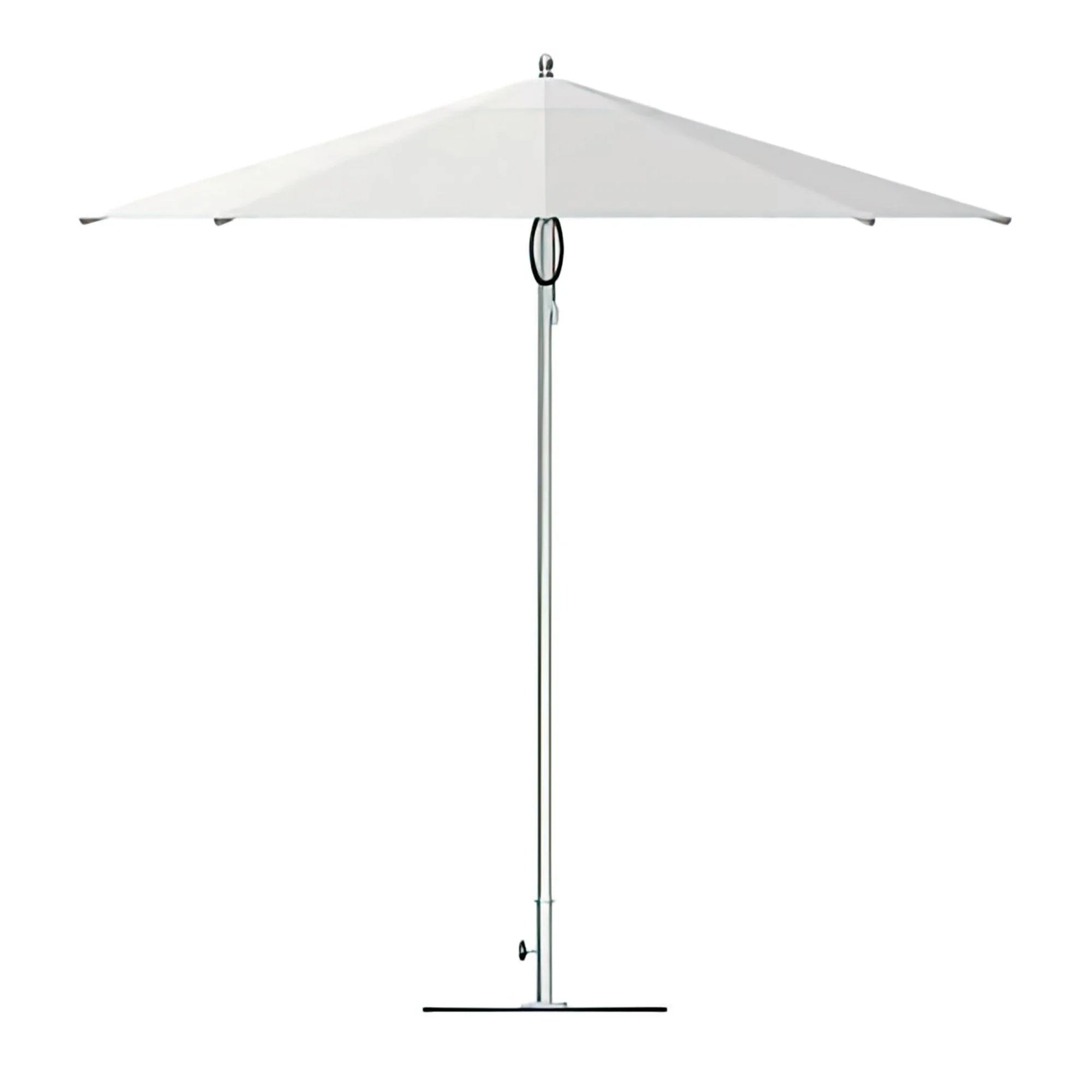
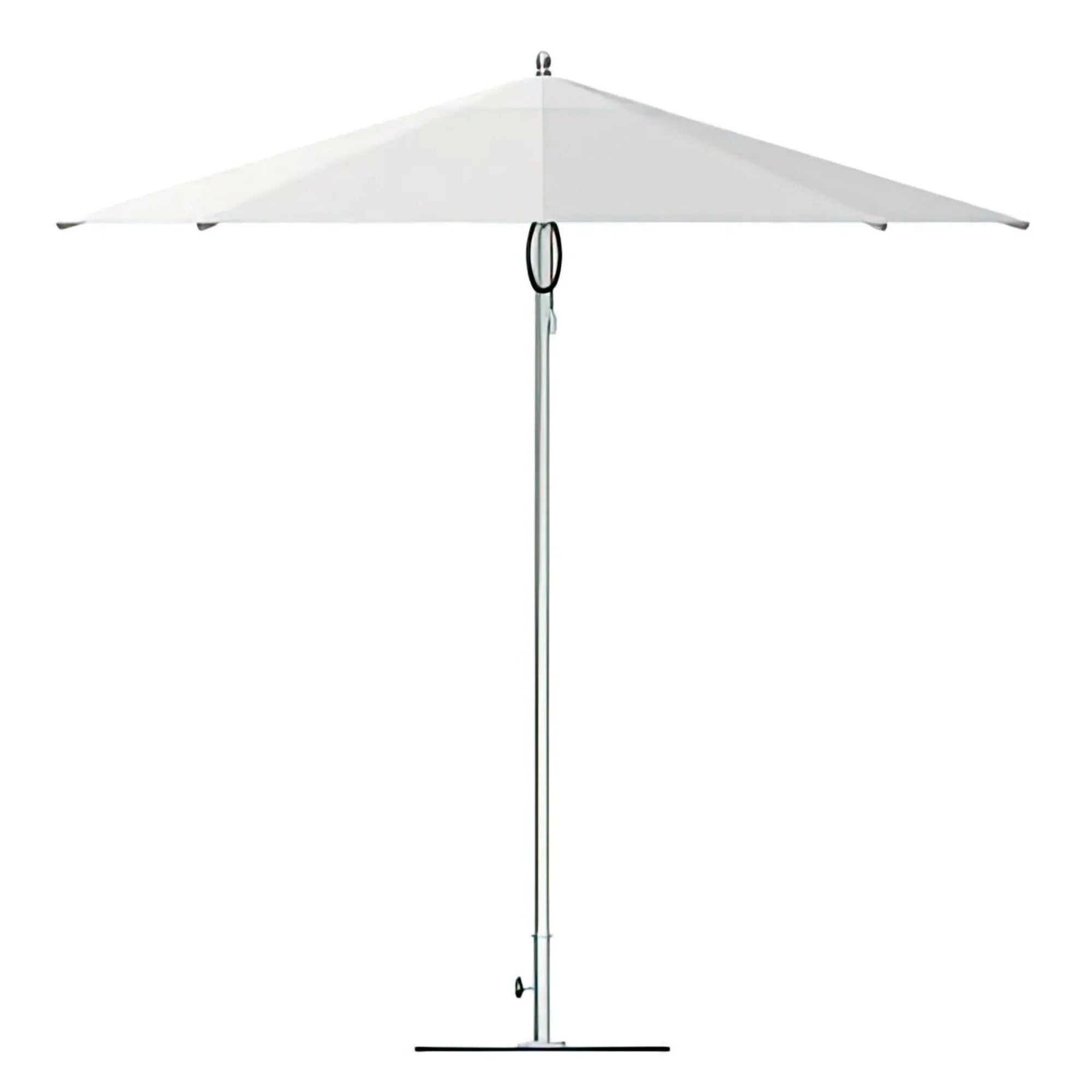
The difference is structural, not cosmetic. A residential market umbrella ships with a 1.5-inch aluminum pole, stamped hub fittings, and a polyester canopy built for occasional weekend deployment. Fine for a backyard. A commercial umbrella starts at a 2-inch pole diameter, often 2.5 inches on hospitality-grade models, in powder-coated aluminum or galvanized steel. Cast bronze or aluminum hardware runs through the rib assembly, and the crank system is engineered for the torque of daily operation rather than the occasional Saturday.
Sunbrella Solution-Dyed Canopies
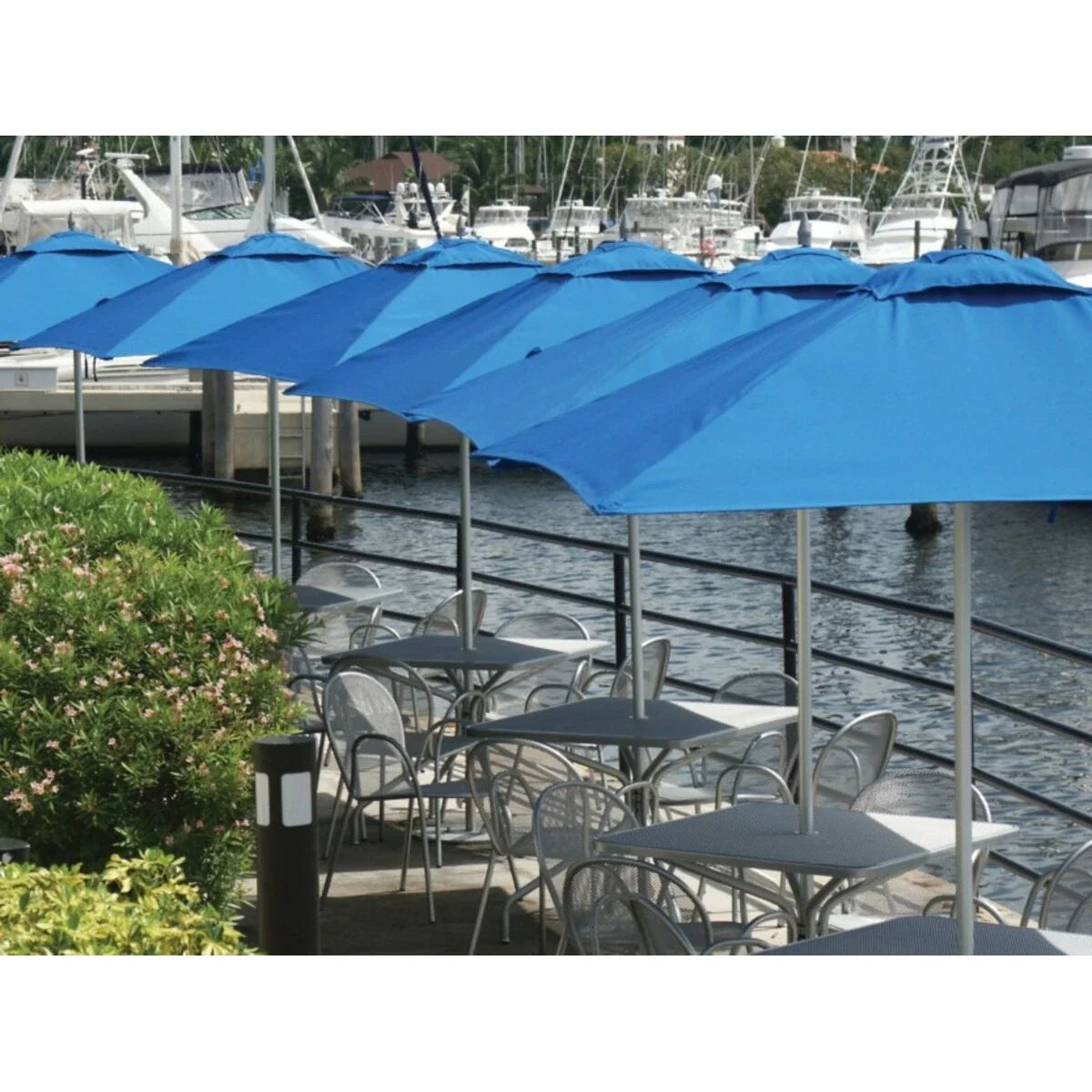
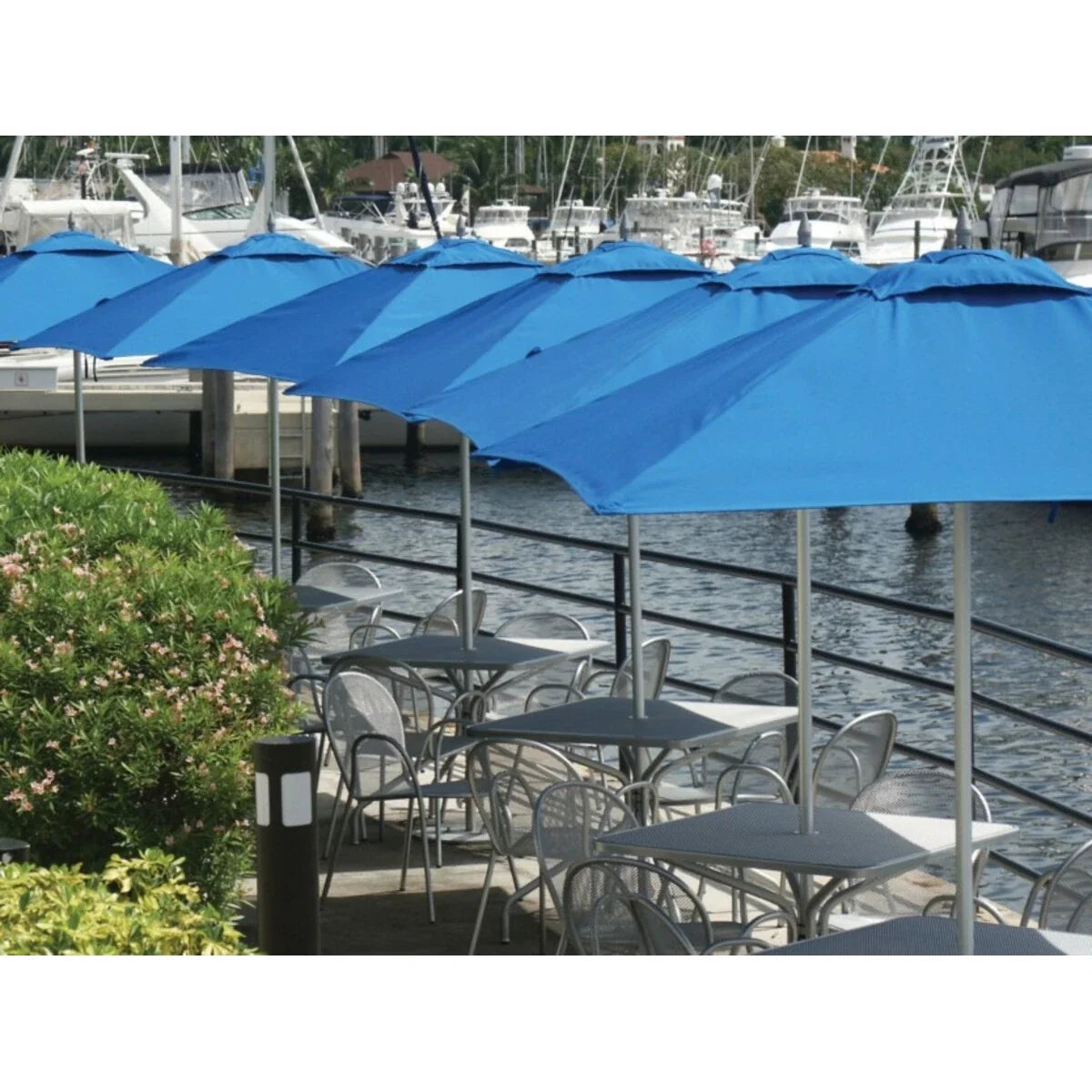
Sunbrella solution-dyed acrylic dominates the commercial canopy market for a simple structural reason: the color lives inside each fiber at the polymer level, not on the surface. Surface treatments fade under UV and repeated cleaning. Fiber-level color doesn't, which is why a cleaning crew can sanitize a dining terrace with dilute bleach and the canopy comes through without fading or degrading. The practical payoff is a 6-to-10-year commercial UV rating and full bleach-clean safety, backed by a selection of over 100 colors and patterns so a property can hold its palette across a full redesign cycle rather than starting from scratch.
Mechanisms Built for Frequency
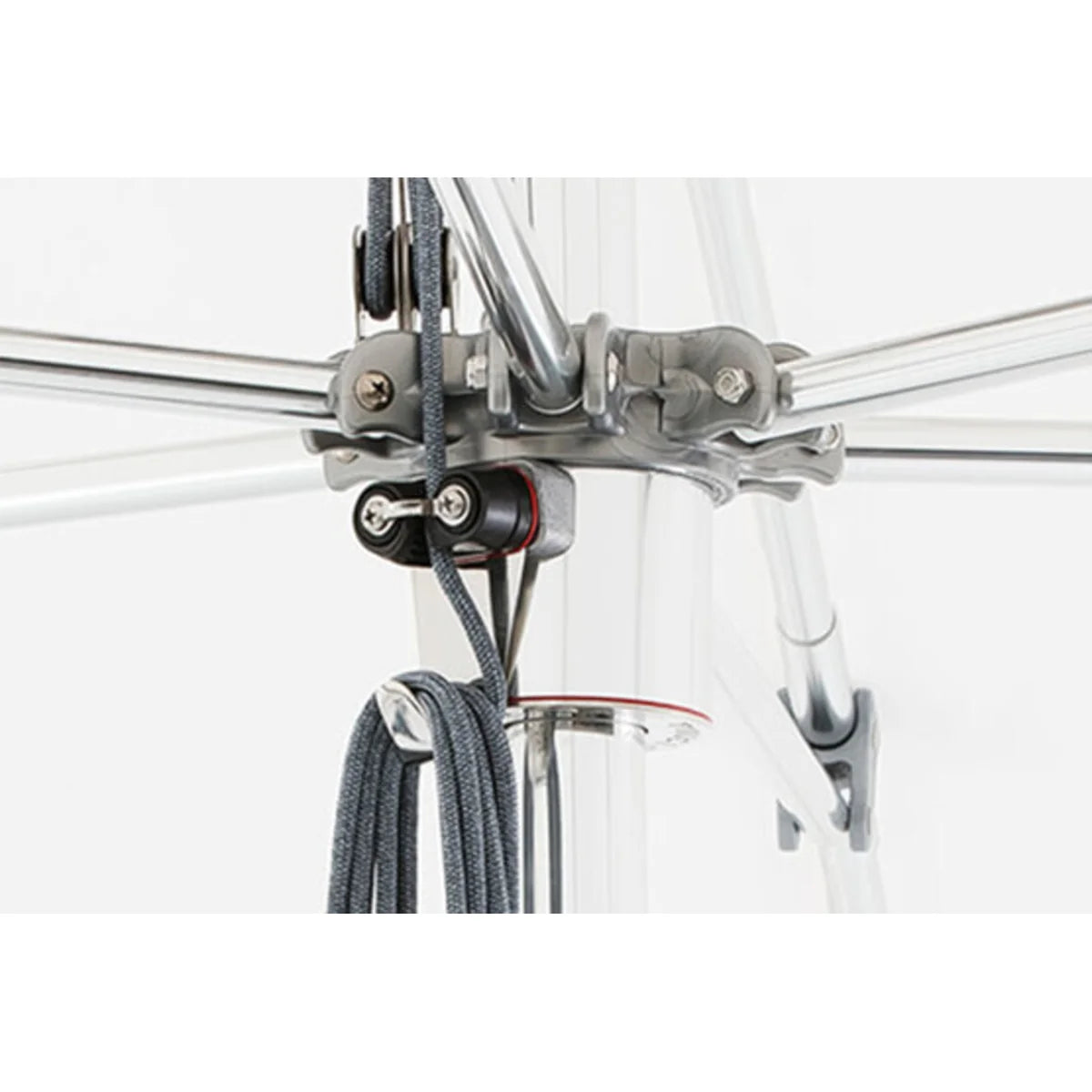
A commercial crank should feel as smooth at cycle 5,000 as it did at cycle five. That takes sealed internal components, stainless or brass hardware at every friction point, and tilt mechanisms with positive locking positions that hold their angle under sustained wind rather than drifting through a shift. Auto-tilt models link the tilt function to the opening motion, so the canopy tracks the sun automatically on each morning deployment. On a western or southern exposure with steep sun through lunch service, that one design choice eliminates a staff adjustment loop that would otherwise run every hour.
Market Umbrellas vs. Cantilevers: Matching Configuration to Space
Market Umbrellas for Dining Terraces
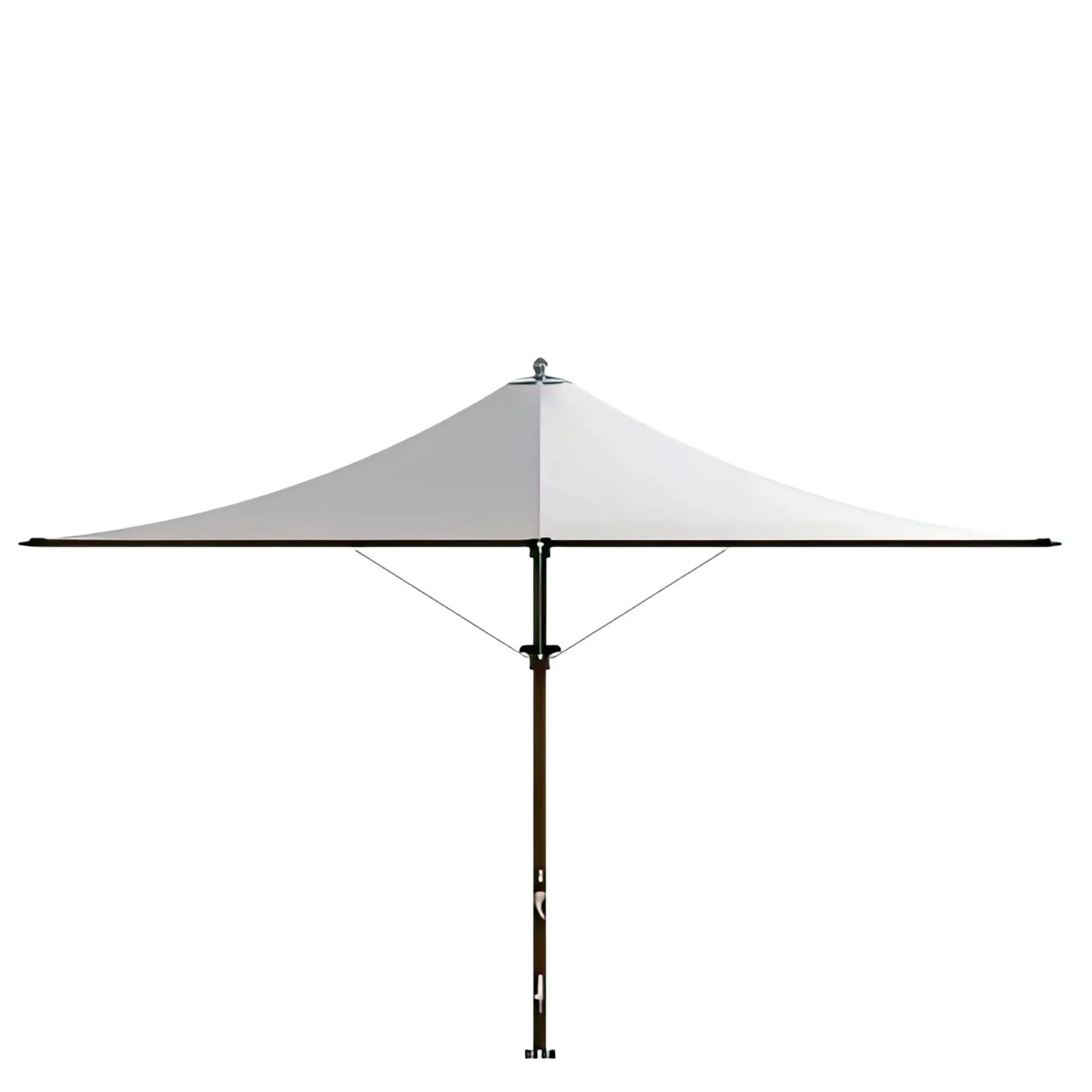
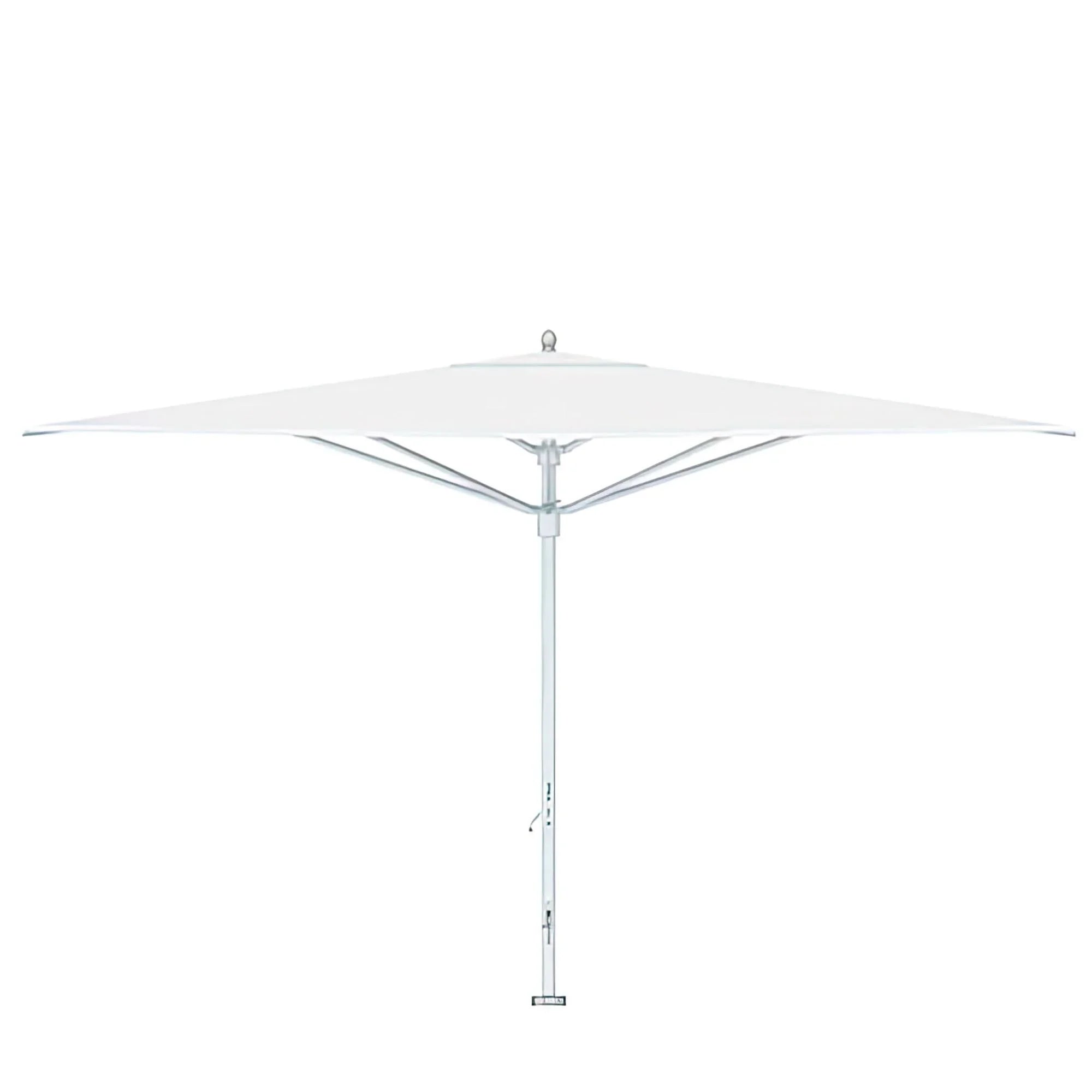
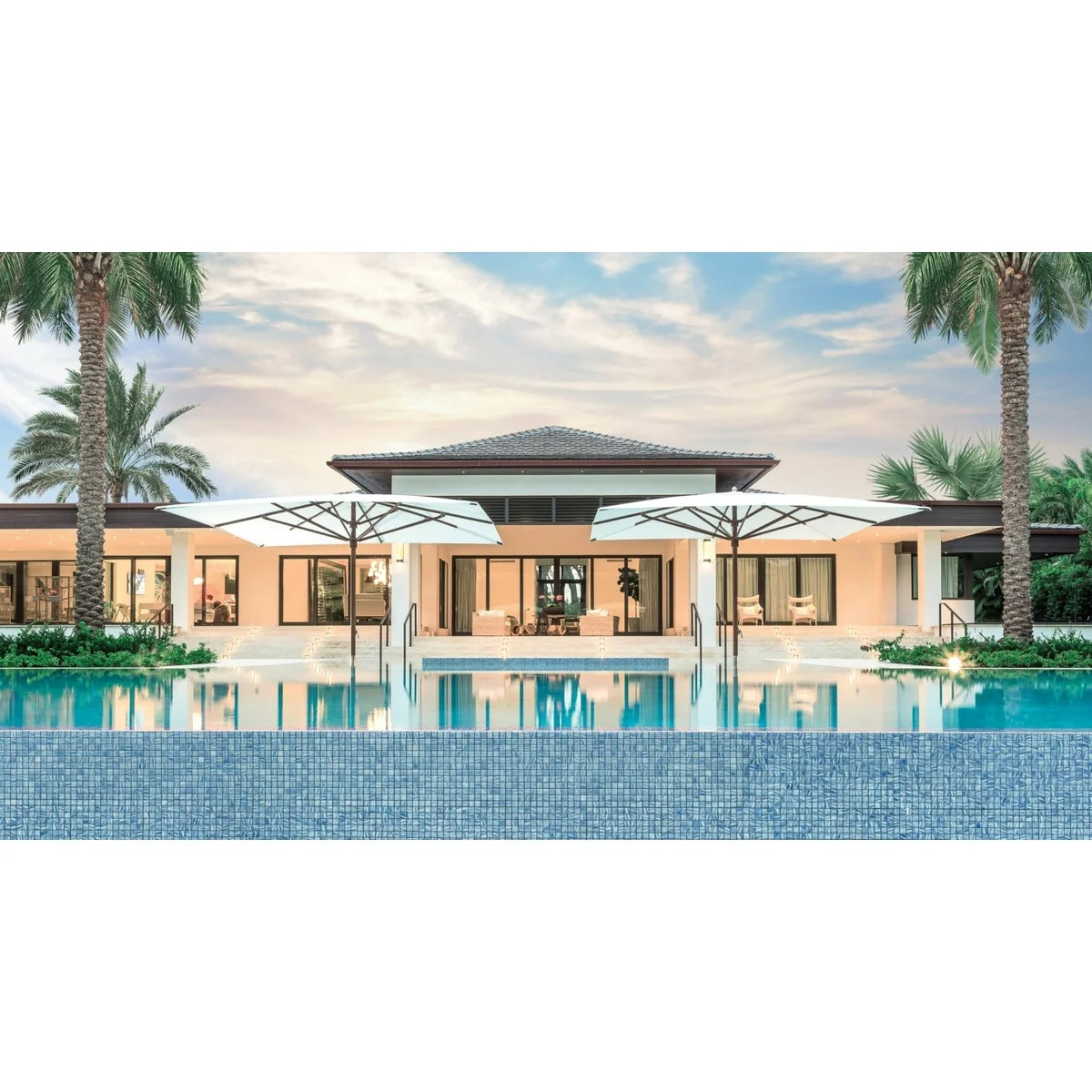
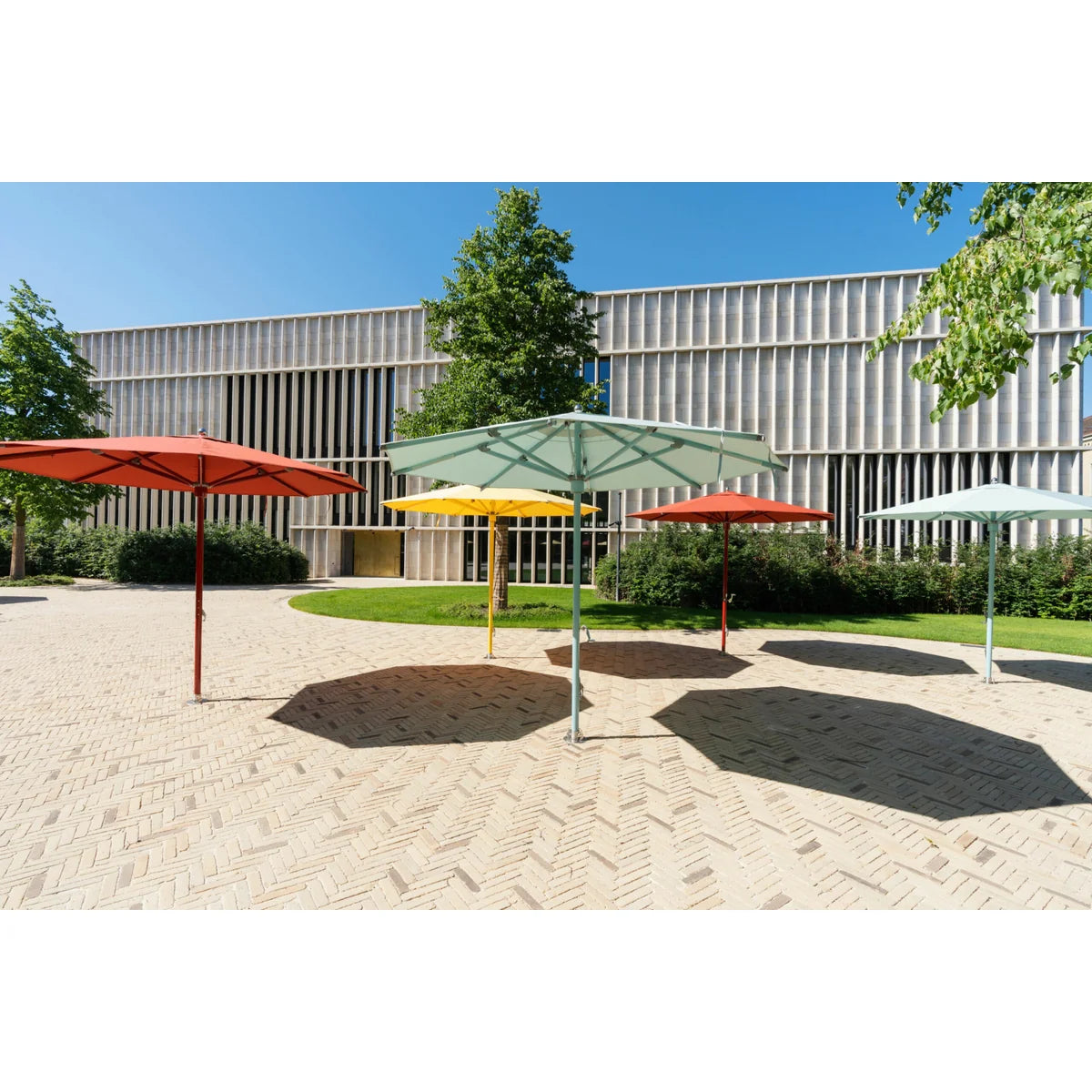
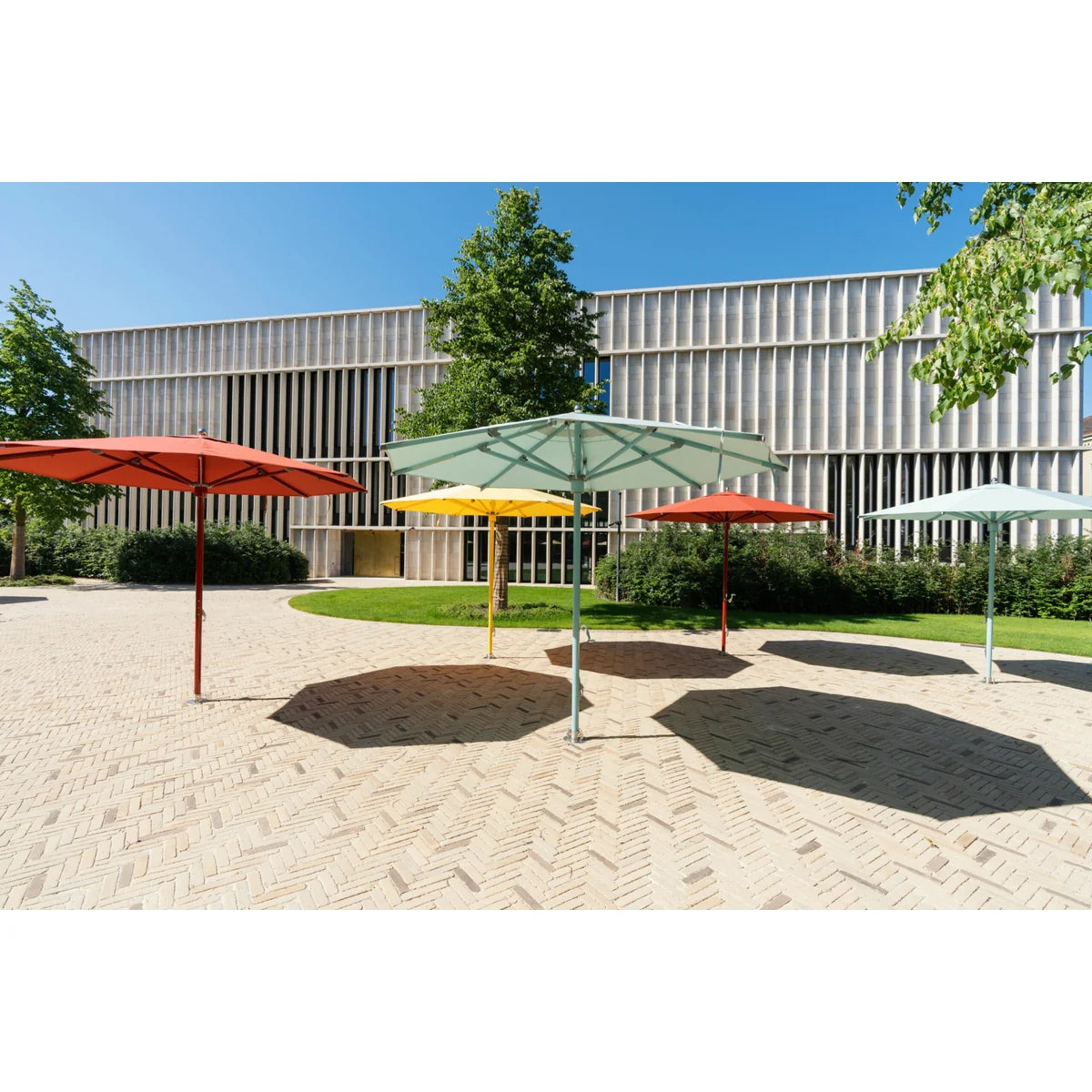
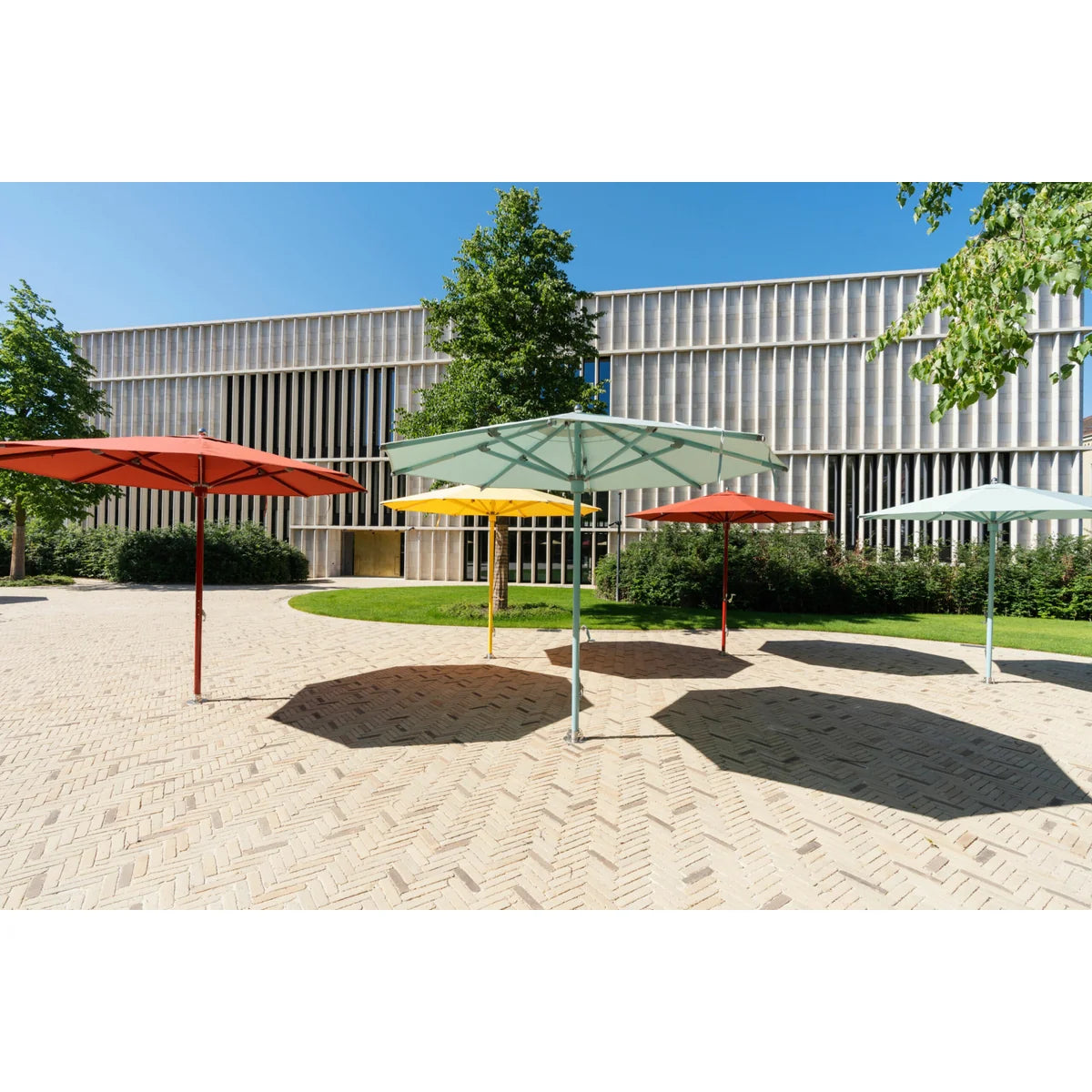
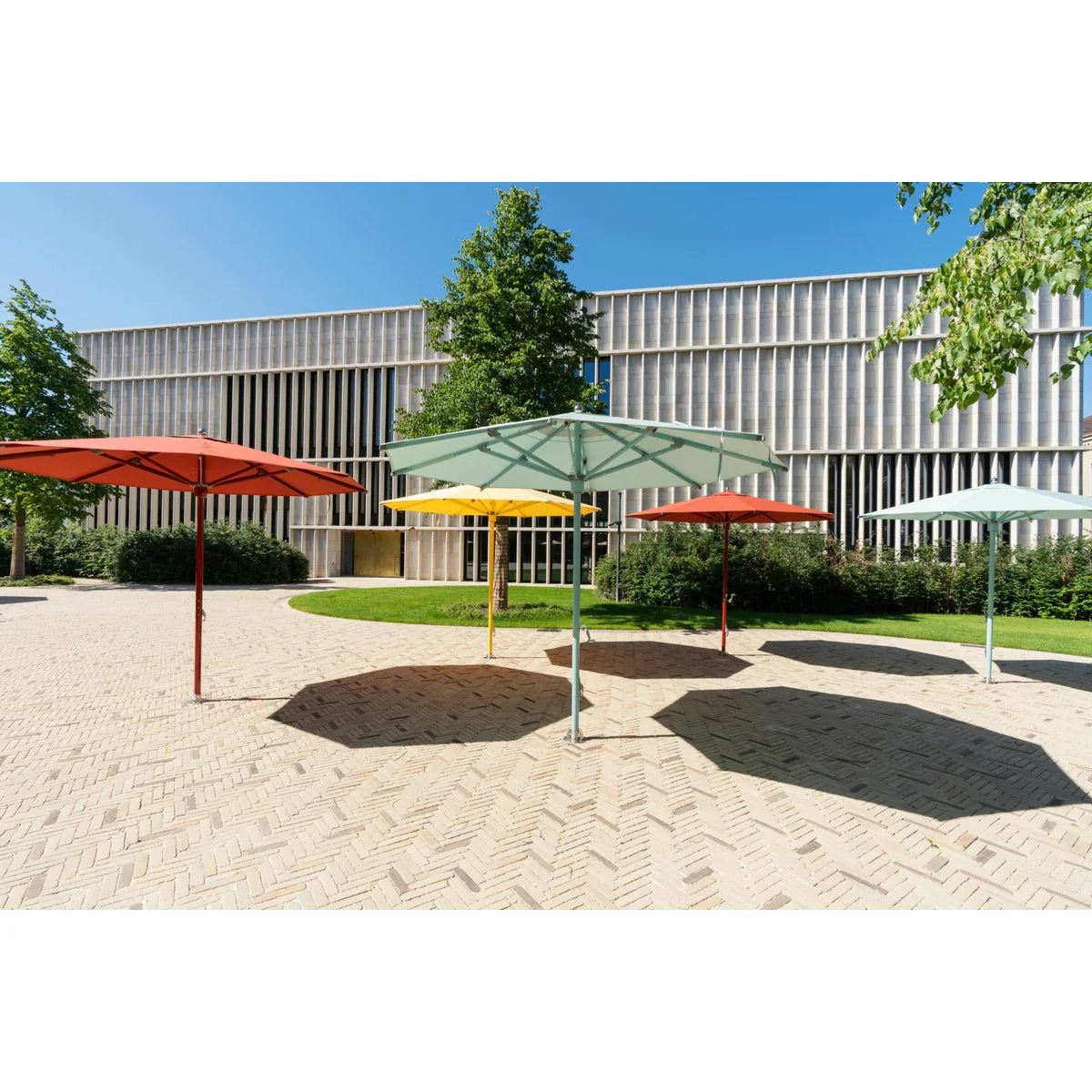
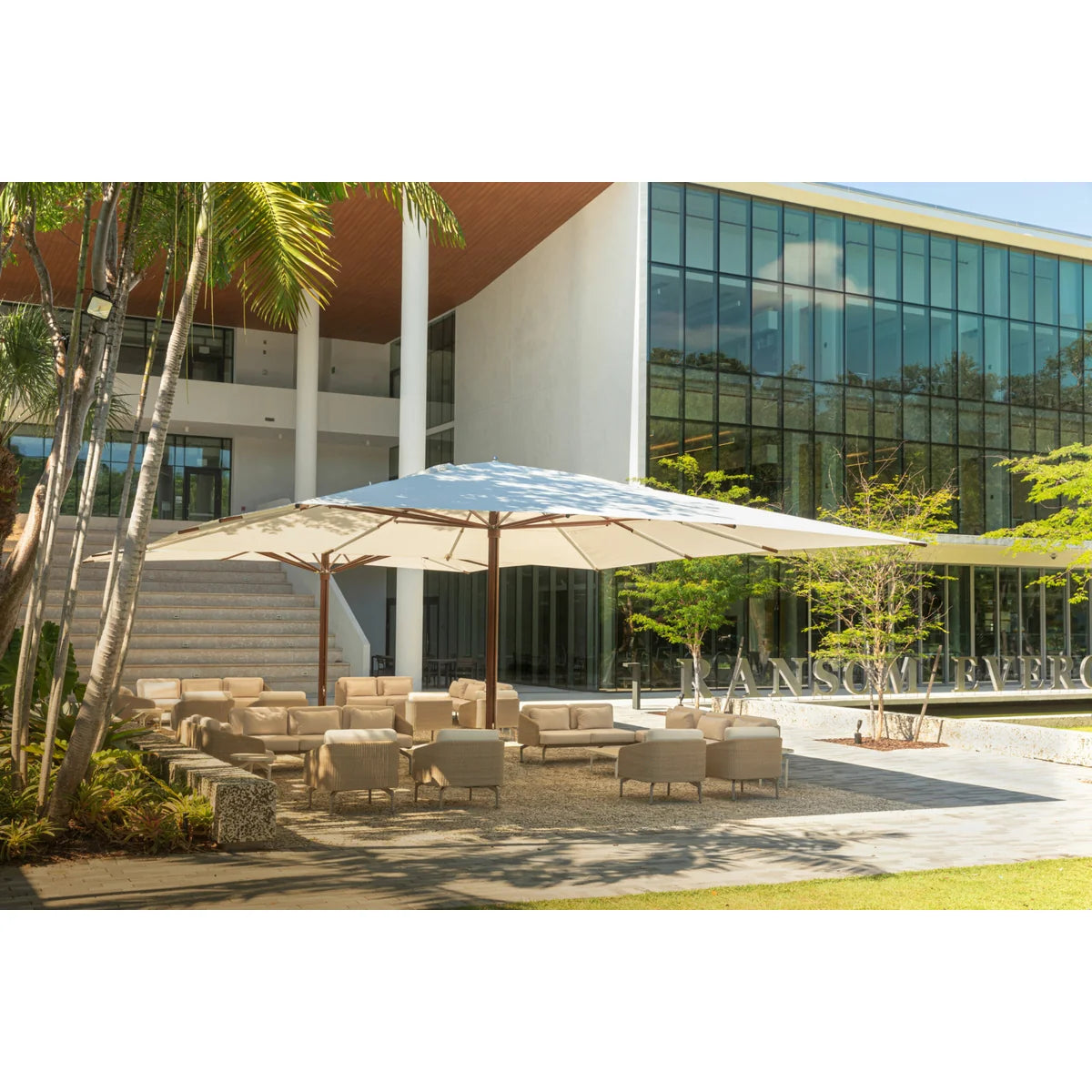
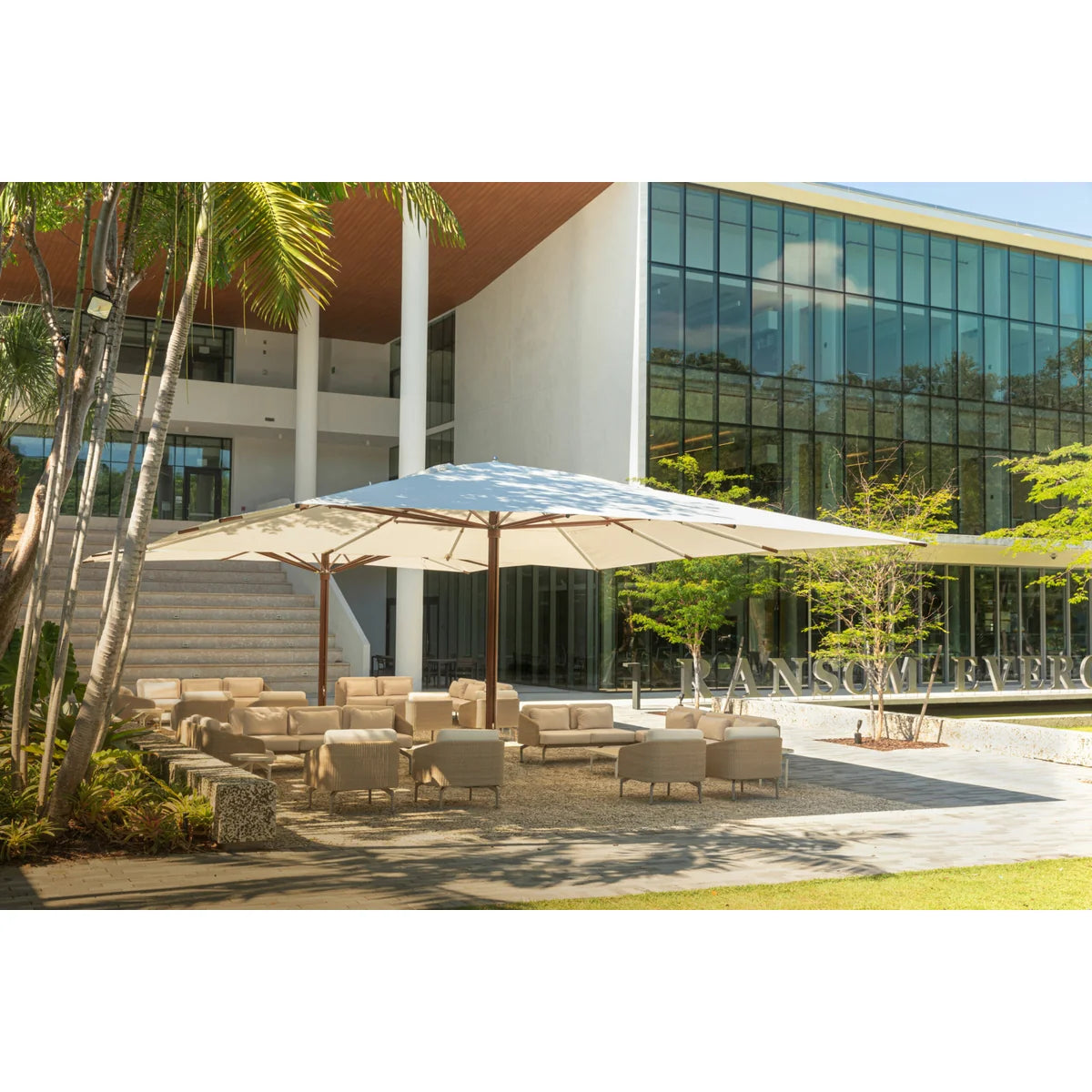
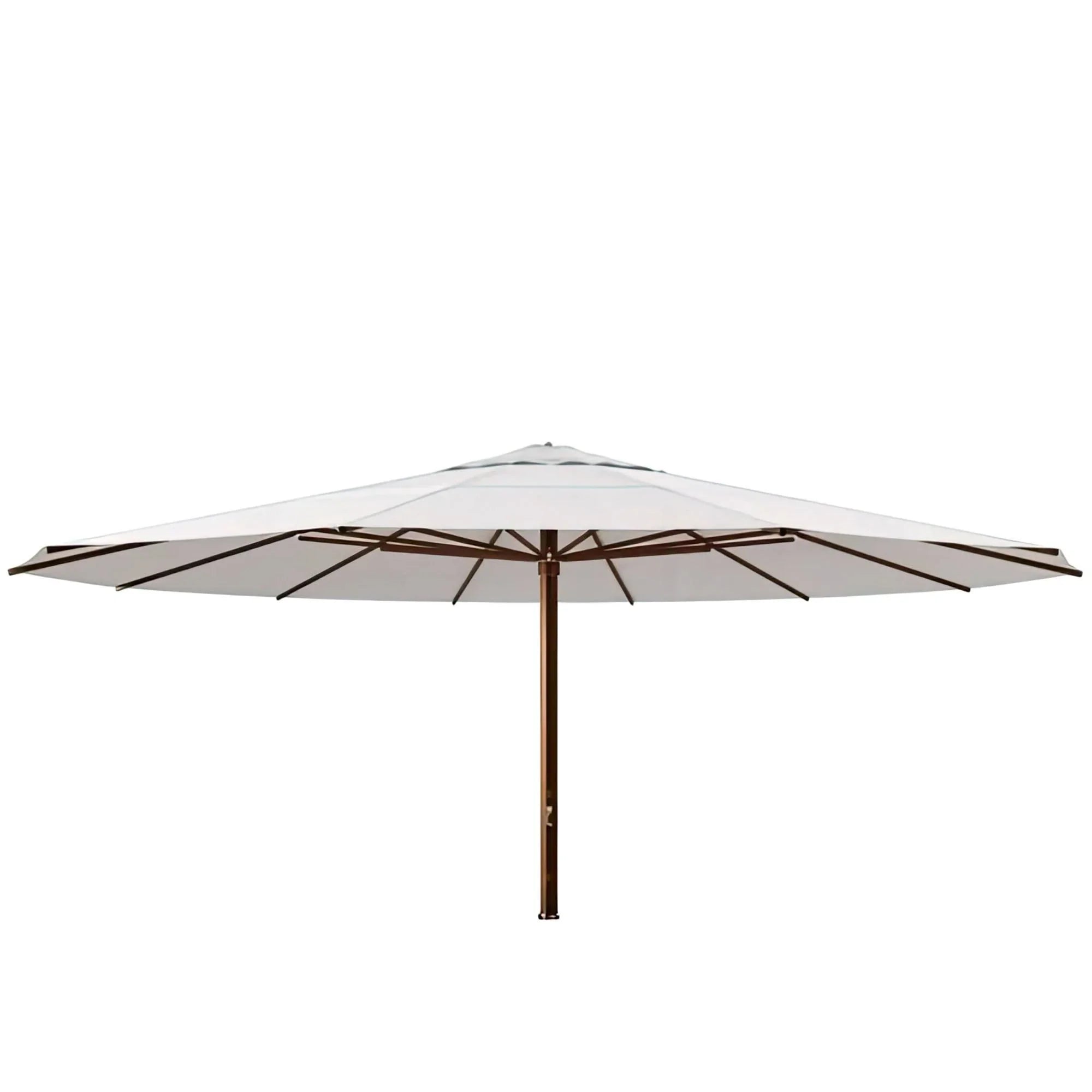
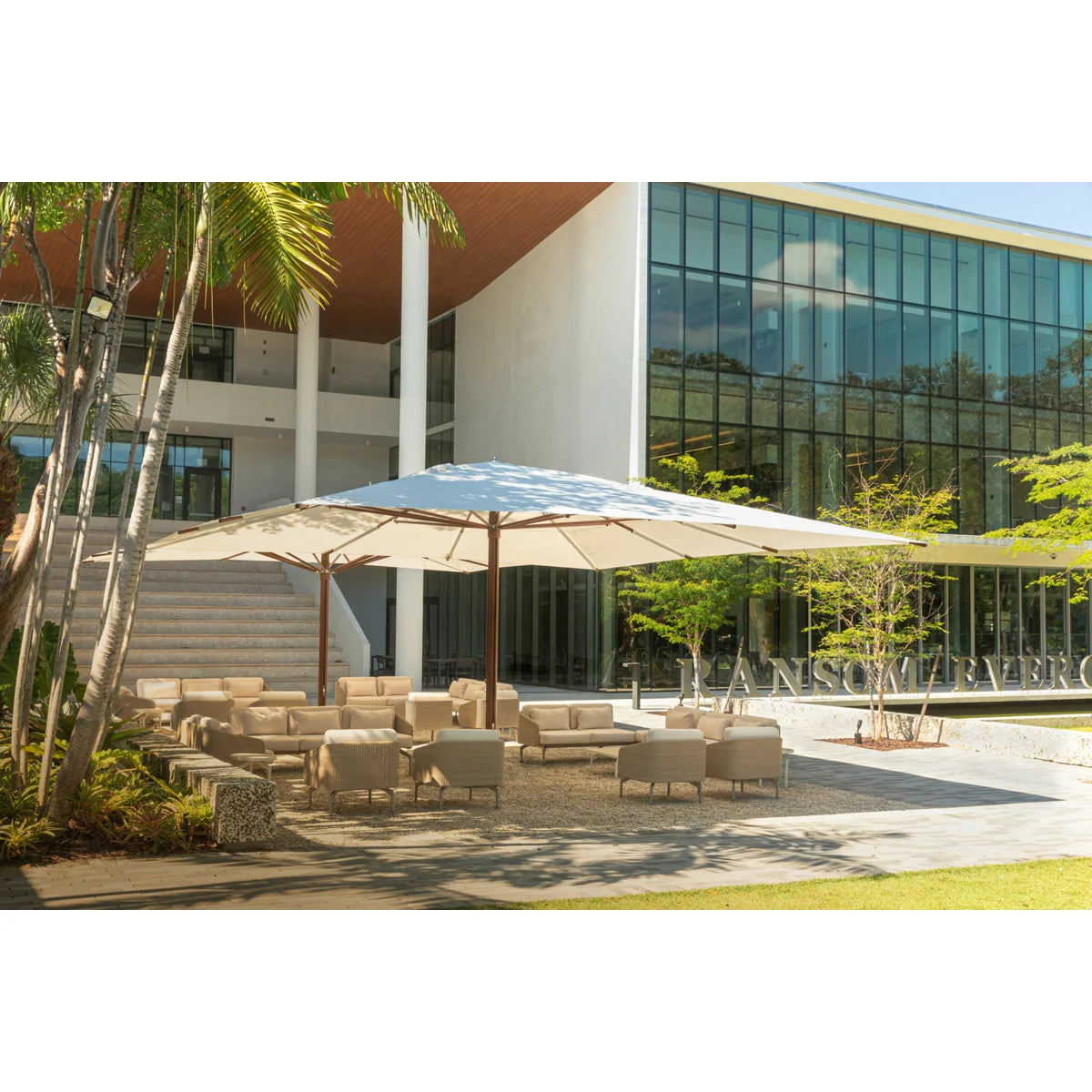
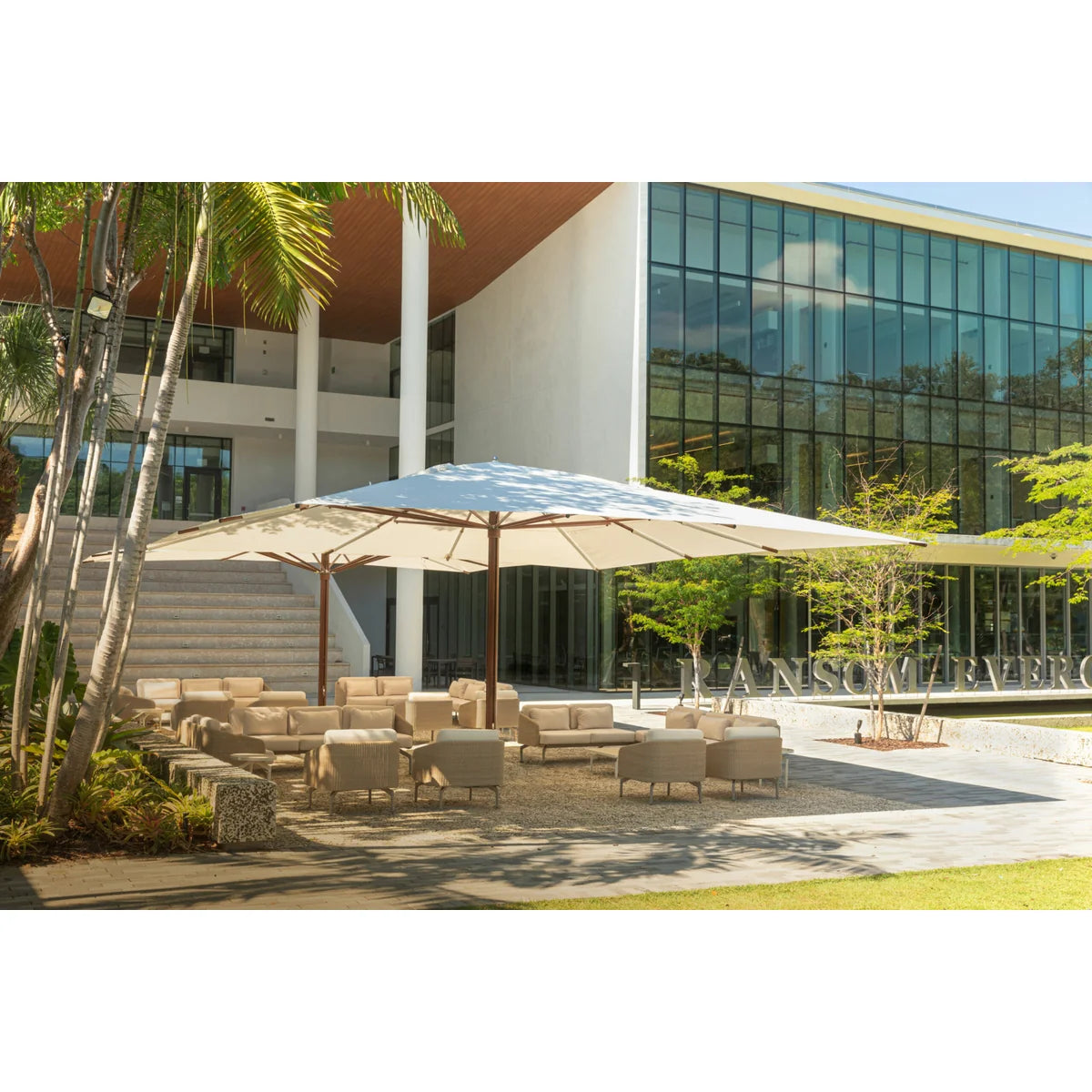
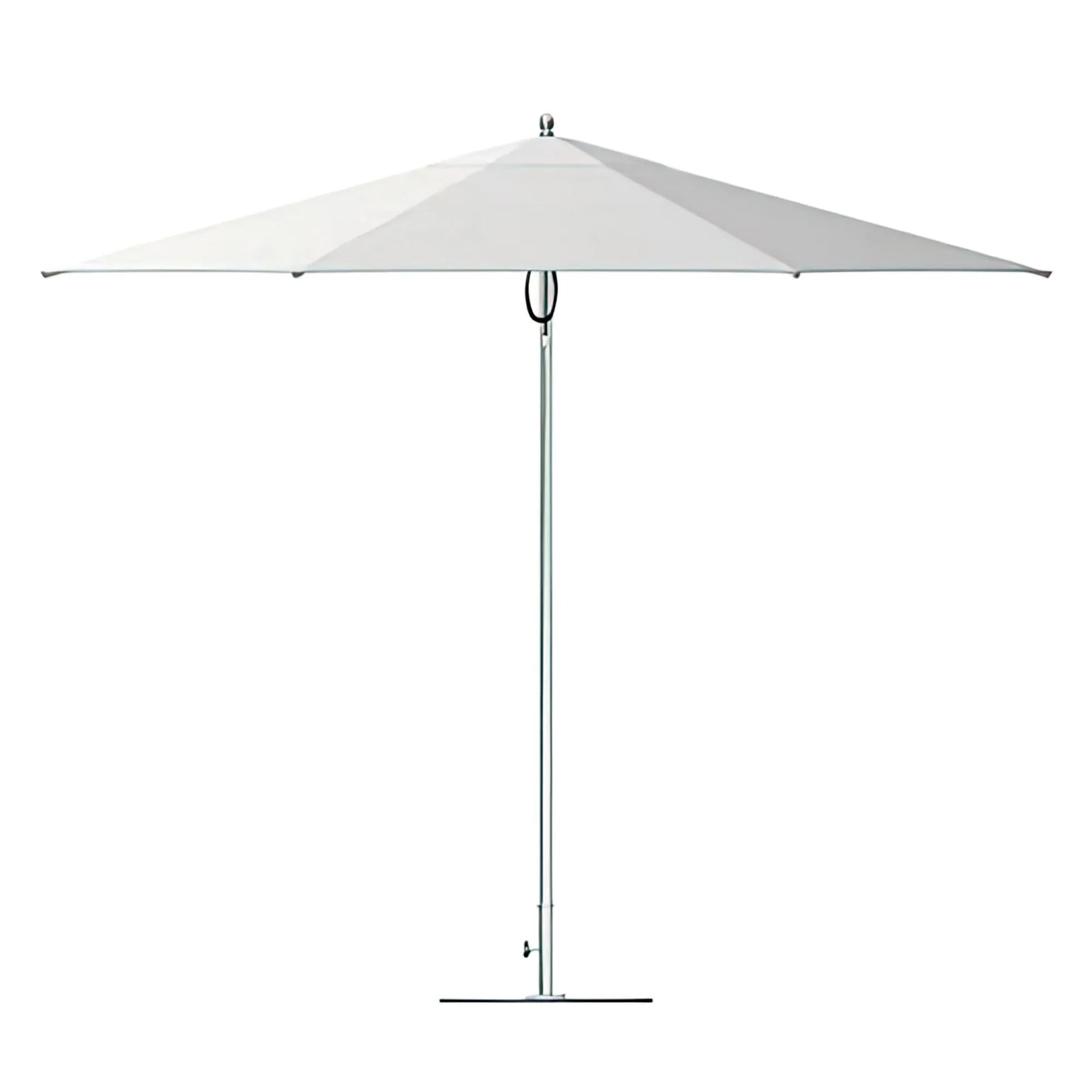
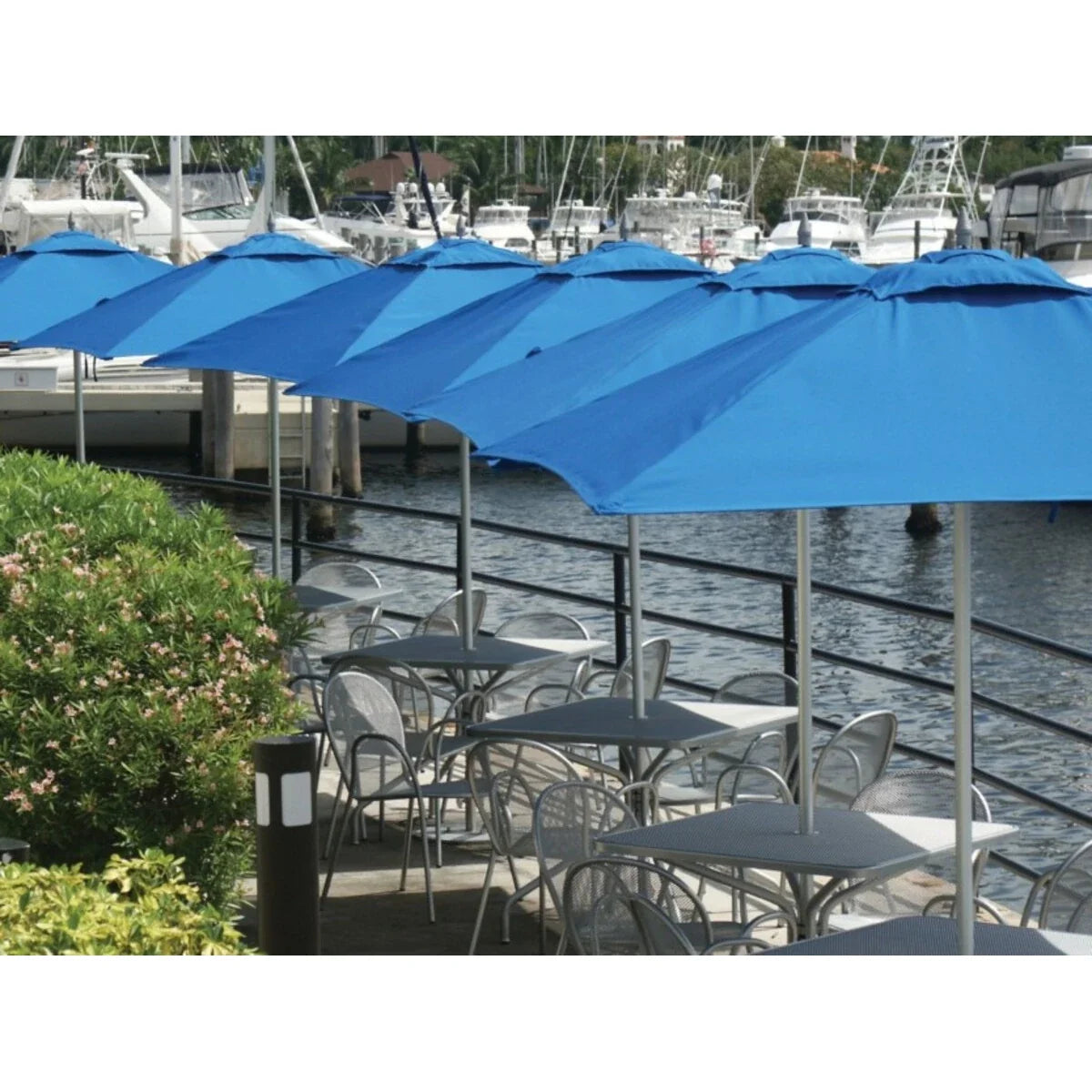
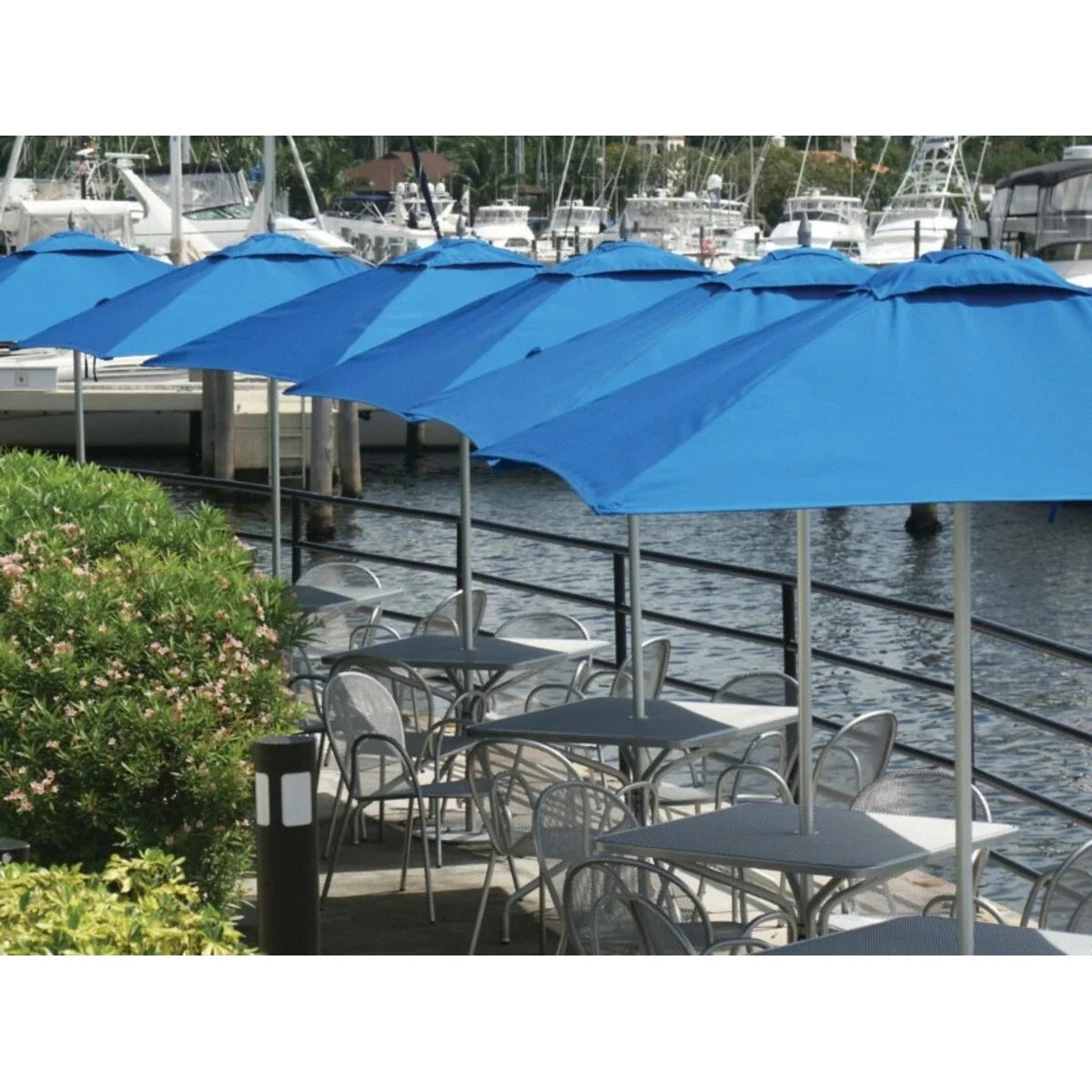
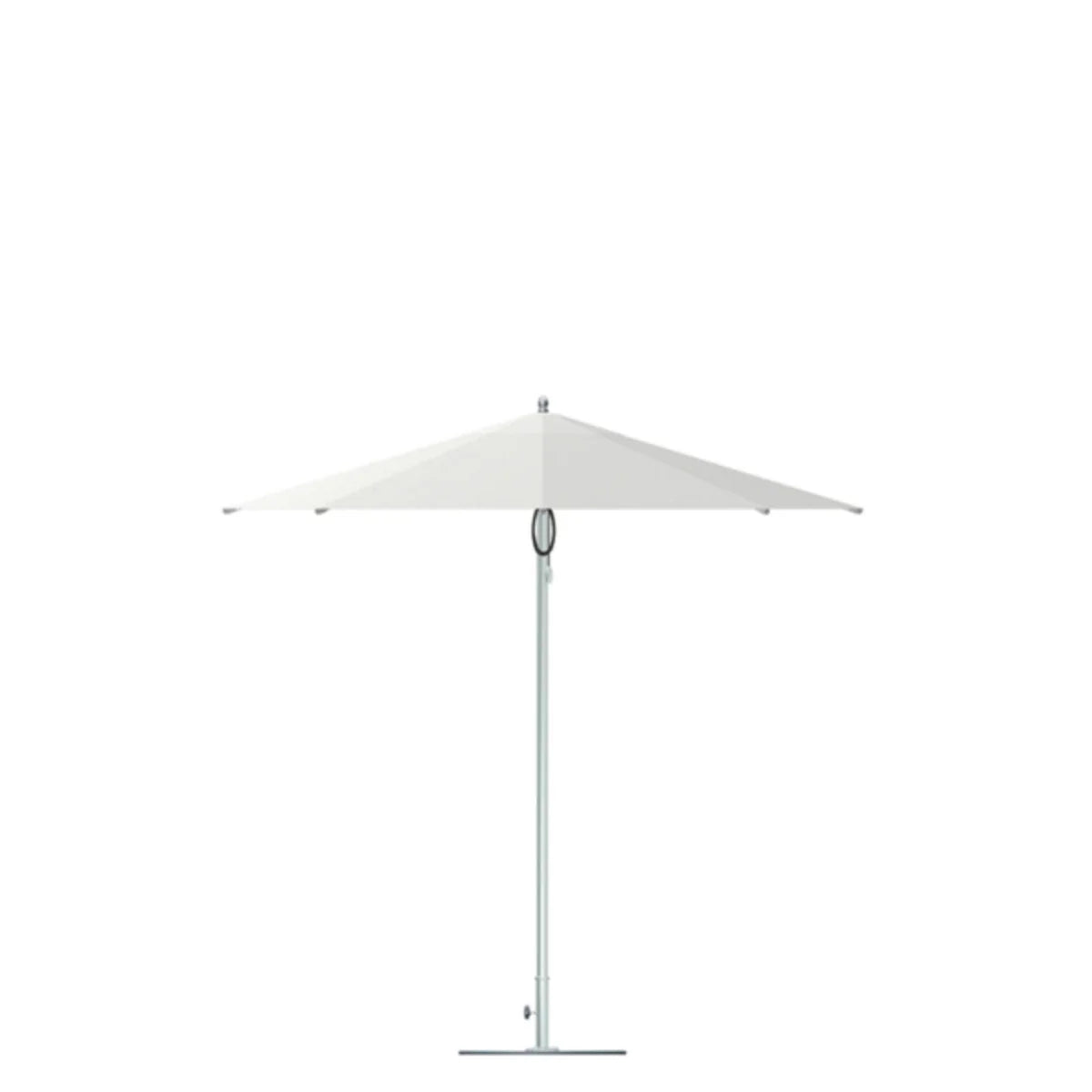
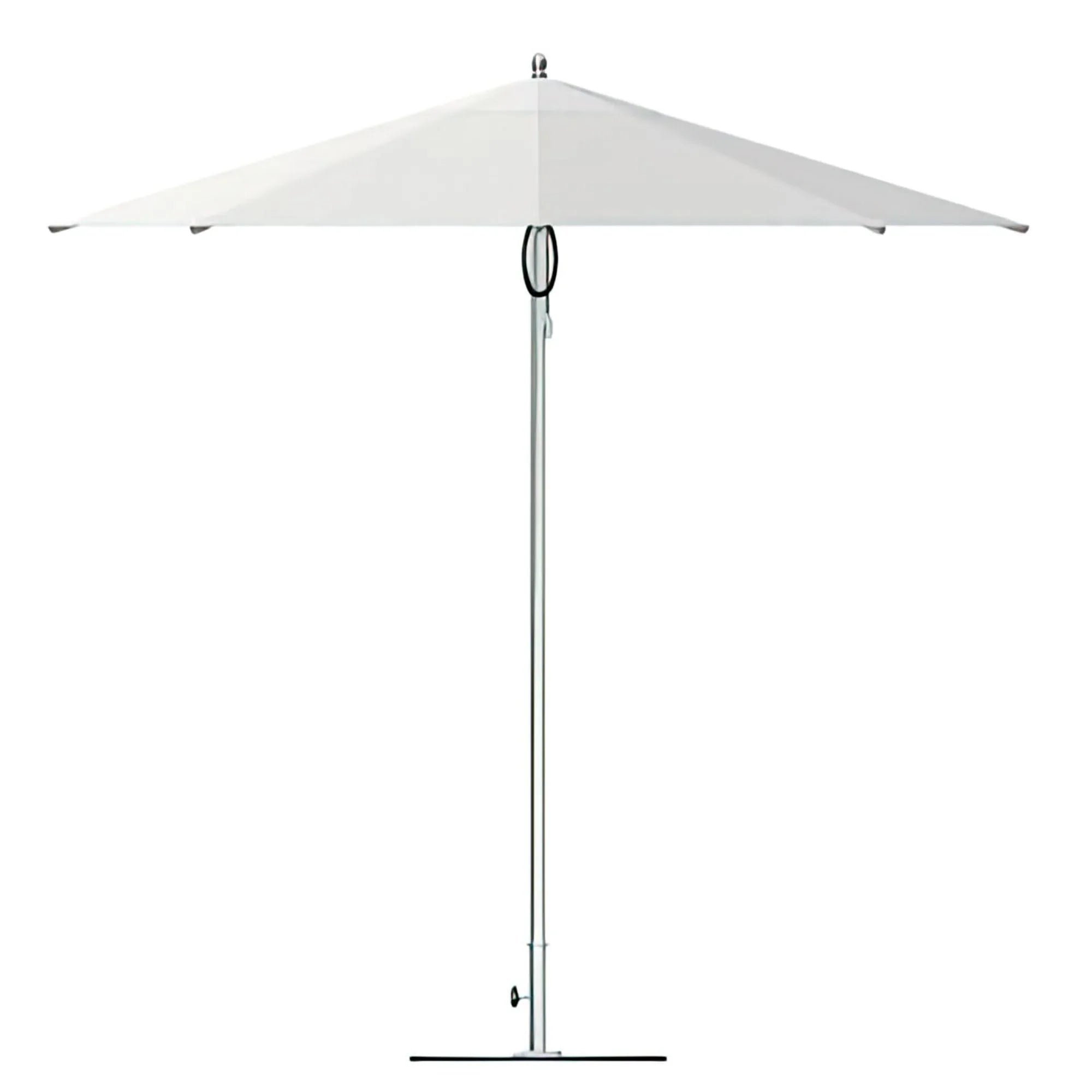
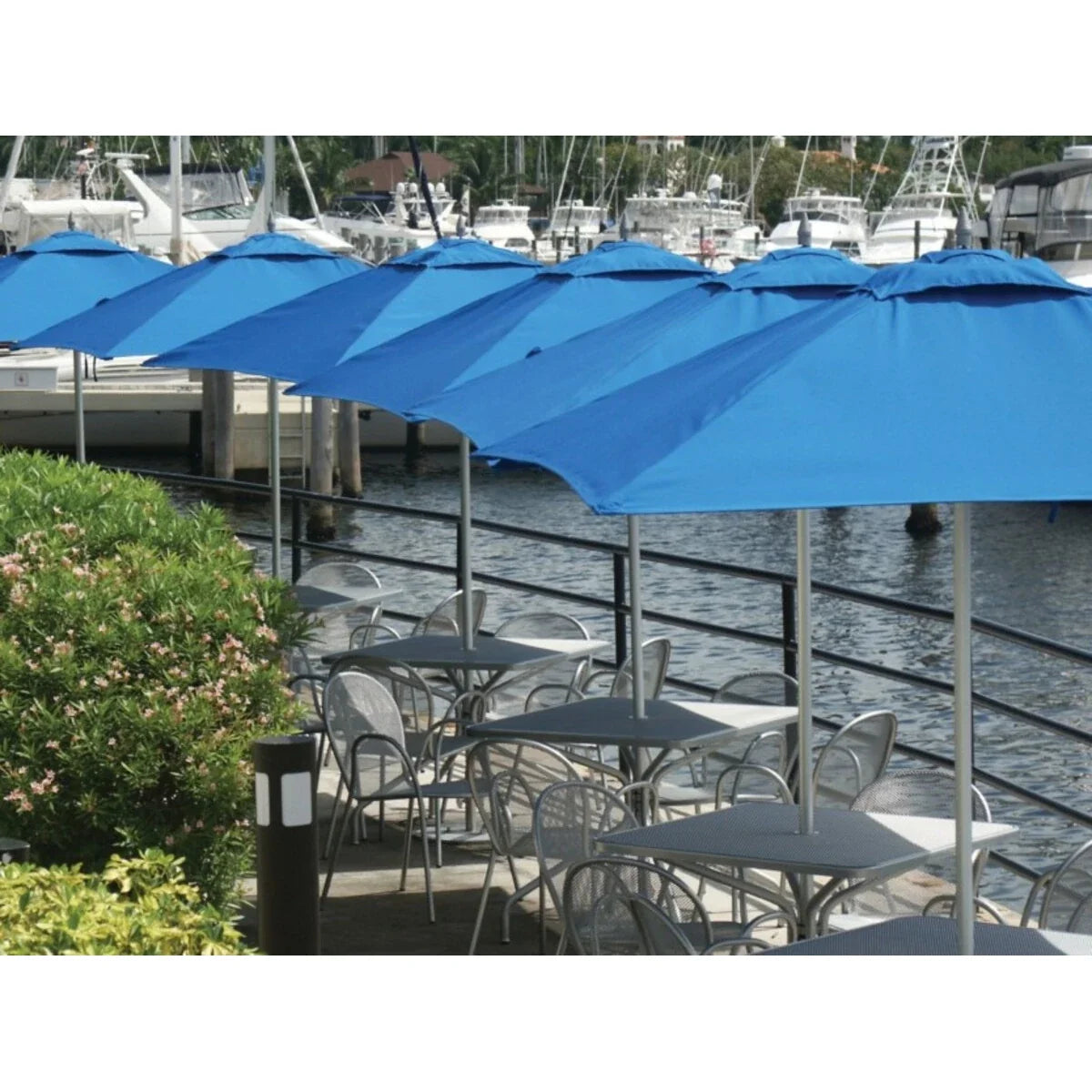
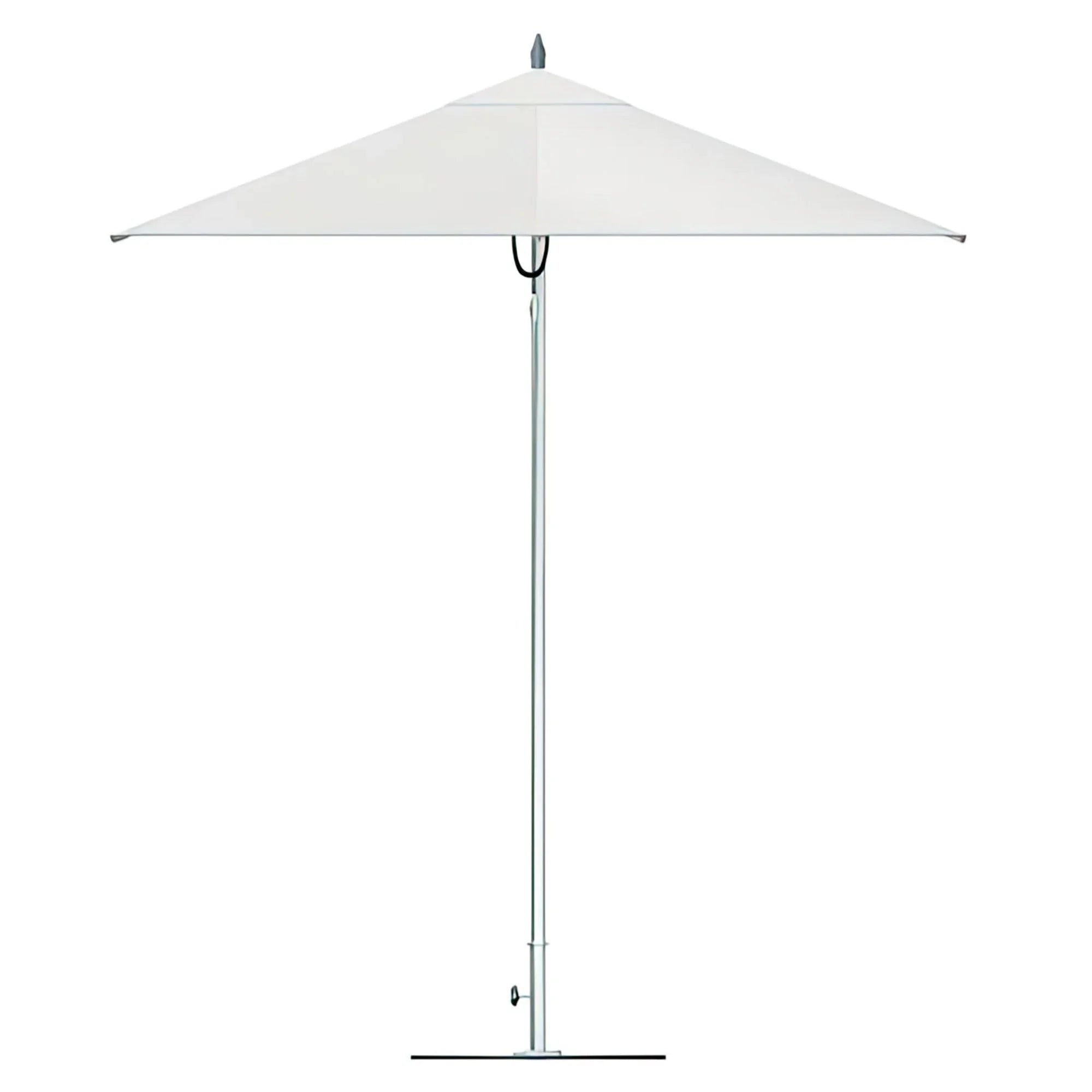
The market umbrella, with its straight center pole, is the workhorse of hospitality dining. It pairs directly with commercial patio dining tables built with umbrella holes, anchors to a weighted base or in-ground sleeve below, and delivers clean overhead coverage with no offset arm to manage. A 9-foot canopy covers a standard four-top without the ribs crowding adjacent settings; six-tops need 11-foot canopies; grouped dining areas often call for 13-foot models or larger.
Cantilever Umbrellas for Lounges and Pool Decks
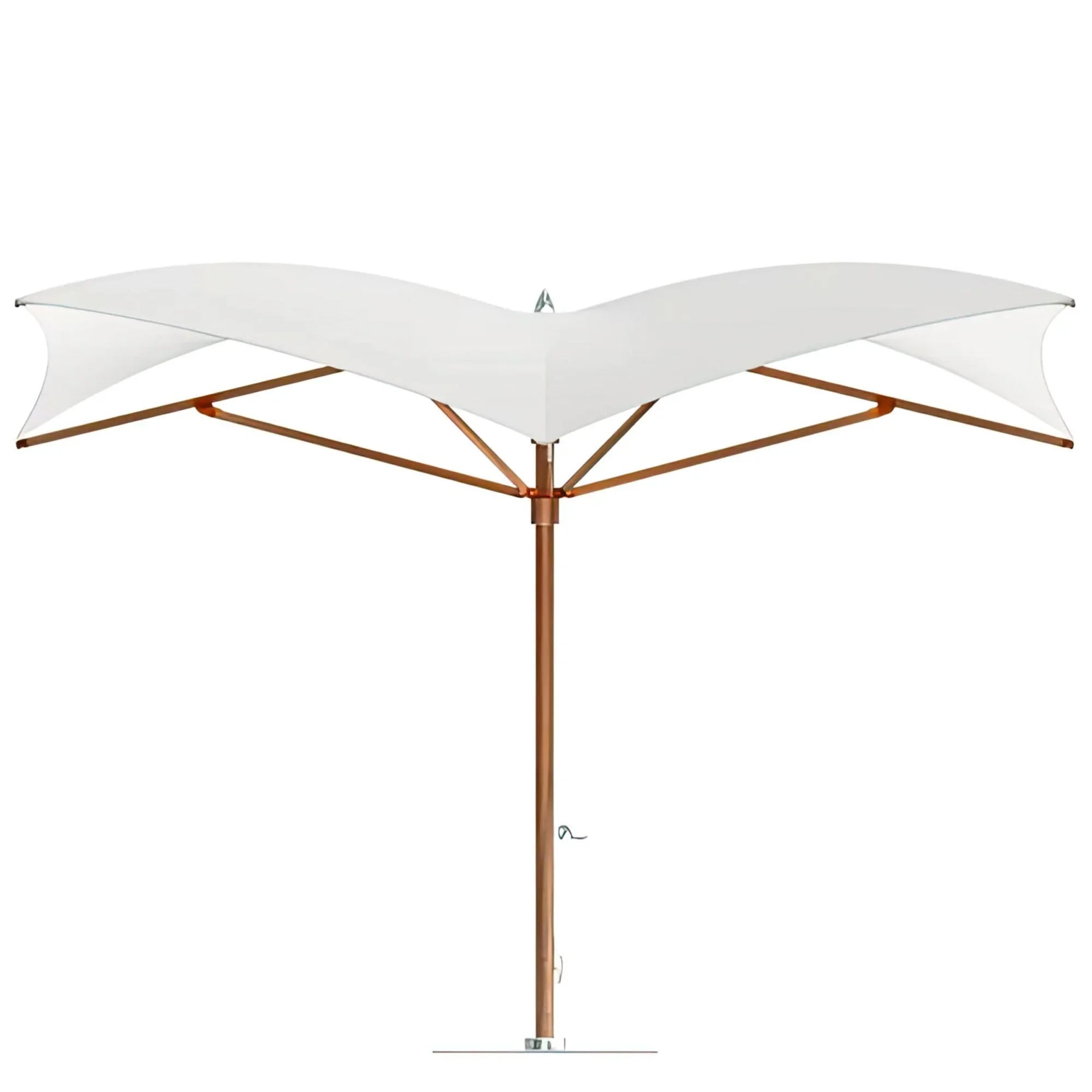
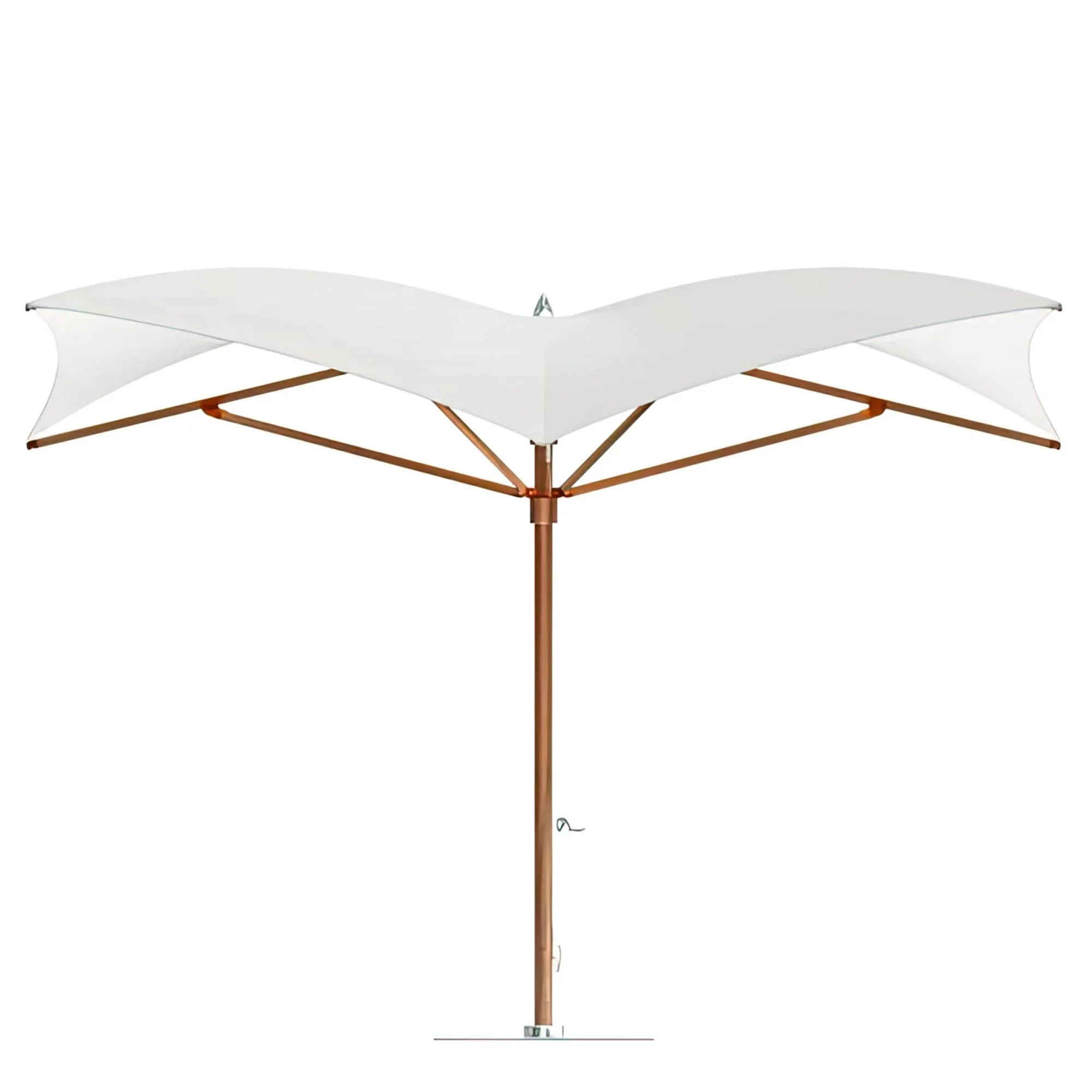
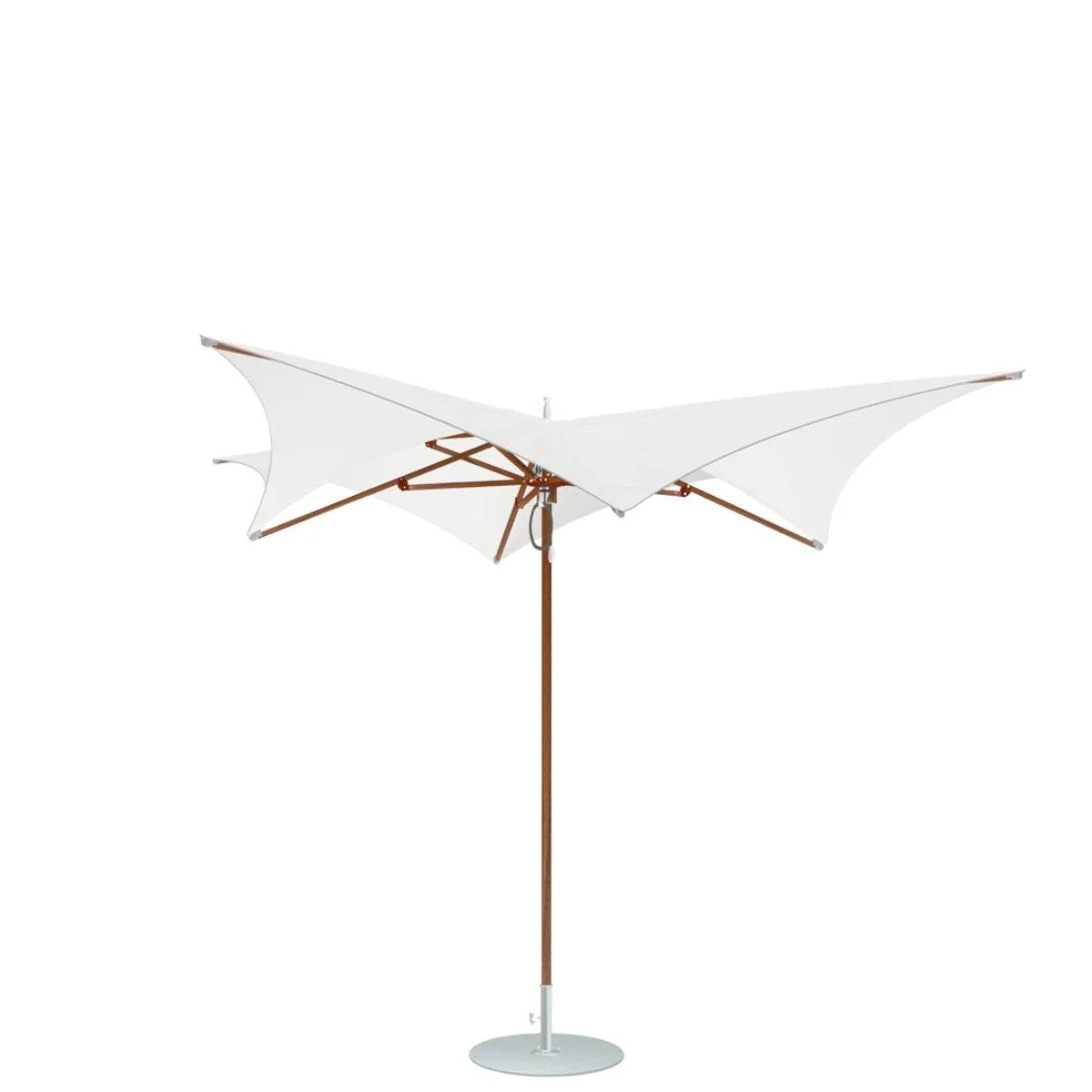
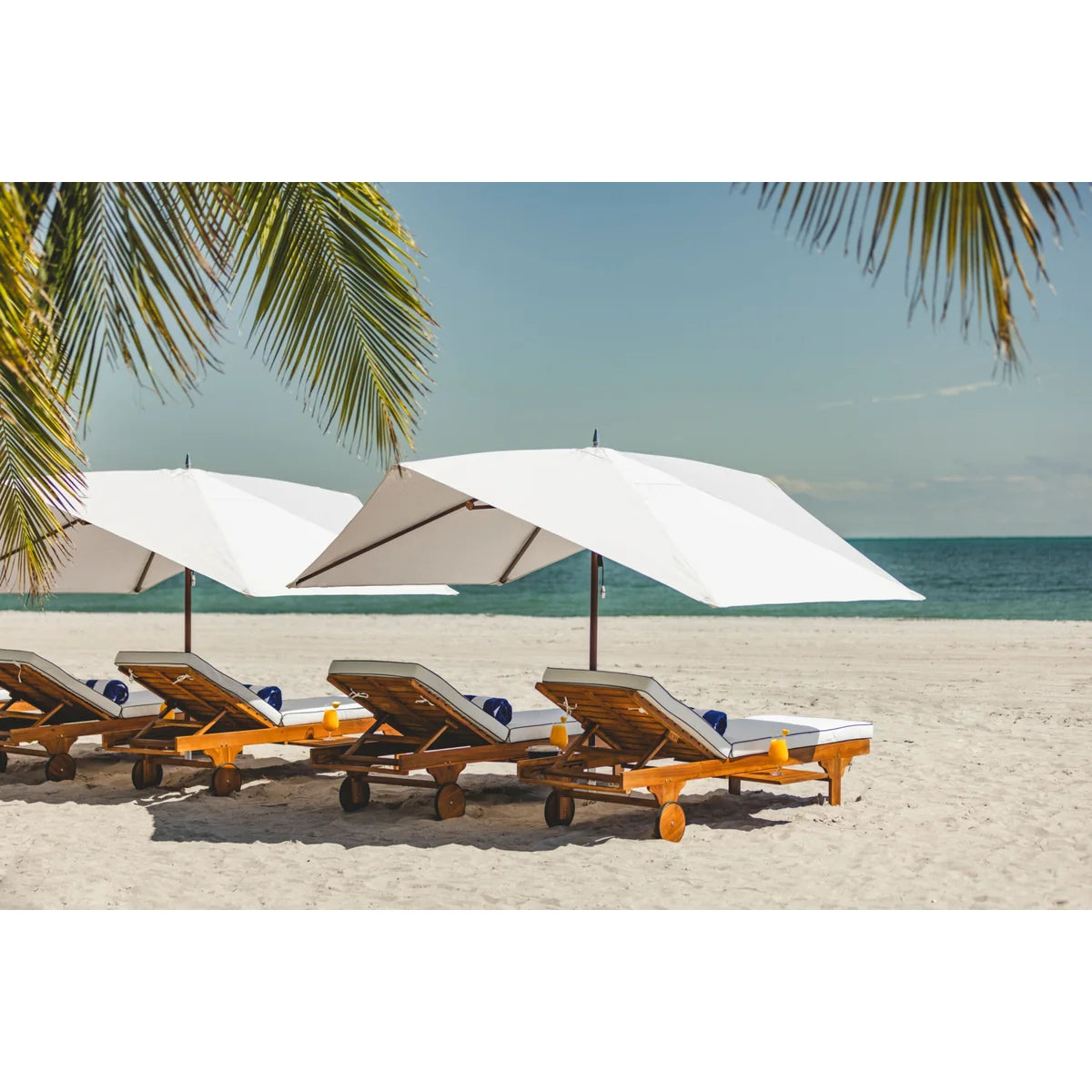
Cantilevers move the entire support structure to one side, mounting the canopy on an offset arm attached to a freestanding base beside the seating area. No center pole means no interference with lounge chairs, pool chaises, or bar clusters, and commercial cantilevers rotate a full 360 degrees so one umbrella can follow the sun all day without anyone moving furniture. Quite a few hospitality-grade models build LED lighting right into the canopy frame, which carries a lounge space from afternoon service into evening without a separate fixture overhead.
Base specification on cantilevers deserves real attention, because the extended offset arm creates a much larger wind load than a market umbrella of comparable canopy size. Commercial ballast bases in the 150-to-250-pound range, filled with sand or water, are standard for exposed locations. On rooftops, elevated terraces, or coastal sites with steady offshore wind, in-ground sleeves or bolt-down base plates are the more reliable call.
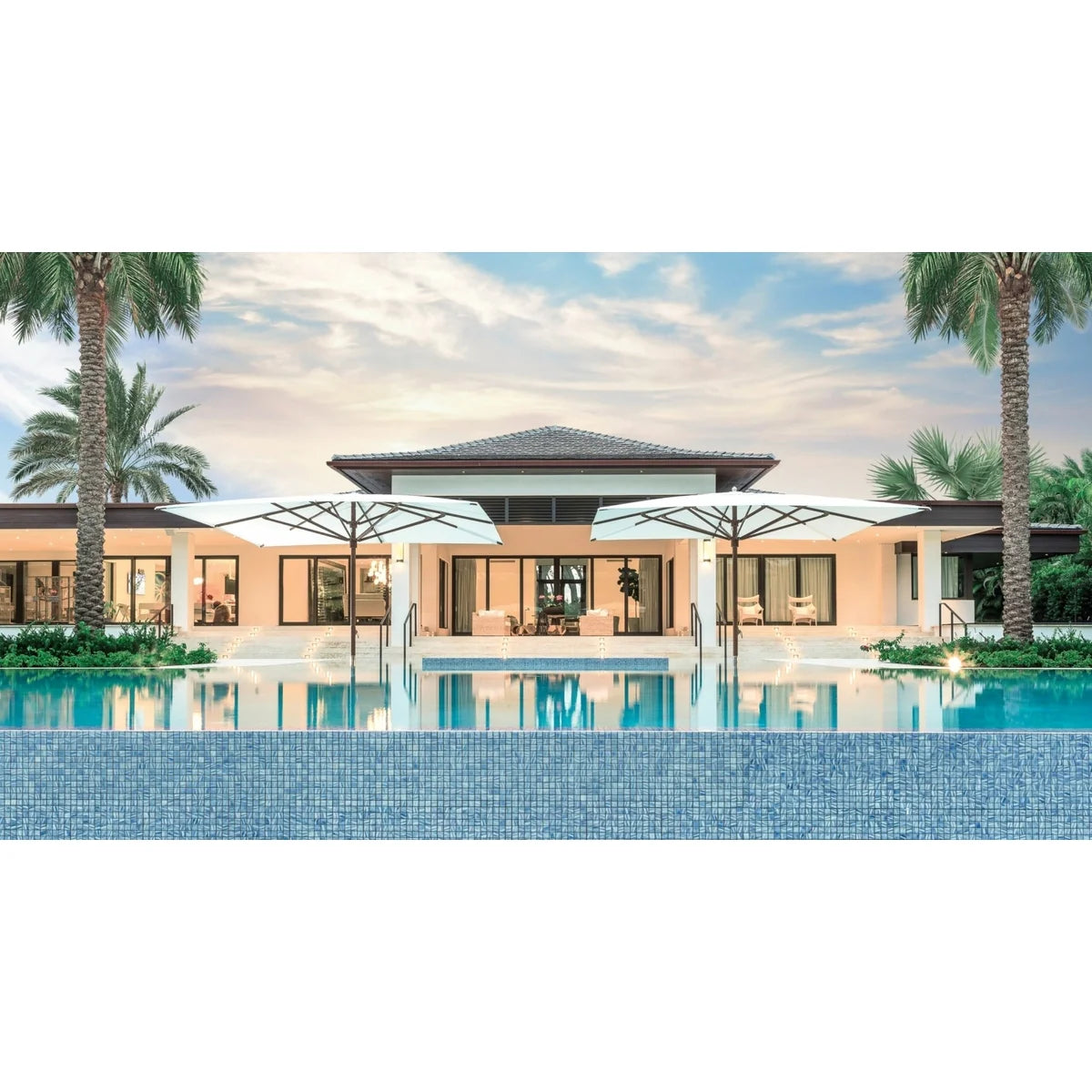
Hotel Pool Deck and Resort Poolside Umbrellas
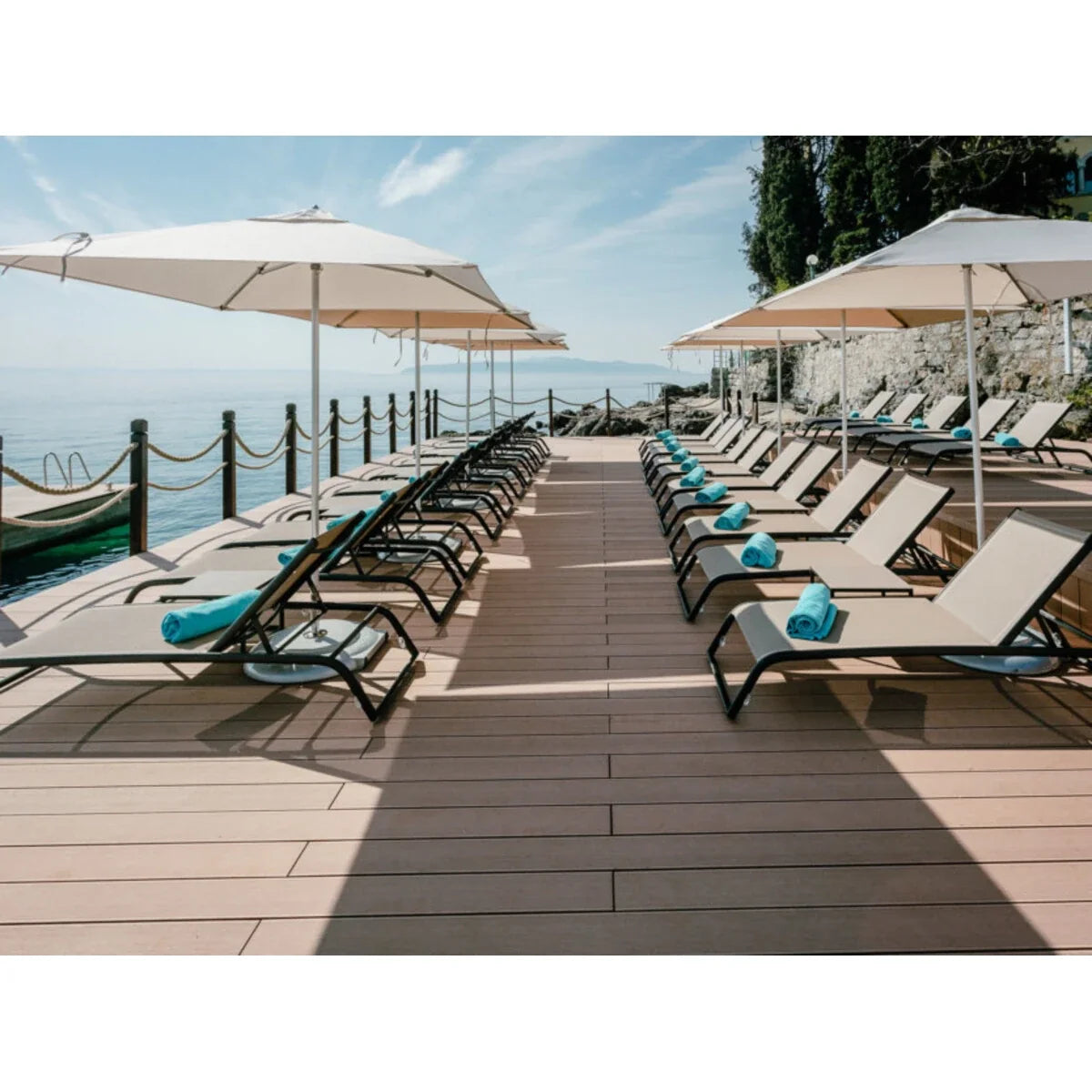
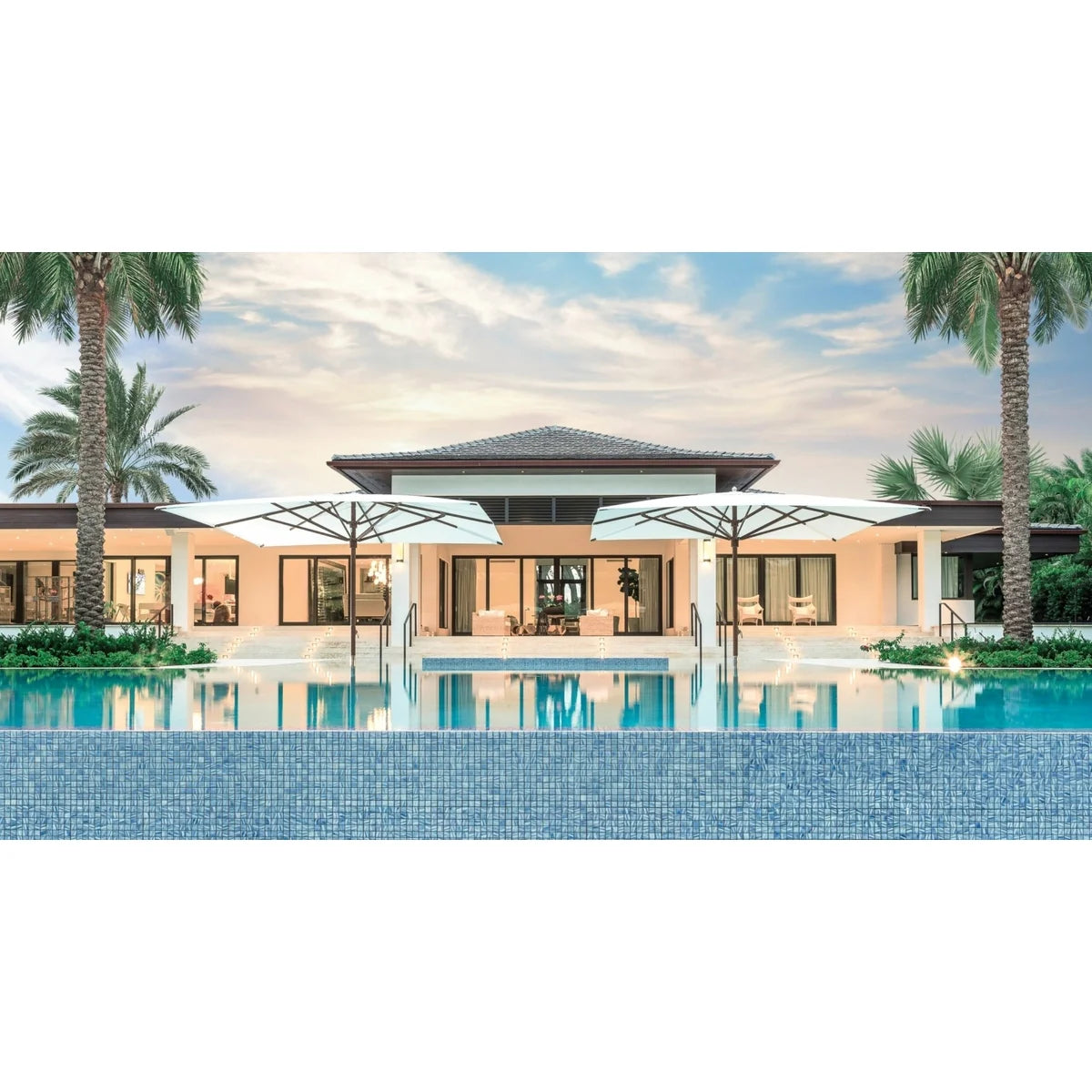
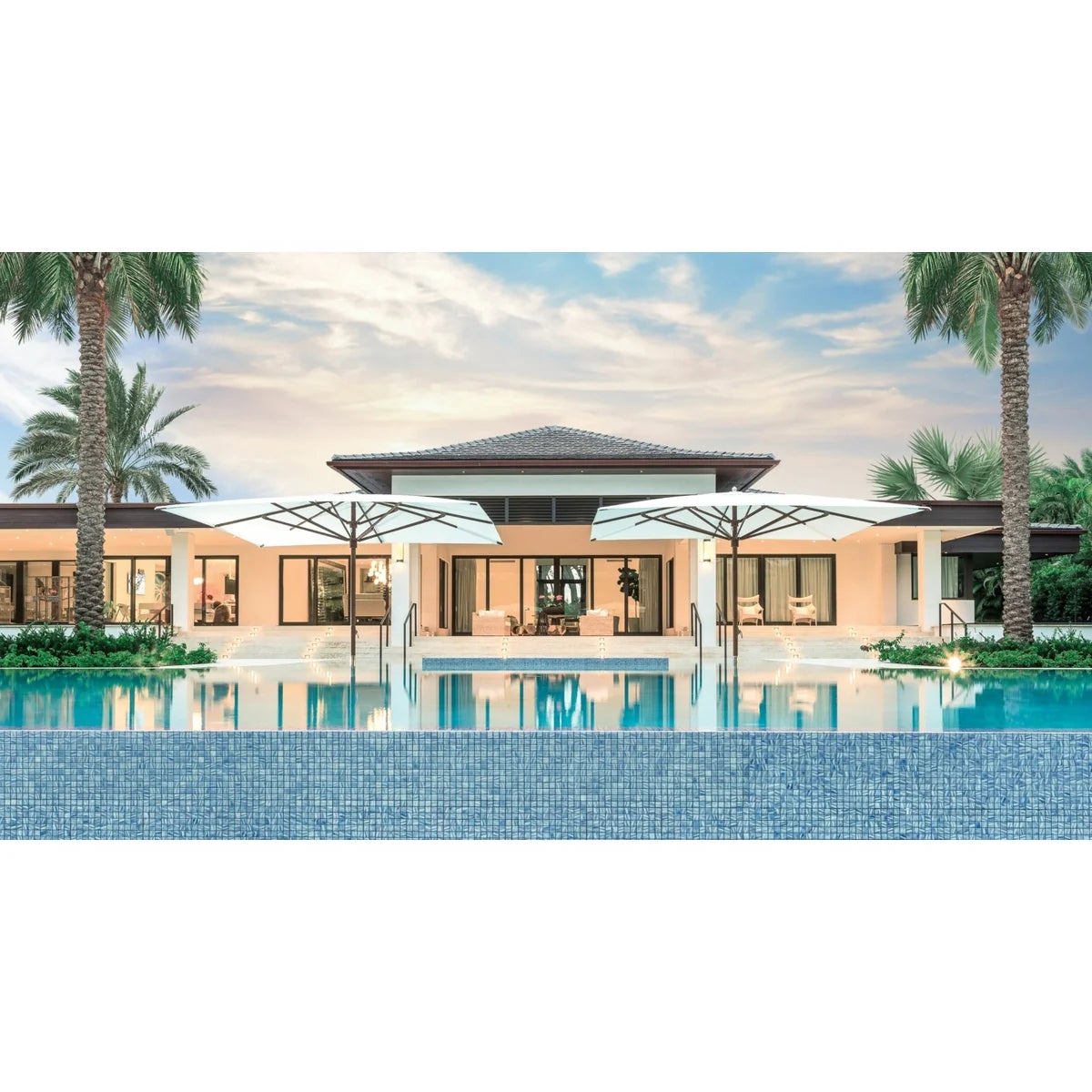
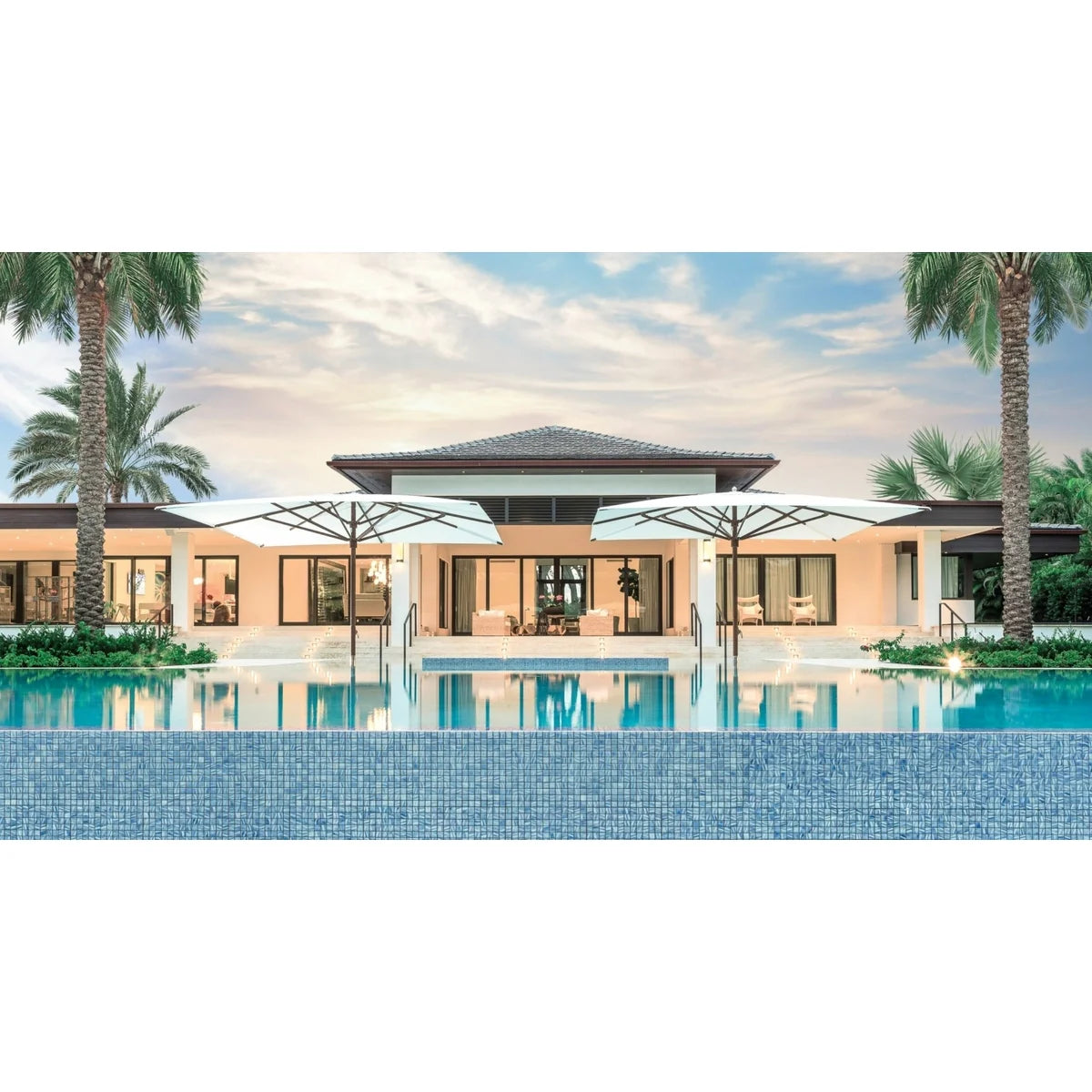
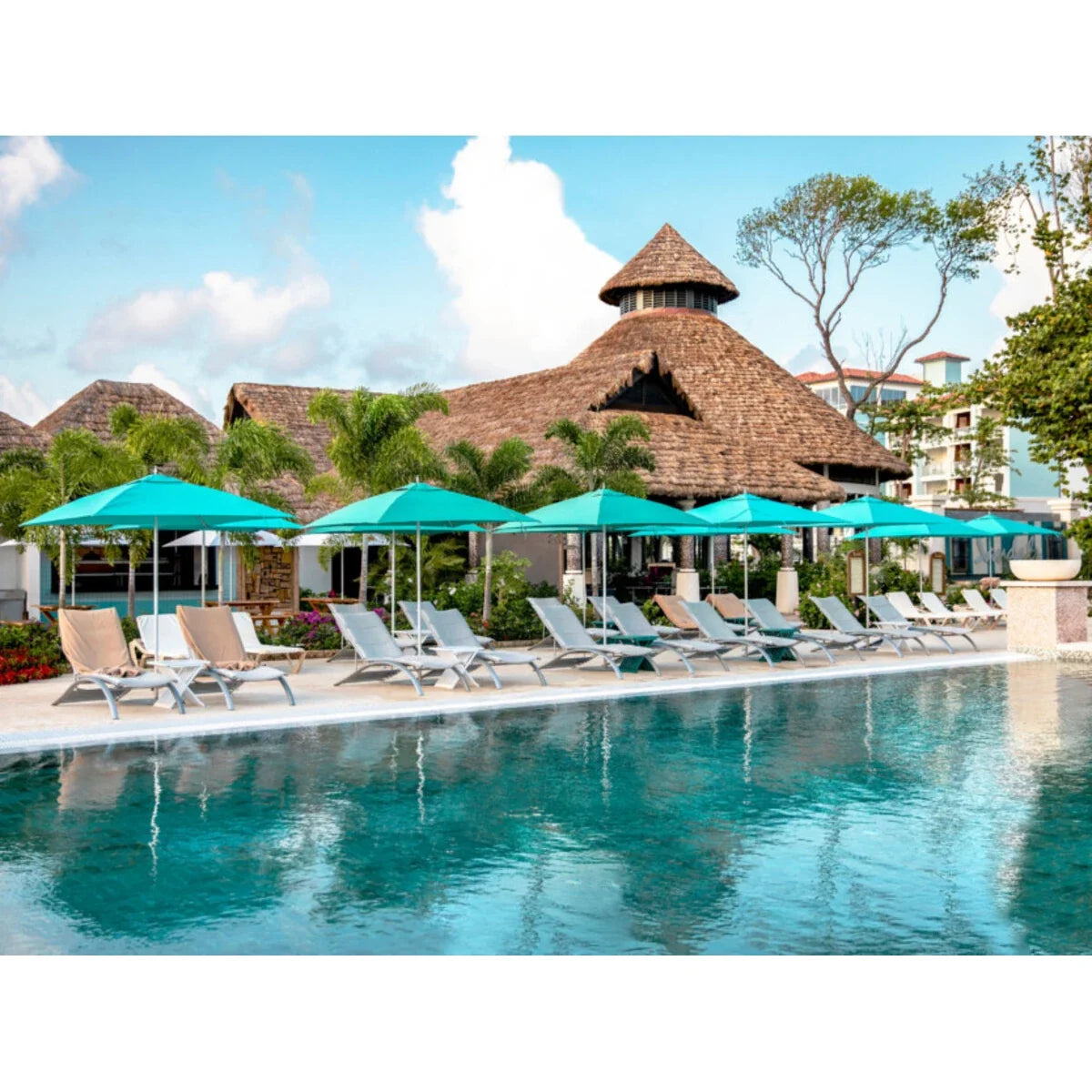
Poolside umbrellas answer to a rougher set of conditions than dining terrace models: all-day direct sun, pool splash, sunscreen residue, and cleaning chemicals hitting adjacent surfaces constantly. Canopy fabric has to hold up to real bleach and real mold exposure, day after day, which is why Sunbrella solution-dyed acrylic is the default around pools rather than merely a preference.
Cantilevers dominate hotel pool decks because chaise lounges and pool furniture don't have umbrella holes to work with. The offset arm puts the canopy overhead without any pole in the seating footprint, and since commercial cantilevers rotate the full 360 degrees, one unit can track a chaise arrangement through the entire sun arc without repositioning furniture. On a resort deck running 20 to 50 umbrellas at once, that operational simplicity is worth more than it sounds.
Large-format market umbrellas in the 11-to-13-foot range still earn their place on resort grounds, covering shaded bar areas, poolside dining cabanas, and food service stations near the water. The one thing that changes near a pool: bases and in-ground sleeves need ratings for continuous moisture from deck washing and splash, which rules out some residential-grade hardware that corrodes fast in that environment.
Key Specifications for Commercial Umbrella Procurement
Before placing an order across multiple locations or one large installation, confirm these variables:
- Pole diameter and table compatibility: Most commercial market umbrellas use a 2-inch or 2.5-inch pole. Confirm this matches existing umbrella-hole tables and planned base anchors before ordering.
- Canopy diameter by seating configuration: 9-foot covers four-tops; 11-foot covers six-tops; 13-foot or larger suits grouped lounge clusters; commercial cantilevers span from 10 to 16 feet for pool deck applications.
- Sunbrella fabric grade: Grade A Sunbrella is the standard commercial specification for most dining and lounge applications; Grade B covers specialty wovens and premium pattern libraries.
- Frame material and finish: Powder-coated aluminum for coastal and high-humidity environments; marine-grade galvanized steel for permanent or semi-permanent fixed installations.
- Base and anchoring method: Weighted freestanding bases for flexible layouts; in-ground sleeves or concrete anchors for permanent positions; confirm base weight ratings against local wind load requirements.
- Accessories: LED lighting kits, storage covers, and ballast blocks should be specified together to make sure everything is actually compatible within the product line.
Patio Productions has been supplying commercial-grade outdoor furniture to hospitality properties since 2007, and a lot of that experience comes down to exactly this kind of detail: the pole diameter, the base rating, the fabric grade that actually survives a pool deck. Complimentary design consultation is available for any commercial project, and white-glove delivery is standard on large commercial orders. Properties working with architects, procurement firms, or managing multiple locations get project coordination, volume pricing, and dedicated support through our trade program, built specifically for this kind of specification work.
Common Questions About Commercial Patio Umbrellas
Start at 2 inches; hospitality-format umbrellas and cantilevers often run 2.5 to 3 inches. Pole diameter drives base compatibility and umbrella-hole sizing on your dining tables, so lock this in before you order either one. Mixing diameters across a single installation is the fastest way to end up with bases and tables that don't match, so confirm the spec across your full umbrella order before anything ships.
6 to 10 years, roughly a decade of real service with proper care. What actually shortens that lifespan: sustained wind damage at the rib attachment points, mold from storing wet canopies in sealed covers, and abrasion from contact with overhead structures or stacked furniture. Dilute bleach, the manufacturer's own recommended cleaner, is safe on the fabric and doesn't shorten canopy life at all.
50 to 75 pounds minimum for a sheltered 9-to-11-foot market umbrella; 150 to 250 for cantilevers. Exposed coastal or elevated sites push that number to 100 pounds or more even on a standard market umbrella. Cantilevers need the heavier ballast because the offset arm creates a large wind-catch surface with no center pole to share the load. In-ground sleeves or bolt-down plates skip the base-weight question entirely and are the more reliable call for anything permanent.
The frames, generally yes. The canopy is the part that needs managing. Aluminum and galvanized steel frames handle year-round exposure fine. Sunbrella tolerates rain without damage, but closing a canopy while it's still wet, especially inside a sealed storage cover, is exactly how mold and mildew get started. Close umbrellas each evening, use ventilated covers, and save full removal for extended off-season closures, hurricane zones, or genuinely severe winters.
Yes, through our trade program. Architects, procurement firms, and hospitality groups managing multiple locations get volume pricing plus dedicated project support, including coordination, sampling, and phased order management for larger rollouts. A complimentary design consultation comes with any commercial umbrella specification. Reach out directly or visit the trade program page to get a project started.


