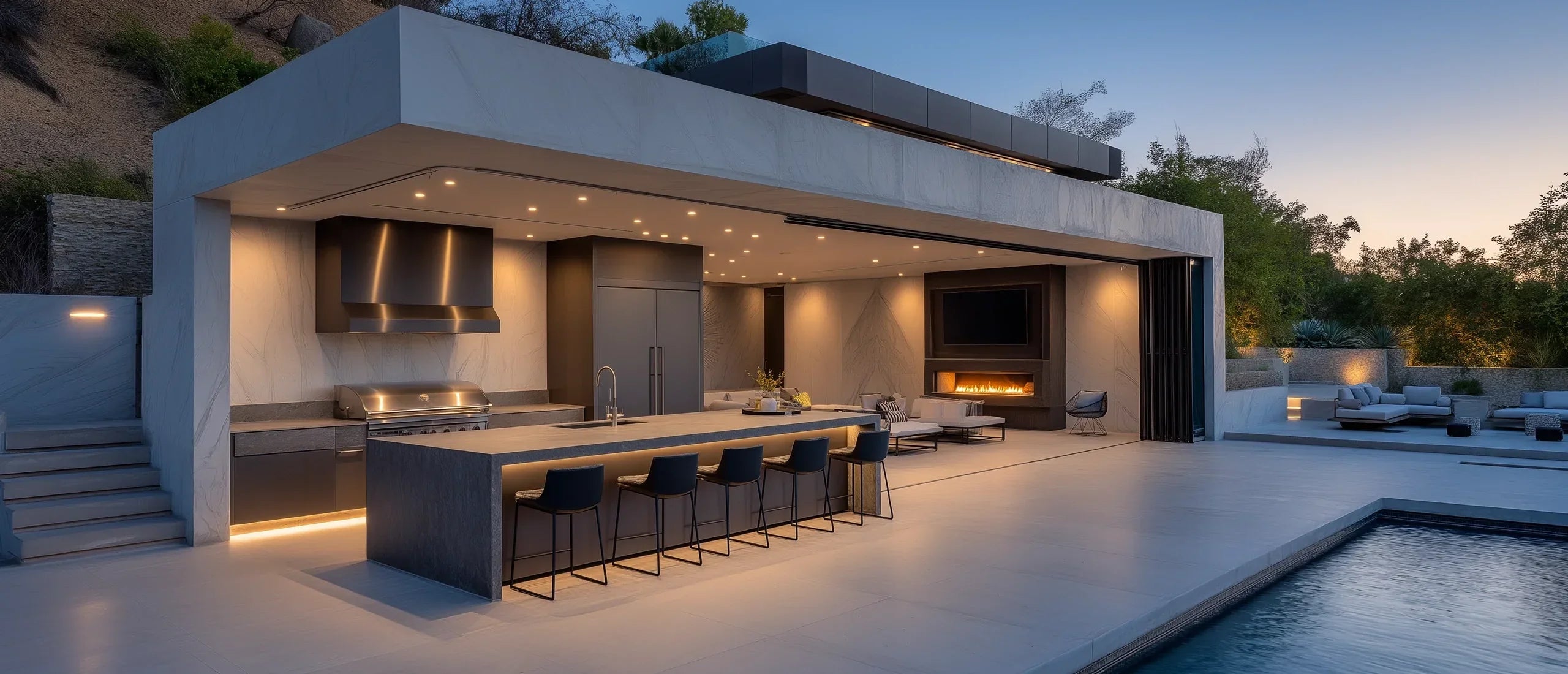
Top Outdoor Kitchen Design Ideas for 2025
If you love al fresco dining at home, you're in good company. The solo grill stuck in the corner? That era is over. A well-designed outdoor kitchen is a full culinary and entertaining destination — and every season brings sharper ideas for how to make it stylish, sophisticated, and built for the way you actually live outside. No more solo grill stuck in the corner for you. The Patio Productions team has pulled together the design directions shaping the best outdoor living spaces right now, so your outdoor cooking spot can be everything you want it to be.
So let's talk through the styles and ideas — modern to rustic, modular to eco-friendly — that will inspire you to design your own perfect patio kitchen.
Top Outdoor Kitchen Ideas: Quick Shortlist
- Today's best outdoor kitchens blend functionality, durable materials, and sleek aesthetics
- Modular designs offer unmatched flexibility to customize your dream outdoor cooking space
- Eco-friendly materials and smart tech are must-haves for the modern outdoor chef
- Multi-functional spaces integrate cooking, dining, and entertaining without compartmentalizing
- Creative lighting and bold appliances add flair even to the most minimalist designs
Top Outdoor Kitchen Design Ideas: Quick Answers
Blend indoor-outdoor flow, plan lighting, choose durable materials. Create seamless transitions to the house, layer task and ambient lighting, and pick weather-tough finishes like stainless and concrete. Use compact, purpose-built appliances to save space and keep the layout efficient.
U-, L-, and galley layouts cover most needs. U-shape centralizes work zones; L-shape flows well into dining; galley suits narrow footprints with parallel counters. Sketch options and pick what fits your traffic flow and cooking style.
Think vertical, fold-away, and multifunctional. Mount shelves and hooks, add drop-leaf or collapsible work surfaces, and choose appliances with multiple functions. Light, bright finishes and mirrors help small kitchens feel larger.
Stainless, granite, and concrete are standouts. Use stainless for appliances and cabinetry, and granite or concrete for counters. Favor low-maintenance finishes like powder-coated metal, treated lumber, and outdoor-grade stains to simplify long-term care.
Layer task and ambient lighting; add solar options. Illuminate prep and cook zones with task lighting, then add ambient fixtures to warm the space. Solar path, string, or spot lights provide eco-friendly glow and safer walkways.
Plan early, follow codes, and vent smoke away. Consult local permits, hire qualified pros for hookups, tie into existing lines when possible, and include shutoff valves. Add a properly placed hood or chimney to vent smoke outside the seating area.
Yes — plan smart for strong ROI. Outdoor kitchens can raise home value and quality of life. Start by measuring space, prioritizing essentials, sketching zones, and selecting durable materials and compact appliances that fit your budget and climate.
Before the Aesthetics: Get the Layout Right
Before you fall in love with a style or a countertop material, spend time on the layout. It's the decision that will define how your outdoor kitchen actually feels to cook in — and it's the hardest one to fix after the fact.
Think in zones rather than just square footage: a prep zone (counter space, sink, cutting areas), a cooking zone (grill, side burners), a serving zone (landing space adjacent to the grill), and a storage zone (cabinetry, refrigeration). Most residential kitchens try to compress all four into a single run — which works, but leaves you constantly bumping elbows with yourself.
The four footprints that cover most situations: straight/galley (efficient, works along a wall or fence line, but the cook faces away from guests); L-shape (the workhorse — one arm cooks, the other serves or bars); U-shape (maximum counter space, needs room); and island (socially the best layout, guests gather at the bar side while you work). Plan for 42–48 inches of clearance on the working side, and keep guest circulation paths out of the cooking zone.

Modern Minimalist Outdoor Kitchens
Sometimes, less is just so much more. Clean, sleek, and sophisticated — modern minimalist kitchens remain one of the strongest design directions going. To pull this look off, think streamlined cabinetry, neutral color palettes, and appliances that integrate flush with the design rather than announcing themselves.
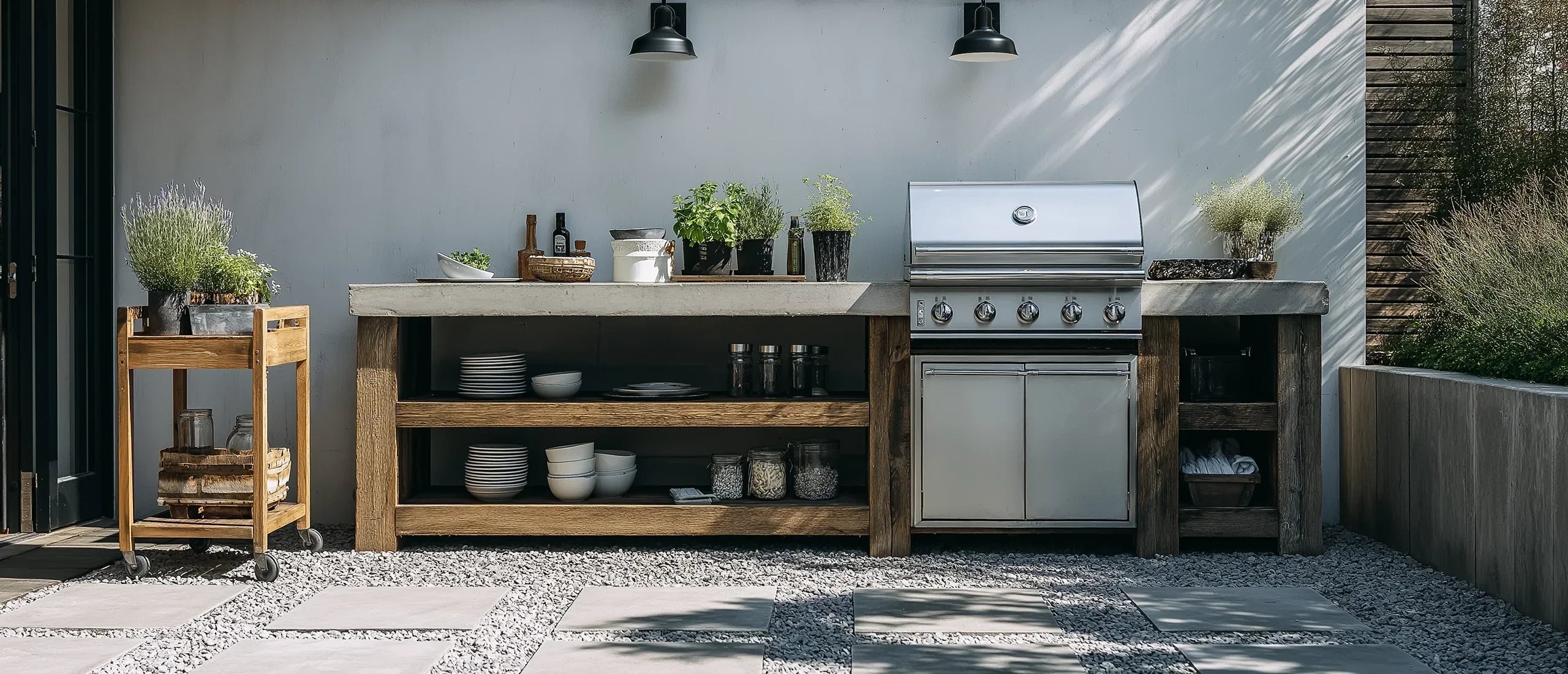
Minimalism doesn't mean boring. It's often actually harder to keep things beautiful while reducing the number of elements you're working with. Make sure each color and material complements those around it, and look for appliances and furniture pieces with simple, uncomplicated profiles. Matte black or brushed stainless finishes read as intentional rather than industrial when the surrounding cabinetry is equally resolved.
The other thing minimalist kitchens do well: they age gracefully. Trend-forward choices look dated in five years; a well-executed minimal kitchen looks considered in twenty. If you're investing in a permanent structure, that longevity matters.

Rustic Farmhouse Kitchen Elements
Maybe you're more of an old-fashioned type — and rustic farmhouse kitchens are having a well-deserved moment. The key is finding the balance between modern simplicity and old-world warmth rather than going full-on rustic and losing livability. Picture reclaimed wood cabinetry in minimal, blocky shapes. Vintage-inspired light fixtures over a clean concrete countertop. Stone or brick on the exterior face of the island, paired with stainless appliances that don't apologize for being functional.
A farmhouse sink or a stone fireplace are strong anchors, and from there it's about restraint — one or two character materials against a quieter background, rather than every surface competing for attention. Once you find that balance, the charm is hard to beat. Guests linger. The space feels lived-in in the best way.
Worried about your budget? We've put together some modern and rustic budget outdoor kitchen ideas that prove you don't need to spend big to get the aesthetic right.

Eco-Friendly Design Ideas
Going green continues to trend in all the right directions, and your outdoor kitchen is no different. Sustainable, natural materials like teak, bamboo, recycled glass, and composite decking are today's face of outdoor kitchen design — and the good news is that most of them are also the most durable options available.
Teak is a prime example. It's a sustainably harvested hardwood that handles outdoor exposure without finishes, oils, or seasonal maintenance — and it looks better over time, developing a silver-gray patina that no synthetic can replicate. Powder-coated aluminum cabinetry is another: virtually zero maintenance, won't rot or warp, and made from a highly recyclable material. The overlap between eco-friendly and built-to-last is bigger than most people expect.
These days, incorporating natural elements into your outdoor space isn't about sacrificing style for sustainability. Manufacturers continue to bring innovative materials and thoughtful design choices, so you can create a kitchen that's both beautiful and kind to the planet.
| Material | Benefits |
|---|---|
| Teak and bamboo | Rapidly renewable, durable, and stylish — no seasonal maintenance |
| Recycled glass | Reduces waste, adds unique texture to countertops and backsplashes |
| Composite furniture & decking | Made from recycled plastics and wood fiber, low-maintenance |
| Reclaimed wood | Gives new life to old materials; brings rustic character nothing else replicates |
| Sustainable stone | Natural, long-lasting, thermally stable near cooking zones |

Seamless Indoor-Outdoor Integration
Let's break down some walls. Imagine a beautiful Sunday morning where you're cooking in your outdoor kitchen — in just a few steps, you're in the open-air living room, ready to serve to eagerly waiting guests. This year and beyond, it's all about blurring the lines between interior and exterior spaces. Matching finishes, consistent color palettes, and wide-open floor plans make your home feel like one continuous, beautiful sanctuary rather than a house with a backyard attached to it.
- Consistent flooring materials that flow from inside to outside
- Matching countertop materials and cabinet styles across the threshold
- Retractable glass walls that open the space completely
- Covered cooking areas that protect against weather without closing the space off
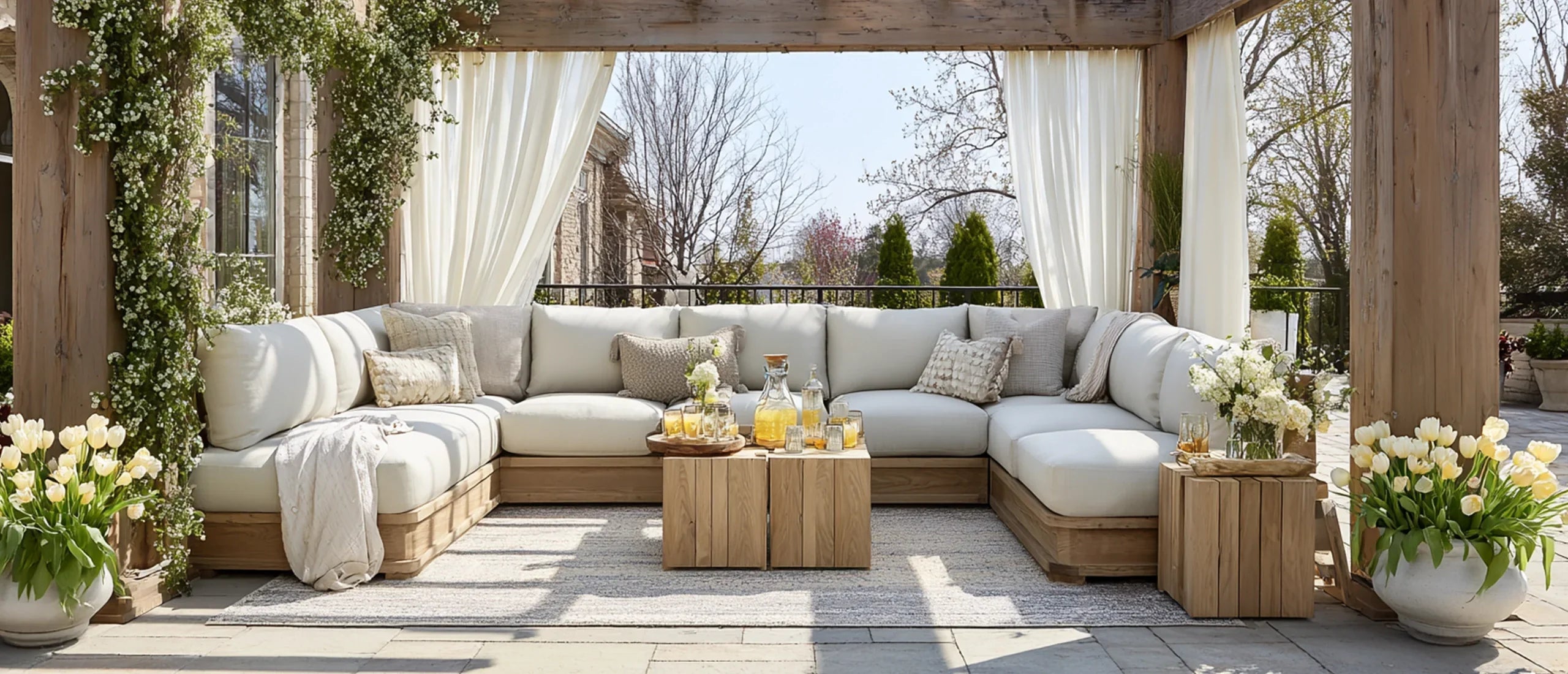
The furniture you choose for the spaces surrounding the kitchen matters as much as the kitchen itself. A deep seating arrangement positioned within conversation distance of the grill keeps the cook in the social picture rather than isolated behind the counter. That connection between cooking zone and lounging zone is what separates a backyard kitchen from a genuine outdoor living space.

Modular Designs
Your backyard isn't designed for one type of outdoor fun. Dinner parties, lazy afternoons, family picnics, active games, swanky patio brunches — how do you design for all of it? Modular outdoor kitchens are the answer. Mix, match, and reconfigure your layout on a whim. And if you decide in two years that you need a wood-fired pizza oven (let's be real, who doesn't?), you can make it happen without starting from scratch.
Modular systems also protect your investment against changing tastes and changing households. A configuration that works for two adults entertaining frequently looks different than one built around weekend family cookouts. The flexibility to evolve the space without rebuilding it from the ground up is one of the strongest practical arguments for modular construction.
- Built-in seating areas that double as storage
- Multiple prep stations for cooking alongside someone
- Concealed storage solutions for a clean visual profile
- Integrated beverage centers and built-in grill configurations

Incorporating Smart Technology
You're designing a modern kitchen, so modern appliances belong in the picture. Wi-Fi-enabled grills let you monitor internal temperatures from your phone without stepping away from the conversation. Voice-activated lighting systems shift the mood with a word. Smart refrigerators track what's inside so you never run low on what matters most when guests arrive.
| Feature | Benefit |
|---|---|
| Wi-Fi-enabled grills | Monitor temperatures remotely without leaving your guests |
| Voice-activated lighting | Create the perfect ambiance hands-free, mid-cook |
| Smart outdoor refrigerators | Never run out of key ingredients on a busy hosting day |
| Integrated sound systems | Set the tone without a separate Bluetooth speaker on the counter |
| App-controlled appliances | Preheat, adjust, and monitor from anywhere in the yard |
I'll admit — I've been accused of being an old cranky man since I was 20. Certainly not a tech early adopter. But once I started cooking with some of these connected appliances, it's genuinely hard to walk away from the convenience. A grill that alerts you when your brisket hits 195°F while you're three conversations deep on the other side of the patio? That's a quality-of-life upgrade with no downside.

Stylish Outdoor Bar Areas
Can you really call your outdoor kitchen complete without a proper bar setup? Mixing margaritas for a summer bash or cracking a cold one while you man the grill — a well-designed bar area is the social hub that makes the kitchen sing. Sleek and minimalist, or warm reclaimed-wood rustic: there are strong bar designs for every patio aesthetic, and plenty of ways to create a backyard bar that feels like it belongs rather than was bolted on as an afterthought.
The best bar configurations are built around the overhang. A twelve-inch bar counter overhang gives guests a proper place to sit; pair it with the right outdoor bar and bistro furniture and you've created the social side of your kitchen without needing a separate seating area at all. Storage under the counter — for glassware, mixers, ice — is what separates a functional outdoor bar from a decorative one.

Multi-Functional Islands and Counters
Outdoor kitchen islands are no longer just for prepping and serving food. They've become the Swiss Army knife of the outdoor kitchen — cooking, dining, entertaining, and storage all handled by a single thoughtfully designed structure. Built-in seating areas on the guest side, integrated appliances, warming drawers, pull-out trash and recycling — a well-spec'd island handles the full arc of a dinner party without requiring you to leave the zone.
Unique materials make these spaces genuinely striking. Concrete island tops, reclaimed wood accents, or live-edge stone give an island personality that stock cabinetry never will. If you're starting the island planning process, browse our outdoor kitchen islands for structural and configuration options, then layer in the materials and finishing details that fit your aesthetic. And if you're thinking about dining on the guest side rather than bar seating, our outdoor dining sets include options scaled for outdoor kitchen adjacency.

Creative Lighting Solutions
Lighting is one of the most overlooked elements of outdoor kitchen design, and one of the highest-impact. From string lights and lanterns to built-in LEDs and overhead pendants, there are endless ways to illuminate your outdoor space — and getting it right transforms the kitchen from a daytime cooking station into an evening destination.
The key is thinking in layers. Task lighting at the grill and prep surfaces keeps you cooking safely after dark — under-counter LEDs, hood-integrated fixtures, or mounted spots aimed at cutting areas. Ambient lighting sets the tone for the broader space: string lights strung across the pergola, wall sconces at the perimeter, landscape uplighting in the surrounding planters. Put them on separate circuits or smart dimmers and you have a kitchen that functions hard at seven and feels like a destination at nine.
You don't need to pick a single lighting type and commit. Different sources create different moods, and the best outdoor kitchens use three or four in combination — each controllable independently so the right atmosphere is always one switch away.

Designing for Seasonal Use
Just because the temperatures drop doesn't mean the outdoor kitchen goes into hibernation. A few well-planned additions extend the season meaningfully — and in a climate like San Diego's, push year-round use well within reach.
| Feature | Summer | Fall | Winter | Spring |
|---|---|---|---|---|
| Built-in heaters | ✓ | ✓ | ✓ | ✓ |
| Cozy fireplaces | ✓ | ✓ | ✓ | |
| Retractable awnings | ✓ | ✓ | ✓ | |
| Indoor-outdoor spaces | ✓ | ✓ | ✓ | ✓ |
Built-in overhead heaters — infrared panels mounted to a pergola ceiling — heat people and surfaces rather than the ambient air, which means they're effective even with some breeze. Combine them with a fireplace or fire feature for colder evenings and a retractable awning for rain protection in the shoulder seasons, and the kitchen runs nearly year-round. I've seen some impressive setups where the full indoor-outdoor transition means the kitchen never really closes — it just shifts registers depending on the weather.
Let's Fire Up Some Outdoor Kitchen Creativity
There are hundreds of other great outdoor kitchen design ideas out there — and the best one is always the one that fits how you actually live. Become the ultimate grill master, build the cocktail bar your guests can't stop talking about, or design a space where long dinners under the stars become a regular thing. It's your patio. Design it for yourself.
And when you need someone to dream big with, the Patio Productions team is here. We've been helping homeowners find the right furniture and accessories for their outdoor kitchens from our San Diego showroom since 2007 — ICFA-certified and happy to help you pull it all together. Give us a call or stop by.
Crank up that grill, shake up your favorite bevy, and get after it. Cheers!