

HDPE vs PVC Wicker: What's the Difference?
Finally find information on the difference between High Density Polyethylene (HDPE) and PVC wicker! Although they are both plastics, the two differ in terms of strength, hardness, transparency. This discussion can go deeper into specifics but I'm going to sum it all up for you.
You can use this information when shopping for outdoor wicker patio furniture. Prices vary greatly on synthetic resin wicker sets and that's largely because of the material used. To make sure you don't wind up on the losing end, take a moment to read through this comparison of HDPE and PVC Synthetic wickers.

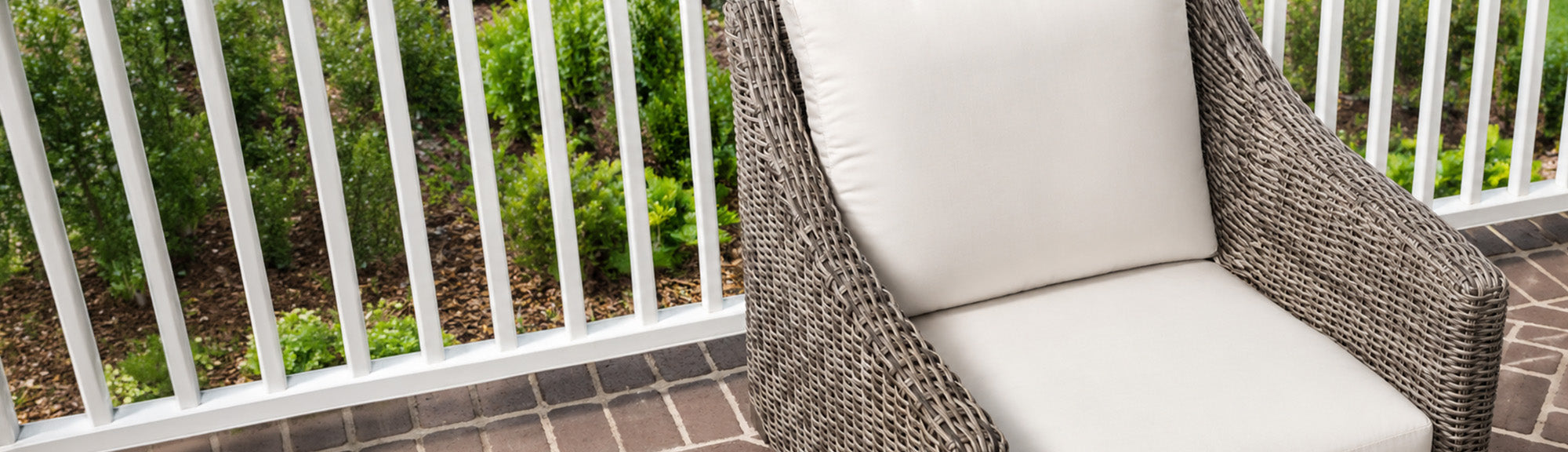
A close up of HDPE wicker.
[READ: How to Choose Quality Wicker Furniture Without Paying the Price]
Comparing HDPE and PVC Wicker Strands
There are two types of plastics; thermoplastics and thermosetting polymers.
Frequently Asked Questions: HDPE vs PVC Wicker
Both are plastics but differ in strength and structure. HDPE offers higher tensile strength and hardness and tolerates higher temperatures. PVC is a vinyl polymer known for low production cost. Prices on resin wicker vary largely by which material is used.
They are thermoplastics. Thermoplastics can be melted and molded repeatedly and are recyclable. Thermosetting polymers can be molded only once. PVC is amorphous while HDPE is semi-crystalline.
Low cost and widely used vinyl polymer. PVC is the third most popular plastic after PE and PP. It is lightweight and durable with low production cost and is commonly used to make pipes.
Higher strength and temperature resistance. HDPE provides more tensile strength and intermolecular force, resists many solvents, is lighter and harder, and can withstand about 230°F. It is recyclable and used in items like water pipes and wood plastic composites.
Material choice drives price and performance. The big swing comes from whether the strands are PVC or HDPE. Understanding the material helps you avoid paying more for less suitable construction.
Yes, it relates to hardness and density. PVC is amorphous. HDPE is semi-crystalline, which influences hardness and density and helps explain the higher tensile strength noted for HDPE strands.
Know which plastic the wicker uses. When comparing sets, note if strands are PVC or HDPE. HDPE brings higher strength and temperature tolerance. PVC emphasizes cost. Use this to judge value before you buy.
This preliminary overview just begins the analysis, continue below to discover how HDPE and PVC wicker differ in durability and application.
Thermoplastics
- Can be melted and molded repeatedly. This is why they are recyclable.
- Used to make bottles, plastic bags, wire insulation, pool toys, and containers.
Thermosetting Polymers
- Can be melted and molded only once. Become solid when cooled.
- Several types of thermoplastics; either amorphous or semi-crystalline.
- PVC (polyvinyl chloride) is amorphous while HDPE is a semi-crystalline.
What is PVC?
PVC is a cheap vinyl polymer that is used to make pipes. It is the third most popular plastic following polyethylene (PE) and polypropylene (PP). Some of its key features are as follows:
- Lightweight and durable material.
- Low production cost.
- PVC is heavier and stronger in terms of pressure capacity (pipes).
[READ: Wicker vs Rattan -What's the Difference?]
What is High Density Polyethylene?
Also abbreviated as PEHD (Polyethylene High-Density), High Density Polyethylene is a polyethylene thermoplastic that is made from petroleum. HDPE offers more tensile strength, and intermolecular force. Tensile strength measures the force required to pull something apart as applied in wicker strands.
- Resistant to a variety of chemical solvents.
- Lighter, stronger, harder, and can withstand higher temperatures.
- Can withstand temperatures of 230 degrees Fahrenheit.
- Has absorptive characteristic that dampens vibrations.
- Has a higher Crystallinity than Polypropylene. Crystallinity influences hardness and density, hence the name High Density Polyethylene.
- Polyethylene is the most widely used plastic. Eco-friendly material that can be recycled!
- Used to make fireworks, wood plastic composites, water pipes.
HDPE is made from the catalytic polymerization of ethylene. Polymerization is achieved through suspension, gas, or solution-phase reactors. Comonomers (butane, octane, and hexane) are added to increase intermolecular force.
Additional Resources:
- Natural Wicker vs Synthetic Resin Wicker
- The Patio Buyers Guide
- How to Choose the Best Material for Outdoor Furniture
Reader Comments
Fran June 24, 2017
Purchased all weather wicker that the weave split and broke down in a year. Like the look but want it to hold up. What type should I buy?
Patio Productions June 28, 2017
Low quality wicker will easily break down within a year or two. High Density Polyethylene (HDPE) is the way to go. But it's also important to ask how many hours the wicker is rated for. The best rated wicker will be rated for 5,000 hours of direct sunlight. This type of wicker should carry a 3-5 year warranty (about 1,000 hr/year). Virgin resin wicker means that it has never been recycled before, creating a longer lasting product. Sunset West is a brand known for their use of virgin wicker. Of course, when it comes to choice of material you get what you pay for. The better the material, the more expensive it is.
Shauna February 23, 2018
Is the Charleston wicker collection by North Cape International made of HDPE?
Patio Productions February 26, 2018
Hello. Thank you for your comment.
I was not able to confirm that information. Nevertheless, NCI offers a 3 year warranty on their wicker and that's a fairly standard warranty for HDPE. You wouldn't be able to offer that kind of warranty with any other material.
Dave May 25, 2018
Thank you for this information! Is the only way to know the quality of the resin wicker to ask? I'm trying t find info about Spring Ridge furniture sold by Ashley furniture with no luck. Any recommendations for searching?
Patio Productions May 26, 2018
Yes, it is very important to ask when you are shopping around. Salespeople should know this information or be able to get it by contacting the manufacturer. Quality manufacturers are proud of this type of information and make it well known when their product is made from high quality materials. If a salesperson can't seem to be able to get that information for you then the next best thing to look at is the warranty. The highest quality resin wicker will come with a minimum 3-5 year warranty. Going directly to the manufacturer's website and look up their warranty information is another option.
Carlos Ramirez April 27, 2019
I'm about to purchase a Brookstone outdoor furniture from Art Van Furniture. I don't see anything on there about being PVC or HDPE. After reading this article I want to get HDPE. It does says its a Virgin Resin Wicker and solution dyed olefin. Am j getting my money's worth? It's going to cost around $1300 for 3 seat sofa and a love seat.
Patio Productions July 27, 2019
The next best way to verify that you are dealing with HDPE or another high quality wicker is by looking at the warranty. HDPE wicker typically has a minimum 3 - 5 year warranty. You can also tell by the price. On average, an HDPE sofa would cost between 1500 - 2500. Some go as high as 3000.
Sandeep Singh Sidhu February 6, 2020
IT IS TOTALLY DEPEND ON THE WARRANTY AS I AM IN THE OUTDOOR FURNITURE INDUSTRY AND WE ARE THE ONE WHO IS CATEGORISING OUR WICKER IN HDPE AND BESPOLE MANUFACTURER DONT USE THIS AS A RESULT FURNITURE DONT STAY WELL FOR LONG DUE TO ENVIRONMENTAL CONDITIONS
Susan Gallagher June 11, 2019
What other companies do you recommened buying from ?







%20and%20PVC%20wicker!%20Although%20they%20are%20both%20plastics,%20the%20two%20differ%20in%20terms%20of%20strength,%20hardness,%20transparency.%20Th...)