Article: The Effects of Longterm Sun Exposure on Your Patio Furniture

The Effects of Longterm Sun Exposure on Your Patio Furniture
There's a stretch of late afternoon in Colorado, right around 6:30 or so in the summer, where everything just looks better than it really is. Cushions glow a little, wood warms up. Even your old furniture gets this second wind and you think, "hey, maybe it's holding up fine after all," then you sit down, feel the heat trapped in the seat, notice the brittleness in the armrest, and realize… yeah, nope, the sun's winning this battle for sure.
Sunlight does that. It flatters first, then it takes. So it goes.
If you've spent any time building out a patio that actually gets used, not just admired from inside, you've probably already run into this in small ways. Maybe you have some cushions or a throw pillow that faded unevenly. A table that feels hotter than it should, or a chair that creaks a little differently than it did last summer, an umbrella you swear was orange but now is decidedly pink. It's subtle until it isn't.
That's how UV exposure works! If you want a broader framework for how climate plays into all of this, this guide on choosing the perfect outdoor furniture for your climate is a good place to ground yourself before getting too deep into materials. Because sun exposure doesn't act alone. It teams up with time, heat, and moisture, and wreaks havoc like you'd expect. It's very good at what it does.

That's why some furniture categories, like teak patio furniture, have held their sterling reputation for as long as they have. These pieces don't deflect the sun. They work with it. Like materials science judo. But that doesn't mean they're maintenance-free or bulletproof or magically better in every setting - nothing is. But knowledge is power, and today I am arming you with the tools you need to pick the best patio furniture for your climate that will resist fading, warping, and otherwise sustaining UV damage, so you are left with a gorgeous patio set that lasts a lifetime of looking ridiculously good.
What UV rays actually do (and how it sneaks up on you)
UV radiation breaks things down at a molecular level. That sounds dramatic, but it's very real. The U.S. Environmental Protection Agency explains how UV rays degrade materials like plastics, wood finishes, and fabrics over time, causing fading, brittleness, and loss of structural integrity.
The tricky part is how slow it feels. Day to day, nothing seems to change. Then one season rolls into the next and suddenly your honest-to-goodness deep navy cushions look kind of… tired. Not destroyed, but... off. And weirdly purple.
I've always thought of sun damage as being less like a storm, more like erosion. You don't notice it happening. You notice that something is different over time.
And it shows up in weird ways. The top of a table fades faster than the legs. One arm of a club chair gets brittle because it faces south or west. The back cushions age differently than the seat cushions because they catch a slightly different angle. It's uneven and oddly specific, but still not something we'd want. "Uniqueness" isn't always desirable.
Some materials shrug UV off, while others really don't.

Aluminum and coated metals: steady, not invincible
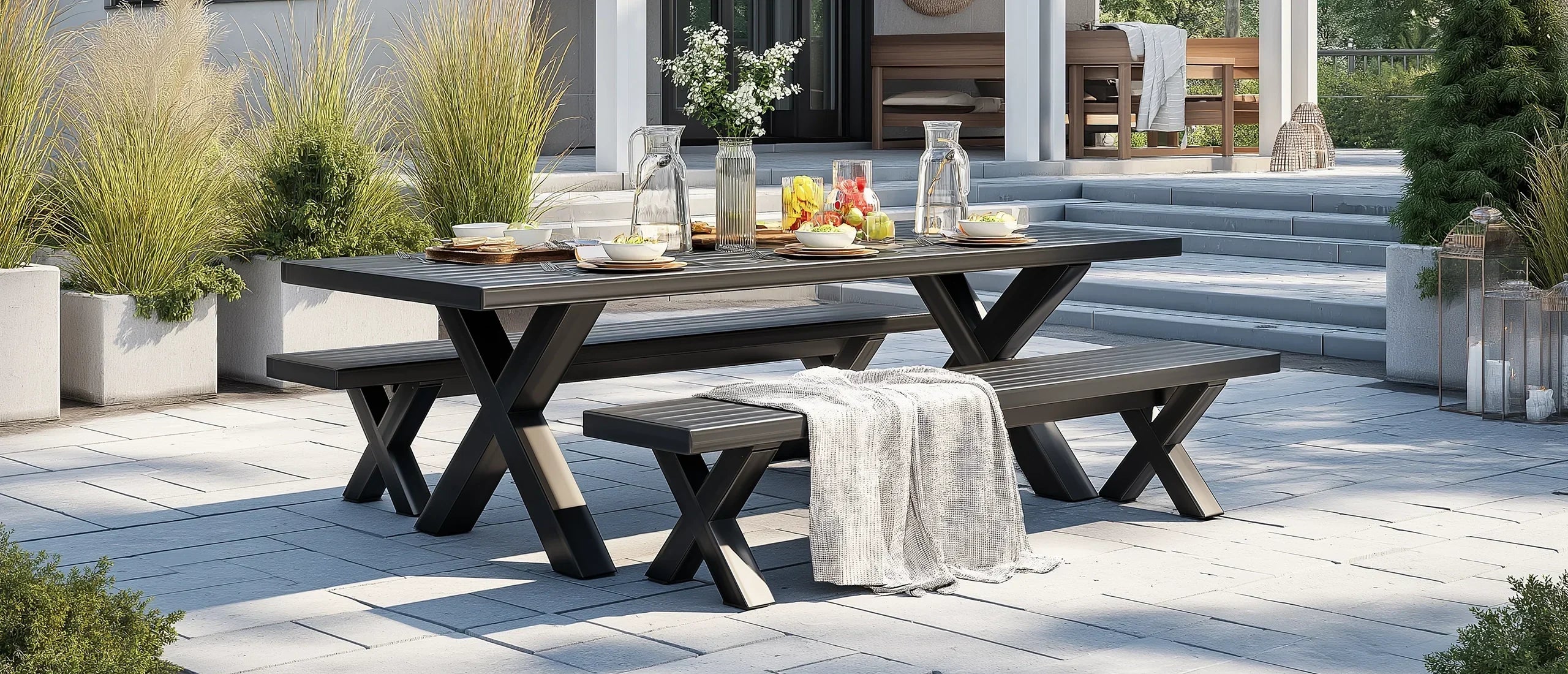
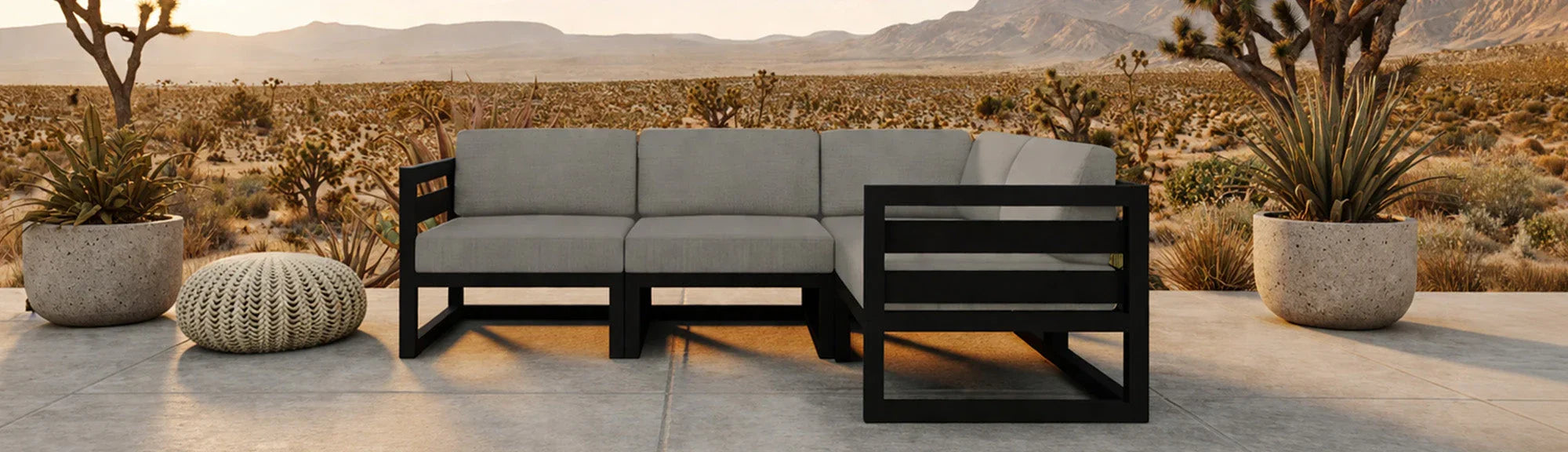
Powder coated aluminum holds up well under UV exposure, especially compared to painted steel. The coating itself is designed to resist fading and chalking, and the aluminum underneath doesn't rust the way steel does. That's a big deal in sunny, dry climates.
The Aluminum Association (it's a real thing) points out that aluminum naturally forms a protective oxide layer, which helps with corrosion resistance. That's part of why it's such a staple in outdoor furniture.

But here's where people get tripped up. The powder coating is still a surface treatment. Over time, especially with intense sun and heat cycles, it can fade or develop a slightly dull, chalky feel. It doesn't fail catastrophically. It just stops looking new.
And once you see it, you can't unsee it.
(Quick aside: darker finishes tend to show this a bit less, especially matte ones. Glossy black can look fantastic for about a year, and then… it tells on itself. Oops!)
Teak and hardwoods: they don't fight the sun, they adapt to it
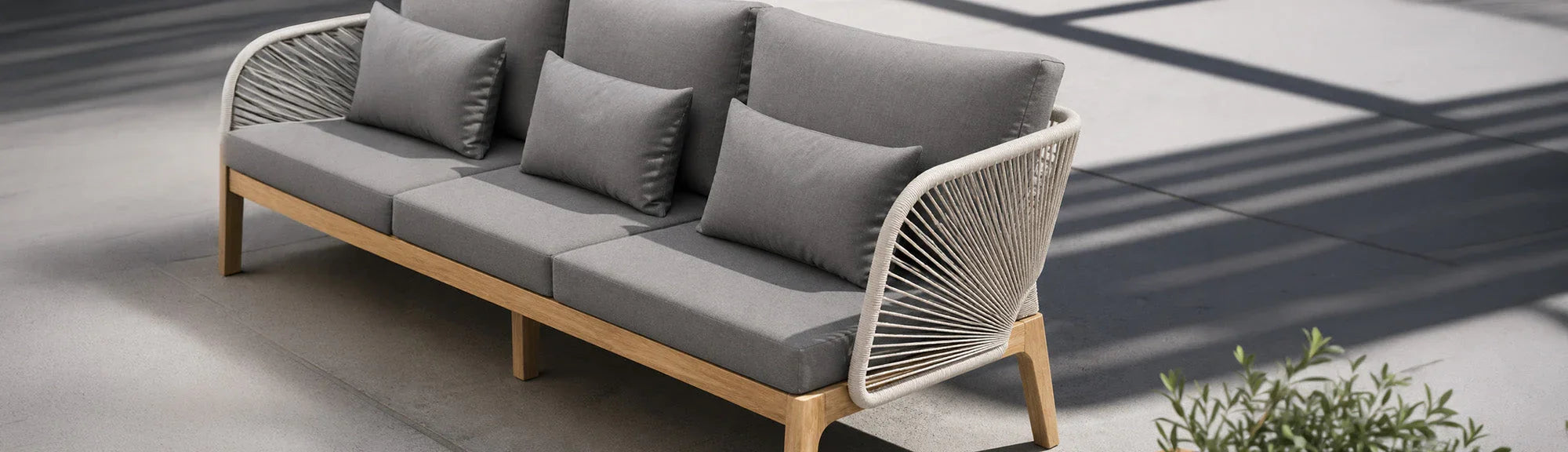
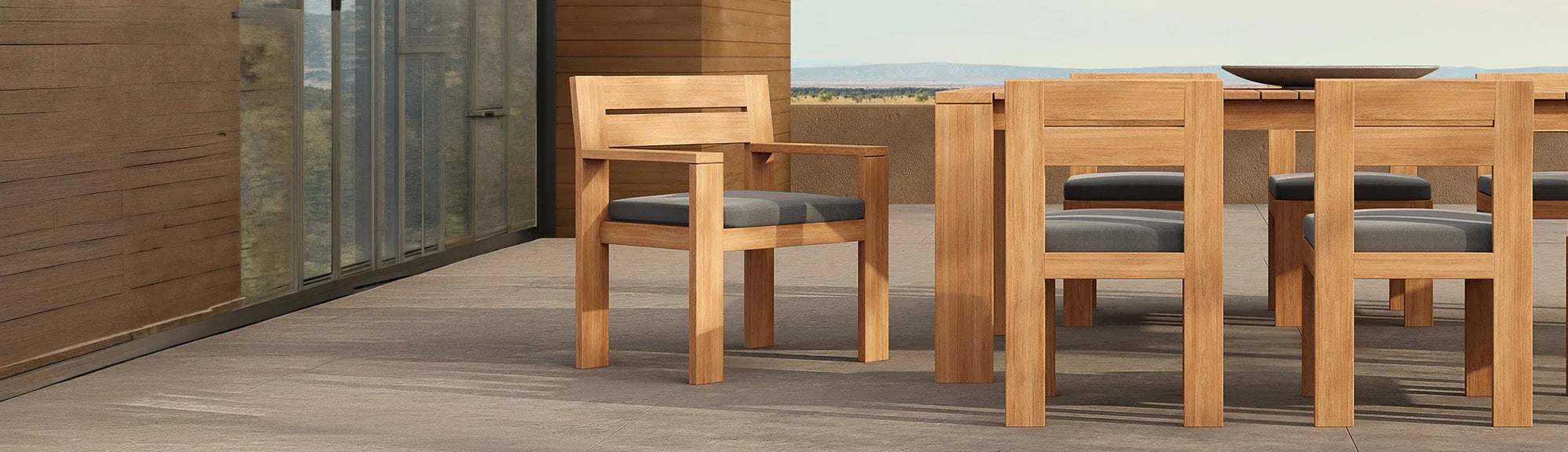
Teak is interesting because it doesn't try to resist UV in the same way synthetics do. It weathers. That's part of the design. Call it aging with dignity, or your furniture really coming into its own.
The U.S. Forest Service has documented teak's natural resistance to decay and insects, largely due to its oil content. Those oils also help it handle moisture and temperature swings. But the color change? That's UV at work.
Golden brown turns to silvery gray, first slowly, then all at once.
Some people love that. I do, depending on the setting. My own teak set at home is a very distinguished rustic grey color (if I'm being honest, it's because I decided to stop taking the time to maintain it properly and now I am living - albeit happily - with my silver seating set). It can make a space feel settled, like it's been there for years even if it hasn't. But if you're trying to maintain that original tone, you're signing up for regular maintenance. Cleaning, sealing, oiling. It's not difficult, but it is consistent.
Acacia and other hardwoods don't handle this transition as gracefully. They tend to dry out faster, crack more visibly, and generally look more "worn" than "weathered." There's a difference.
Poly lumber and HDPE: built for this exact problem
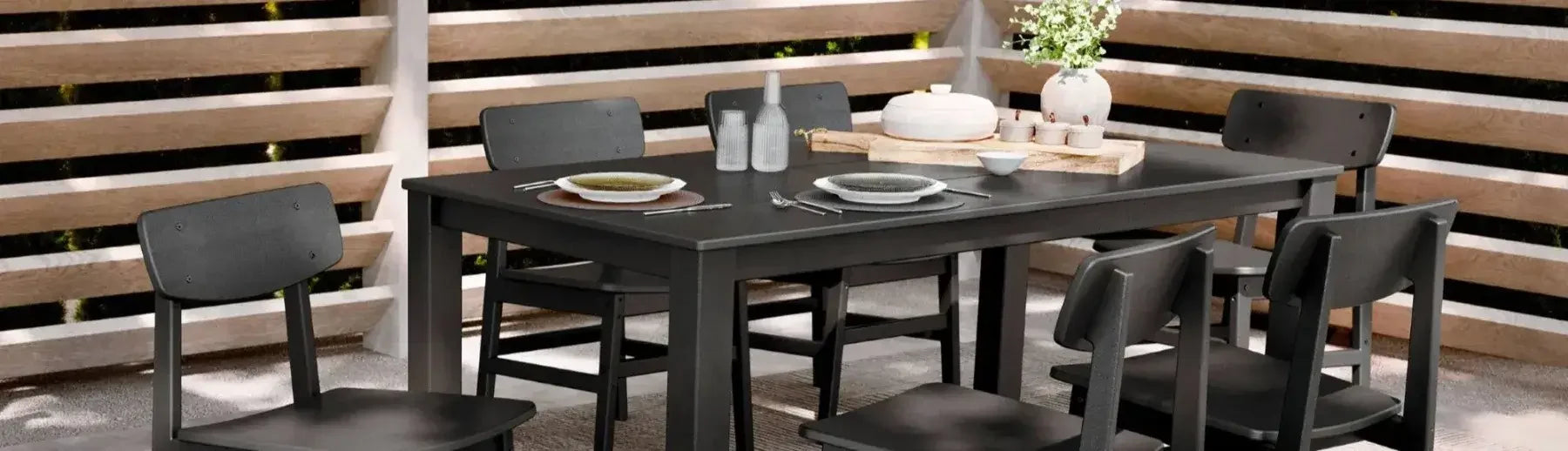
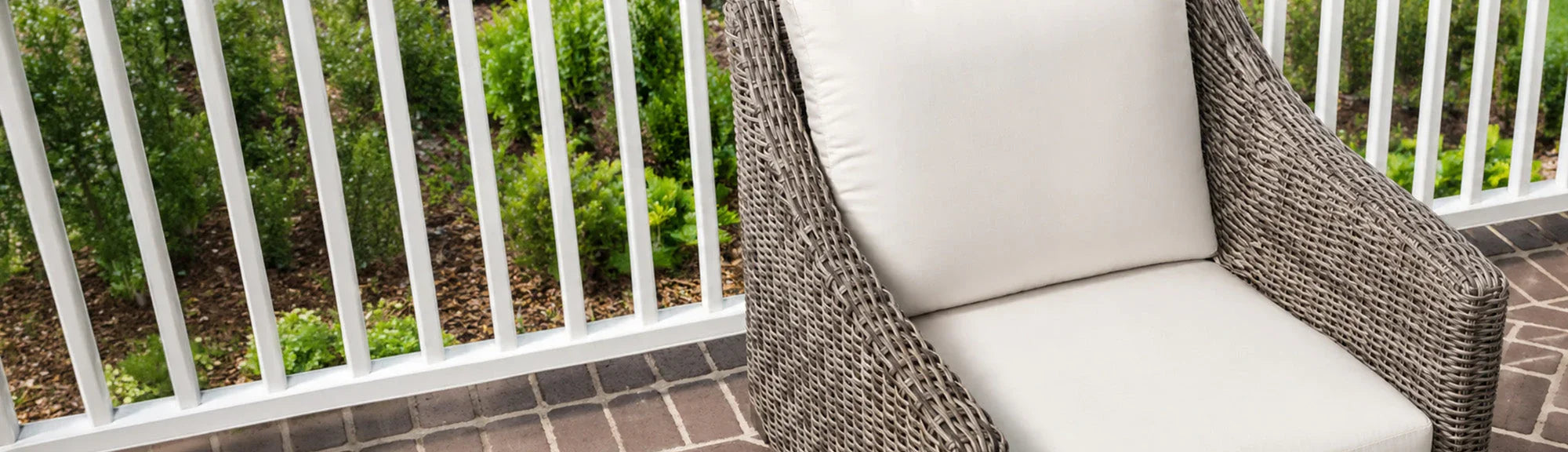
High-density polyethylene, or HDPE, is engineered with UV inhibitors baked into the material itself. That's the key difference. It's not just coated for protection. It's built that way all the way through.
The American Chemistry Council notes that HDPE has strong resistance to environmental stress cracking and UV degradation, especially when stabilized during manufacturing.
What that means in real life is pretty straightforward. It keeps its color. It doesn't get brittle. It doesn't care that it's been sitting in direct sun for eight hours.
It also doesn't develop that "hot to the touch and slightly suspicious" feeling that some cheaper plastics get.
I have a strong sense that this is why so many poolside setups lean heavily on poly lumber. It's predictable. You don't have to think about it very much, which is kind of the goal.
If you want to go deeper on how these materials compare, this breakdown of poly lumber furniture versus other options is worth a look.
Fabrics and sling materials: where sun damage gets very obvious
This is where UV exposure becomes impossible to ignore.

Lower-quality fabrics fade quickly. Sometimes unevenly, which is worse. The Skin Cancer Foundation notes that UV radiation breaks down fibers over time, which affects both color and strength.
Higher-end materials like solution-dyed acrylics (think Sunbrella) are designed so the color runs through the fiber, not just on the surface. That makes a big difference.
If you've ever seen a cushion where the outside looks fine but the inside seam is still vibrant, you've seen this in action.
There's also textilene, often used in sling chairs. It holds up well structurally, but it can still fade over time, especially in very intense sun. It just does it more gracefully.
For a deeper dive into which colors fade faster (because they absolutely do), this guide on outdoor fabric fading is surprisingly helpful.
The myth of "full sun rated" furniture
There's this idea floating around that some furniture is just "sunproof." That if it's labeled correctly, you can place it anywhere and forget about it.
I haven't really seen that hold up.
Some materials perform better, sure. HDPE, high-quality aluminum, well-made teak, and of course composite poly lumber. But placement still matters. Orientation matters. Shade structures matter. High quality patio furniture is an investment, like a nice car, and you should take care of it in a similar way.
Even the best materials age faster in direct, unrelenting exposure. Especially in places like Arizona or Nevada where UV intensity is consistently high. The National Weather Service tracks UV index levels, and those regions spend a lot of time in the "very high" to "extreme" range.
So no, there isn't a free pass. There's just better resistance and smarter buys.
Designing with the sun instead of fighting it

This is where things get a little less about materials and a little more about layout.
If you know a section of your patio gets hammered by afternoon sun, maybe that's not where your most delicate pieces go. Maybe that's where you place something more resilient, or something you don't mind aging a bit faster.
Or maybe that's where you add shade. Pergolas, umbrellas, even strategic plants (I had a birch tree, so now I have about ten birch trees; happy accident). It doesn't have to be complicated, you just want those sunless spots.
I've seen setups where the furniture is technically "high quality" but positioned in a way that guarantees uneven wear. One side fades. The other doesn't. It ends up looking mismatched even though it started as a set.
That's frustrating and avoidable.
If you're mixing materials, which most people do whether they realize it or not, it helps to think about how they'll age together. A teak table next to bright white poly chairs will look different in a year. Not worse. Just different.
And sometimes that's the point! Don't let that stop your creativity. If you have questions about mixing materials, please reach out to our team to talk about our Free Design Services packages - we've been doing this a long time, and we can give you a very accurate "five years on" prediction for how things are going to age together.
What actually holds up best?
If we're being very practical about it:
-
HDPE and poly lumber are the most resistant to UV-related color and structural changes, from the ground up that's just how they are baked
-
Powder coated aluminum furniture holds up extremely well, though often with some gradual aesthetic aging
-
Teak lasts a lifetime but changes visually (and those changes are very noticeable) unless meticulously maintained
-
Lower-end woods and plastics tend to degrade faster and less gracefully.
-
Avoid PVC at all costs. Avoid any metals that are not treated for outdoor use.
-
Consider furniture covers, no matter what you buy. This takes the guesswork out of the whole equation.
But that's only part of the story, because the "best" material is the one that still feels good to use after a few seasons. Not just structurally sound, but comfortable, visually consistent enough, and not demanding more attention than you want to give it.
I've always come back to that idea of furniture disappearing a little bit. Not literally, obviously. But you want it to disappear from your thoughts and cares. The ideal is this: you sit down, you relax, you don't think about the surface temperature or the color fade or the stiffness of the cushion fabric or whether the armrest feels brittle or splintery. You just stay a little longer than you planned, and then a little longer after that.