
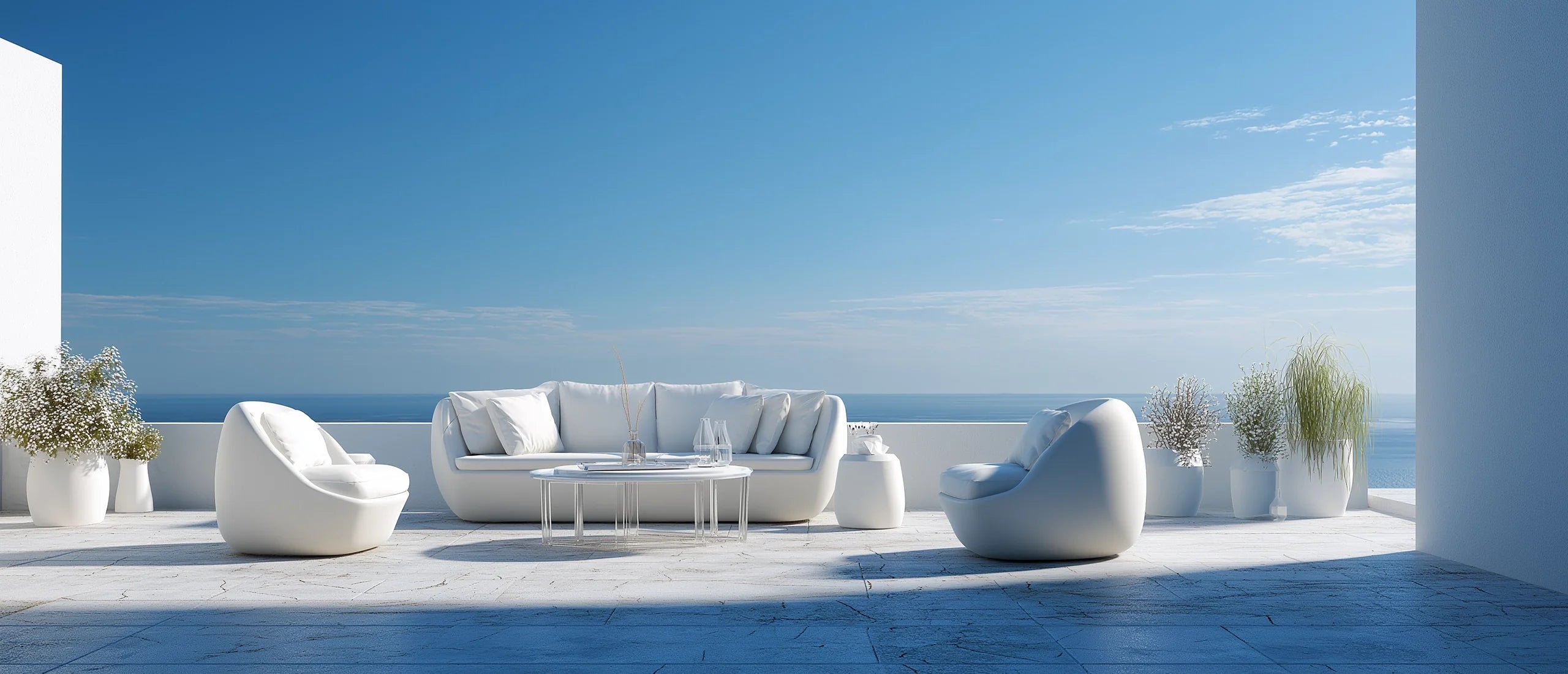
What Type of Patio Furniture Plastic is the Longest-Lasting?
The words "patio furniture plastic" can bring a huge number of images to mind (not to mention a wide range of emotional reactions from furniture shoppers). You might immediately think of those cheap-to-buy (and often cheap-looking) PVC chairs. Or maybe you think of a stylish, modern poly wood dining set crafted from recycled HDPE. Sturdy commercial bistro sets in restaurants, fashionable resin chat sets in the mall, weather-proof benches in the park … I could go on and on. (Instead, I'll get to the point.)
What type of patio furniture plastic lasts the longest, giving you the best value for your investment? I've done my research over here at Patio Productions (your go-to source for premium outdoor furniture in San Diego), and here's the simple answer: High-density polyethylene (HDPE). I mean, it can last for over 15 years. But, as always, there's much more to this complex question than one simple answer.
Patio Furniture Plastic Life-Span & Durability Overview
(click on each type of plastic below to skip to a more in-depth look at its features and flaws)
| Plastic Type | Average Lifespan | Key Features |
|---|---|---|
| HDPE (High-Density Polyethylene) | 15+ years | UV resistant, moisture resistant, highly durable |
| PP (Polypropylene) | Up to 12 years | Good strength-to-weight ratio, chemical resistant |
| PC (Polycarbonate) | 8-10 years* | High impact resistance, heat resistant |
| ABS (Acrylonitrile Butadiene Styrene) | 1-3 years* | Reasonably resilient, doesn't last, inexpensive, not eco-friendly |
| PVC (Polyvinyl Chloride) | 2-8 years | When properly treated |
*Estimated based on properties, specific outdoor lifespan data not readily available
Frequently Asked Questions: Longest-Lasting Patio Furniture Plastics
HDPE is the durability champion. High-density polyethylene (HDPE) typically lasts 15+ years outdoors. It pairs exceptional UV and moisture resistance with low maintenance and comes in luxury styles (poly lumber, HDPE wicker). It can cost more up front but offers standout long-term value.
HDPE > PP > PC > PVC > ABS. Average outdoor lifespans: HDPE ~15+ years; polypropylene (PP) up to ~12; polycarbonate (PC) ~8–10*; PVC ~2–8 (quality varies); ABS ~1–3*. Starred figures are estimates based on properties when specific outdoor data is scarce.
Its tight molecular structure resists damage. HDPE’s densely packed polymer chains increase strength and reduce chemical and UV degradation. That’s why it shrugs off moisture, sun, and everyday wear while keeping color and structure season after season.
Yes—lightweight, resilient, and long-wearing. PP offers a strong strength-to-weight ratio, good chemical resistance, and, when UV-stabilized, can handle outdoor conditions for up to about 12 years. It’s widely used in stylish commercial and residential pieces.
Use it for clear, impact-resistant accents. PC is highly impact-resistant, heat-resistant, and optically clear—great for “glass-look” tables or accent pieces. It’s premium-priced and often overkill for typical chairs or dining sets compared to HDPE or PP.
Sun, temperature swings, moisture, stress, and chemicals. UV exposure can fade and embrittle plastics. Heat/cold cycles, standing moisture, heavy use, and harsh cleaners also shorten service life. Quality materials and smart care counter these forces.
Clean gently and protect during harsh weather. Wash with mild soap and water, avoid abrasives, cover or store in extreme sun or winter, address spills quickly, and use cushions to reduce direct wear. A little routine goes a long way.
What to Know About Outdoor Furniture Plastics
Knowing the best ways to shop for plastic outdoor patio furniture is definitely one of those "teach a man to fish" moments. So grab your fishing net, partner, because we're wading into all the important patio furniture plastic deets today.
Patio Furniture Plastic Longevity Overview:
- High-density polyethylene (HDPE) is the undisputed champion of durable patio plastics, lasting over 15 years on average
- A plastic's UV resistance is crucial for maintaining both color and structural integrity in outdoor furniture
- Regular maintenance can significantly extend your furniture's lifespan, even for low-maintenance plastic
- Investing in quality materials upfront can save you money and hassle in the long run (the "you get what you pay for" principle)
- Different plastics offer various benefits, so choose based on your specific needs, climate, and style preferences
Plastic outdoor furniture is a widely diverse field of products, from inexpensive PVC options to high-end luxury HDPE pieces. That diversity grows naturally from one of plastic's greatest strengths: flexibility. Like, manufacturing and design flexibility… not how bendy it is. The most common plastic polymers for patio furniture (HDPE, polypropylene, polycarbonate, ABS, and PVC) each have their own unique traits and strengths, creating patio furniture of all design styles, shapes, and colors.
One of plastic outdoor furniture's other greatest super-powers is… you guessed it… its resilience to weather and regular wear-and-tear. Most common patio furniture plastics are pretty hardy, especially if you take decent care of them (link: jump to maintenance section below). Which is easy to do since they're pretty low-maintenance compared to other quality outdoor furniture materials like teak and wicker.

Types of Plastic Used in Patio Furniture
Now we're really getting our hands dirty, and you're ready to learn about the five* most common types of patio furniture plastics: high-density polyethylene (HDPE), polypropylene (PP), polycarbonate, acrylonitrile butadiene styrene (ABS), and polyvinyl chloride (PVC).
*Some sources will list polyethylene terephthalate (PET) as another type of plastic used in patio furniture. You will find PET (which is a form of polyester) in synthetic fibers like Dacron, which is often used in the 'stuffing' of outdoor cushions. It's far more commonly used in plastic water bottles, food packaging, or common household items. It's not often used to make the "body" of patio furniture, though, so we're not including it today. (Don't you love a good digression?)

POLYWOOD's EDGE Modular Deep Seating Sectional Set has a recycled HDPE frame with an unbeatable residential-use warranty.
High-Density Polyethylene (HDPE)
Avg Lifespan: 15+ years
Cost: $$$$
We're starting off with the best plastic outdoor furniture today. HDPE is the top long-lasting patio furniture plastic because it marries exceptional durability, an unbelievably long lifespan, and a jaw-dropping variety of luxury styles. You can find HDPE-crafted sofas, deck chairs, Adirondacks, dining sets… pretty much every type of patio furniture. You'll find recycled HDPE in premium brands like POLYWOOD. It's also used in Harmonia Living's high-quality resin wicker pieces, as well as composite wood outdoor furniture from brands like Berlin Gardens. And as a bonus for the planet-conscious shoppers among you, we're proud to offer you eco-friendly recycled HDPE patio furniture.
- UV resistance? Check.
- Moisture resistance? All day, every day.
- Durability? It laughs in the face of wear and tear.
- Weight? Depending on the specific type of HDPE, it can be a bit heavy. (Have your bro-in-law help you move it.)
Now, HDPE is a bit more pricey than some other plastic types, but you're experiencing the value of that investment for years and years. Plus, you won't see many costs to HDPE's low-maintenance needs, so the value really only improves over time as you care for it.
HDPE's exceptional durability stems from its molecular structure. (Science time, folks.) Its long chains of carbon and hydrogen atoms are tightly packed and highly crystalline, resulting in a material that's not only strong but also resistant to chemical degradation and UV radiation. It's got an answer for everything Mother Nature throws at it.
HDPE furniture's average of 15+ year lifespan, combined with a wide range of high-end luxury styles, makes it the best long-lasting plastic out there. In fact, 90% of professional landscapers recommend poly lumber (a specific type of HDPE plastic) for long-lasting patio furniture. Check out POLYWOOD's luxury patio furniture to see all that recycled HDPE plastic furniture has for your outdoor space:
Polywood

Park 33" x 70" Harvester Picnic Table
From $1,059.00

Park 72" Picnic Table
From $1,659.00

Park 53" Octagon Picnic Table
From $2,199.00

Park 36" Round Picnic Table
From $1,259.00

Park 72" Harvester Backless Bench
From $569.00

Park 48" Backless Bench
From $419.00

The 2-seat Lucy 27in Table Bistro Set by Compamia is made from light-weight, fade and weather-resistant polypropylene.
Polypropylene (PP)
Avg Lifespan: up to 12 years
Cost: $$ - $$$
The second best patio plastic option for longevity is polypropylene. PP is a great, versatile plastic outdoor furniture option for the budget-minded buyer. It doesn't have quite as much staying-power as HDPE, but it's still a pretty tough hombre. You'll find a lot of great-looking commercial-grade PP furniture in restaurants, parks, and similar outdoor venues. Especially because PP outdoor pieces are often relatively light-weight.
- High strength-to-weight ratio: It's strong but won't break your back when you move it
- Good chemical resistance: Spill your margarita? No problem!
- Decent weather resistance: It can handle a bit of sun and rain
Studies have shown that UV-stabilized polypropylene can withstand outdoor conditions for up to 12 years without significant degradation. I'm just sayin' that's a lot of summer barbecues.

The Ice 24" Polycarbonate Square Dining Table is elegant and highly shatter-resistant.
Polycarbonate (PC)
Avg Lifespan: 8-10 years*
Cost: $$$$$
*Estimated based on properties, specific outdoor lifespan data not readily available
Okay, so polycarbonate is a strange animal in the patio furniture world. Objectively, it's straight-up the most shatter-resistant option here. If you need your chaise lounger to resist bullets, PC is your best bet. For those of us not fearing for our lives, it's still a great damage-resistant option for most outdoor spaces. (Think 'glass-top' tables, end tables, etc.)
- High impact resistance: It can take a hit better than a professional boxer
- Optical clarity: this stuff is often used as a damage-resistant glass replacement. See-through bistro set, anyone?
- Heat resistance: PC's heat resistance is unnecessarily high; it definitely won't melt unless you live on the sun
Interestingly enough, PC has high optical clarity. Basically, it's clear like glass. So, if you're in the market for an eye-catching crystal-clear side table, PC is the way to go.
Since that level of shatter-resistance is generally unnecessary for (even high-quality) deck chairs and patio dining sets, PC is overkill for most patio furniture. It's also the most expensive option out there.

Acrylonitrile Butadiene Styrene (ABS)
Avg Lifespan: 1-3 years*
Cost: $
*Estimated based on properties, specific outdoor lifespan data not readily available
Try saying that three times fast (or successfully writing it correctly once, in my case). Let's just call this stuff ABS. Here's another plastic polymer defined primarily by its versatility and reliability. It's typically the cheapest option, and it does not last very long. ABS is also horrible for the planet, is not recyclable, and is not something we recommend or carry at Patio Productions.
- Usually inexpensive: ABS plastics are lower quality and cheaper to produce
- Reasonable impact strength: It can handle the occasional bump and tumble - but many become brittle over time
- Heat resistance: It won't warp when the temperature rises
- Glossy surface: Makes it look cheap

Polyvinyl Chloride (PVC)
Avg Lifespan: 2-8 years
Cost: $
Oh, PVC. What to say about PVC? You've probably seen this furniture. It's the stuff that looks like it's made from white plastic plumbers pipes… because it is. Okay, that's not entirely fair. There are varying degrees of PVC quality, so patio furniture PVC may or may not have actually been intended for plumbing. I will say, though, that PVC does remain a very cost-effective, durable, low-maintenance option. That's why this versatile plastic has been a staple in budget-friendly outdoor furniture for decades.
- Weather & wear resistance: PVC can take a beating and still perform well, and that's worth celebrating
- Flexibility: It can be molded into just about any shape your heart desires
- Low maintenance: It's the "set it and forget it" of patio materials – just give it an occasional wipe-down
Remember, though, not all PVC is created equal. Look for high-quality, UV-stabilized PVC for your outdoor furniture. It's like putting sunscreen on your chairs – they'll thank you by lasting longer and looking better.
Factors Affecting Longevity
Now, before you rush out to buy the first HDPE chair you see, let's talk about what can make or break your furniture's lifespan. Because even Superman has his kryptonite, right? Make sure you know how to protect our patio furniture investment.
- UV Exposure: We love spending time in the sunlight, but we don't love what prolonged UV exposure does to plastic furniture. UV rays can break down the molecular bonds in plastic over time. That's when you see color fading and structural brittleness. Make sure your plastic patio furniture has UV resistance.
- Temperature Fluctuations: Extreme heat or cold can cause plastic to expand and contract. Depending on how your plastic furniture was produced, it can really affect how 'solid' it feels over time. Repeat after me: no more ricketty rockers!
- Moisture: Moisture, mold, and mildew are just facts of outdoor living. Water's kind of sneaky, finding its way into tiny cracks and hanging out there. Some plastic polymers are more naturally water-resistant than others. Also, finding ways to remove or prevent moisture is the name of the game.
- Physical Stress: Constant use, moving furniture around, or that one friend who always leans back in their chair can cause wear and tear over time. This is just another fact of outdoor living. But luxury brands with reputations for quality craftsmanship are your first best step to resisting the effects of normal wear and tear.
- Chemical Exposure: Harsh cleaning products or accidental spills can potentially damage the plastic. So maybe rethink that plan to clean your patio furniture with the really harsh stuff. It's rarely needed, anyway.

Avoid letting water soak into plastic patio furniture to prevent mold and mildew
Maintenance and Care Tips
The whole point of buying plastic outdoor furniture was the low-maintenance lifestyle, right? Well, low-maintenance doesn't mean no-maintenance. And trust me, you'll want to protect those patio pieces, so they stay beautiful and functional for as long as they can. The level of effort is pretty low, anyway. You just have to know what you're doing to protect your furniture year-round.
- Clean regularly: All you need is a simple soap and water mix. Unless your furniture's manufacturer specifically says so, you don't need fancy cleaners or chemicals. That's money you can spend elsewhere… like on the ingredients to your favorite drink (which you'll be sipping on your favorite patio furniture).
- Avoid abrasive materials: Put down that steel wool! Just soft cloths or a sponge, buddy.
- Store or cover during harsh weather: Patio plastics are tough, not invincible. And a little protection goes a long way. Look for high-quality covers that will allow trapped water to evaporate out. Or just stow your furniture in a dry space in the off-season.
- Address stains promptly: That wine spill from last night's party? Clean it up before it can seep into the material. Make memories, not stains!
- Use cushions: They're not just for comfort – they can also protect the furniture from direct sunlight and wear.
Choosing the Right Patio Furniture for Longevity
Now, you're the Bearer of All Patio Plastic Knowledge. Then what? Here's how to put that knowledge to use when shopping for your plastic patio furniture:
| Consideration | Scenario | Priority |
|---|---|---|
| Climate | Sunny location (e.g., San Diego) | UV resistance |
| Rainy location (e.g., Seattle) | Moisture resistance | |
| Usage | Frequent entertaining | High-impact resistance |
| Solo relaxation | Comfort and style | |
| Warranty | - | Longer warranty indicates confidence in durability |
| Construction | - | Thick plastic, sturdy joints, solid feel |
| Style | - | Balance between durability and aesthetic appeal |
I stand by Patio Productions's recommendation - HDPE is simply the best overall option for long-lasting plastic outdoor furniture. But it's important to note that even the highest quality plastics have their limitations, and other plastics definitely have situations in which they shine. Always consider your specific needs and preferences when making a selection. From HDPE Adirondack chairs that'll outlast your mortgage to stylish polypropylene dining sets perfect for those sunset dinners, there's a patio piece for you.

The Last Lounge
Diverse styling, rugged durability, and comfortable performance? Yep, HDPE is hands-down the top outdoor plastic furniture when it comes to value over a long time span. But every project and outdoor space is unique. So make sure you understand your specific needs, climate, and style preferences. Then make sure you've created a care plan, so your patio furniture can go the distance.
The Patio Productions team would love to spend an afternoon helping you find the perfect patio furniture for your space. So give us a call or swing by our San Diego store. Until then, enjoy bringing life outdoors!






.%20You%20might%20immediately%20think%20of%20those%20ch...)