Eco-Friendly Furniture Options for Your Patio: Aluminum, Teak, Poly Lumber
Eco-friendly furniture options for your patio has never been a hotter, trendier topic. Everyone wants to know about the environmental footprint of their outdoor spaces. And everyone over here at Patio Productions couldn't be happier - it's been our focus for... well, forever. So, whether you're lounging with a cold beer on our showroom floor in San Diego or browsing online, the question keeps coming up: "Which outdoor furniture material is actually good for the planet?"
It's totally understandable, right? You want a gorgeous patio that doesn't come at the expense of Mother Nature. So, after helping countless homeowners create sustainable outdoor spaces, we've learned that the materials you choose - like sustainable teak, recyclable aluminum, or poly lumber pieces made from old milk jugs - make all the difference. Both for the planet and for how long your investment will keep looking great on your patio.
Eco-Friendly Patio Furniture Materials: At a Glance
- Aluminum is the recycling superstar of patio materials, with nearly unlimited recyclability and a surprisingly low environmental footprint despite its industrial origins
- Teak, while beautiful and durable, requires careful sourcing to avoid contributing to deforestation - always look for FSC certification
- Poly lumber transforms plastic waste into decades-lasting furniture, keeping hundreds of milk jugs out of landfills with each piece
- The most sustainable choice ultimately depends on your climate, maintenance preferences, and how long you plan to keep your furniture
- Today's eco-friendly furniture options don't require sacrificing style - modern manufacturing has made sustainable materials more attractive than ever
Frequently Asked Questions: Eco-Friendly Patio Furniture
Look at sourcing, manufacturing, shipping, lifespan, and recyclability. A sustainable choice considers where materials come from, how pieces are made and transported, how long they last, and whether they can be recycled. Longevity is huge: furniture that serves for decades reduces replacement cycles and overall environmental impact.
Yes. It is lightweight, durable, and infinitely recyclable. Modern aluminum frames often include high recycled content, sometimes up to 85%. They resist corrosion without chemical treatments, are easy to move which lowers transport emissions, last 15-20+ years, and are nearly 100% recyclable at end of life.
It can be, when FSC-certified and responsibly sourced. Teak is exceptionally durable, naturally rot and pest resistant, and can last 30-75+ years. Sustainability depends on sourcing. Look for FSC certification to ensure responsible forest management. Teak's longevity and natural oils reduce the need for chemical treatments.
It turns plastic waste into long-lasting furniture. Made from up to 95% post-consumer plastics, a single chair can divert about 500 containers from landfills. Poly lumber resists moisture and fading, needs only soap and water, lasts 20-50 years, and is recyclable at end of life.
Match needs to strengths for real sustainability. Choose aluminum for lightweight, modern, coastal, low-maintenance use. Choose teak for natural warmth and unmatched longevity, with FSC sourcing. Choose poly lumber for zero-maintenance durability, extreme climates, and broad color options that look consistent year after year.
All three are durable, with different upkeep levels. Aluminum: 15-20+ years, minimal upkeep, excellent weather resistance. Teak: 30-75+ years, moderate upkeep, excellent resistance. Poly lumber: 20-50 years, minimal upkeep, excellent resistance. Longer life means lower environmental impact overall.
Prioritize recyclable materials and long service life. Aluminum and poly lumber can be recycled, supporting a circular loop. Teak's sustainability comes from decades of use and responsible sourcing. Choosing recycled content and FSC-certified wood reduces waste and conserves resources.
Understanding Eco-Friendly Outdoor Materials
Let me tell you about a customer who visited our San Marcos warehouse last summer. She came in asking for "the most eco-friendly furniture option possible" and then looked completely confused when I started explaining the environmental tradeoffs between different materials. That's when it hit me. Most people don't know that "eco-friendly" isn't one-size-fits-all in the outdoor furniture world.
The environmental impact of patio furniture involves multiple factors: raw material sourcing, manufacturing processes, transportation footprint, product lifespan, and end-of-life recyclability. A truly sustainable choice considers all these elements rather than just focusing on whether something is "natural" or "recycled."
To help simplify the topic, let's break down how aluminum, teak, and poly lumber (three of today's top outdoor furniture materials) stack up across these dimensions.

Aluminum: The Lightweight Recycling Champion
Aluminum might not scream "eco-friendly" at first glance. After all, it comes from bauxite mining and requires significant energy to produce initially. But here's where aluminum shines: it's infinitely recyclable without losing quality.
Most aluminum patio furniture today contains significant recycled content, dramatically reducing its environmental footprint. At Patio Productions, we've seen more manufacturers proudly advertising recycled content percentages in their aluminum collections, sometimes reaching up to 85%.
The eco-friendly advantages of aluminum:
- Lightweight nature reduces transportation emissions
- Exceptional durability means decades of use with minimal maintenance
- Nearly 100% recyclable at end of life
- Resistance to corrosion eliminates need for chemical treatments
I'll never forget the customer who brought in an aluminum dining set they'd purchased from us 15 years earlier. It needed new cushions but the frames were still perfect despite sitting through coastal San Diego winters. That's the kind of longevity that makes a true environmental difference.
For more details on selecting quality aluminum pieces, check out our guide for the savvy aluminum furniture shopper.


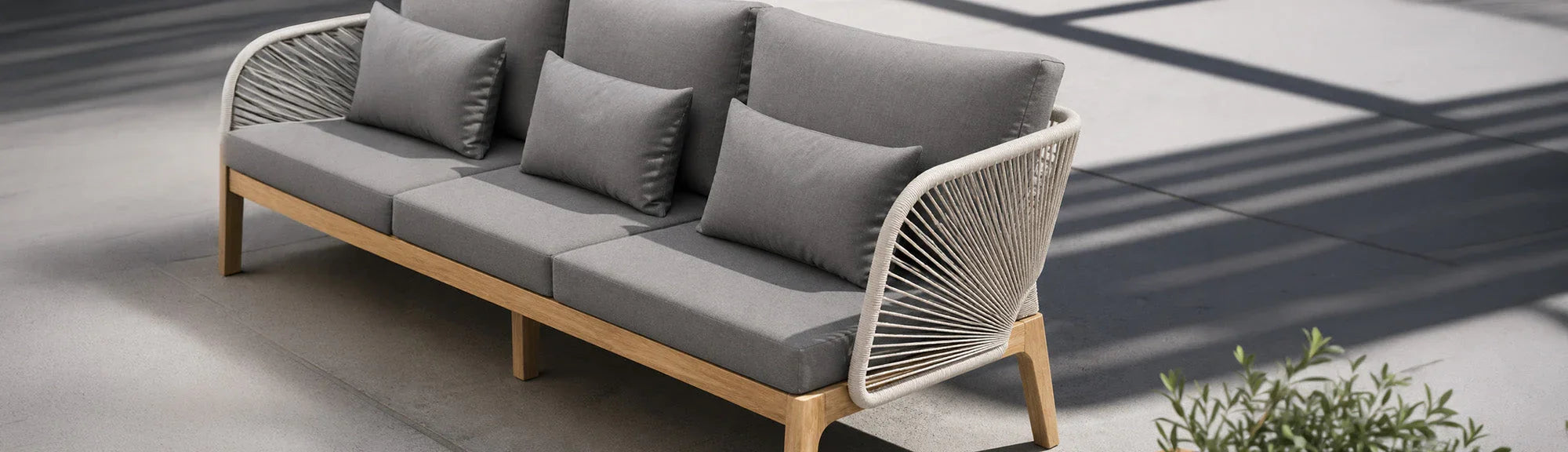
The Qube Sofa Set is made from certified sustainable Grade A teak-eco-friendly and elegant.
Teak: Beautiful But Complicated
Ah, teak - the gold standard of outdoor woods and possibly the most misunderstood material from an environmental perspective. I've watched customers fall in love with teak's golden hue and then look horrified when I mention deforestation concerns.
Here's the truth: teak's environmental impact depends entirely on where it comes from. Irresponsibly harvested teak contributes to habitat destruction and deforestation. But properly sourced teak from FSC-certified forests can actually be a sustainable choice due to its incredible durability and natural resistance to rot and pests. We proudly partner with brands like Harmonia Living and HiTeak that only use certified sustainable, Grade A teak in their products.
Environmental considerations for teak include:
- Can last 75+ years with proper care (I've seen vintage teak pieces that look better than new furniture)
- Requires no chemical treatments due to natural oils and properties
- FSC certification ensures sustainable forest management
- Carbon sequestration during growth partially offsets footprint
The sustainability catch with teak is that it needs proper sourcing. At our showroom, I always show customers the FSC certification for our teak collections. Without that, you might be getting wood harvested illegally or unsustainably.
For a deeper dive into teak sustainability, read our article on the real eco footprint of teak patio furniture or browse our complete teak furniture buyer's guide.
Teak Dining Tables

Foundations 52" Round Teak Dining Table with Umbrella Hole
$2,012.00

Foundations 74" x 39" Rectangular Teak Dining Table with Umbrella Hole
$2,576.00

Foundations 74" -103" x 39" Rectangular Teak Extension Dining Table with Umbrella Hole
$3,512.00

Amadora Extendable Dining Table
From $3,499.00

Classic Teak 43" Square Dining Table
$1,249.00

Classic Teak 60" Rectangle Dining Table
$1,499.00

Poly Lumber: From Milk Jugs to Long-Lasting Furniture
When I first saw poly lumber furniture arriving at our warehouse, I was skeptical. Plastic furniture? Really? But this isn't your flimsy discount store plastic. High-density polyethylene (HDPE) or "poly lumber" represents one of the furniture industry's most successful recycling stories. And leading brands like Harmonia Living continue to introduce new products like the Alpine Collection that keep making the poly lumber space better and better.
Made primarily from recycled milk jugs and detergent bottles, each poly lumber chair diverts approximately 500 plastic containers from landfills. That's environmental impact you can feel good about while you're lounging.
The eco-benefits of poly lumber include:
- Made from up to 95% post-consumer recycled plastic
- Extremely durable with lifespans of 20+ years
- Requires zero maintenance and no chemical treatments
- 100% recyclable at end of life
One of my favorite customer stories involves a family who installed poly lumber Adirondack chairs on their oceanfront property. Five years later, they returned to buy matching side tables, amazed that the chairs looked exactly the same as the day they bought them despite constant exposure to salt air and intense sun.
To learn more about poly lumber's remarkable durability and sustainability, visit our detailed guide on the benefits of poly lumber furniture or explore our article about recycled plastic outdoor furniture options.
Polywood

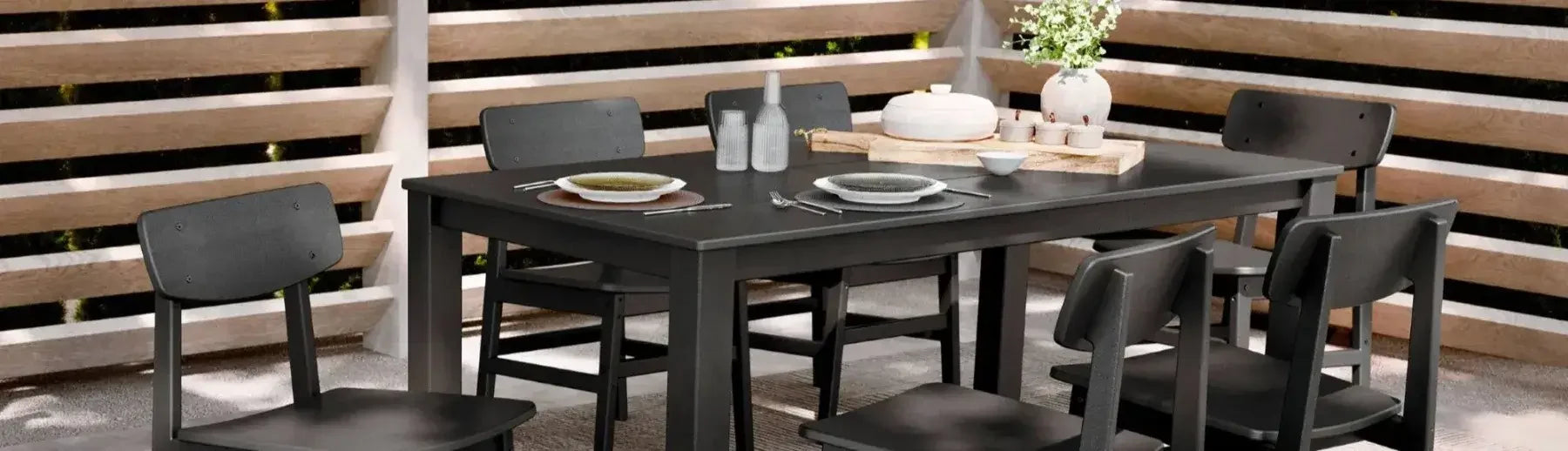
Park 33" x 70" Harvester Picnic Table
From $1,059.00

Park 72" Picnic Table
From $1,659.00

Park 53" Octagon Picnic Table
From $2,199.00

Park 36" Round Picnic Table
From $1,259.00

Park 72" Harvester Backless Bench
From $569.00

Park 48" Backless Bench
From $419.00

Material Comparison: Durability, Maintenance, and Style
When helping customers make sustainable choices, I always emphasize that longevity is a key factor in environmental impact. A piece that lasts 20 years has roughly half the impact of one you replace after 10 years.
Here's how our three eco-friendly contenders compare:
| Average Lifespan | Maintenance Required | Weather Resistance | Environmental Impact | |
|---|---|---|---|---|
| Aluminum | 15-20+ years | Minimal - occasional cleaning | Excellent - resistant to rust with powder coating | Low when made with recycled content |
| Teak | 30-75+ years | Moderate - annual cleaning, occasional oiling to maintain color | Excellent - naturally resistant to elements | Mixed - sustainable if FSC-certified |
| Poly Lumber | 20-50+ years | Minimal - simple cleaning only | Excellent - impervious to moisture, won't crack or splinter | Low - diverts plastic waste from landfills |
Which Eco-Friendly Material Is Right for Your Space?
After helping hundreds of San Diego homeowners create their dream patios, I've learned that matching the material to your lifestyle is critical for sustainability. Even the most eco-friendly furniture isn't a good choice if it doesn't work for your needs.

Consider aluminum if:
You want lightweight pieces you can move easily
You prefer modern, sleek designs
You live in a coastal area where rust resistance matters
You value minimal maintenance

Consider teak if:
You love the natural warmth of real wood
You don't mind some maintenance for extraordinary longevity
You appreciate furniture that develops character over time
You're committed to purchasing FSC-certified products

Consider poly lumber if:
You want virtually zero maintenance
You live in extreme climates (it handles everything from snow to desert heat)
You value color options beyond natural wood tones
You prefer furniture that looks the same year after year
For a broader overview of material options beyond these three, our guide to choosing the best material for outdoor furniture offers additional insights. And if you're interested in other eco-friendly options, our guide to sustainable patio furniture covers additional materials like composite furniture, which we explore in depth in our composite furniture buyer's guide.

Final Thoughts on Sustainable Outdoor Living
Stylish, comfortable, and durable eco-friendly furniture options for your outdoor space are becoming more and more available every year. Meaning you don't have to compromise on your tastes or principles. Knowing how to choose the best eco-friendly material for your patio mostly comes down to understanding the best options: sustainably-farmed teak, recyclable aluminum, or 'keep plastics out of landfills' poly lumber.
Our team has seen the outdoor furniture industry transform over the couple of decades. What started as a niche interest in eco-friendly options has become a central focus for many of our customers, especially those investing in longer-lasting pieces. And your choice to prioritize sustainability contributes to a larger movement toward more environmentally conscious outdoor living.
If you ever find yourself in San Diego, stop by our showroom on Hancock Street. We love chatting about sustainable options... almost as much as we love meeting new neighbors!